
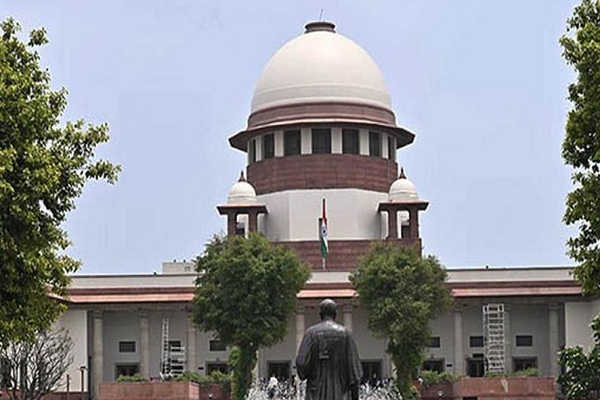
Supreme Court’s question on creamy layer – ‘If both parents are IAS officers then why reservation for children?’

New Delhi, 22 May. The Supreme Court on Friday raised questions on the creamy layer, asking whether children from families who have already achieved educational and economic progress through reservation should continue to claim OBC benefits. The top court said that such progress leads to social change. In the same sequence, the court also commented that if both the parents are IAS officers, then their children asking for reservation again weakens the basic objective of the positive step.
Justice B. The bench of V. Nagarathna and Justice Ujjwal Bhuyan was actually hearing a petition challenging the decision of the Karnataka High Court, which had upheld the decision of keeping the petitioner out of reservation. Both the parents of the petitioner are state government employees. Advocate Shashank Ratna presented the petitioner’s side in the court.
Justice Nagarathna said, ‘If social change comes through education and economic empowerment, then asking for reservation for children again… we will never be able to come out of this. This is a matter which we have to consider. If both the parents are IAS officers then why should they get reservation? With education and economic empowerment comes social change.’
The bench said that the parents are educated, they are in good jobs, they are getting good income, and yet the children want reservation again. Justice BV Nagarathna said, ‘Look, they should come out of reservation now.’ The Supreme Court said that many government orders already make provision for keeping such rich sections out of the benefits of reservation, but now they are being challenged.
Advocate Shashank Ratna argued that salary income is not the main parameter to identify the creamy layer (affluent class) among government employees. He said exclusion from the creamy layer depends on the post status of the parents, such as whether they belong to Group A or Group B services, and not just on their salary income. He said that if salary is considered the only parameter, drivers, peons, clerks and other lower level government employees may also be excluded from the benefits of reservation.
The bench observed, ‘For the Economically Weaker Section (EWS) and deprived groups, there is no social backwardness, but only economic backwardness. There has to be some balance here. Socially and educationally backwardness is fine, but once the parents have achieved a level by taking advantage of reservation, the situation changes. After hearing the arguments, the bench issued notice in the matter.
The petitioner was selected for appointment to the post of Assistant Engineer/Assistant Engineer (Electrical) in ‘Karnataka Power Transmission Corporation Limited’ under reserved category. However, the District Caste and Income Verification Committee refused to grant him a caste validity certificate after concluding that he belonged to the ‘creamy layer’.
Officials pointed out that both the parents were government employees and their combined (total) income was more than the limit for the creamy layer. The classification of the petitioner as belonging to the creamy layer was based on the income of his parents, who are salaried employees and whose combined annual income was reportedly more than Rs 8,00,000.

Comments are closed.