
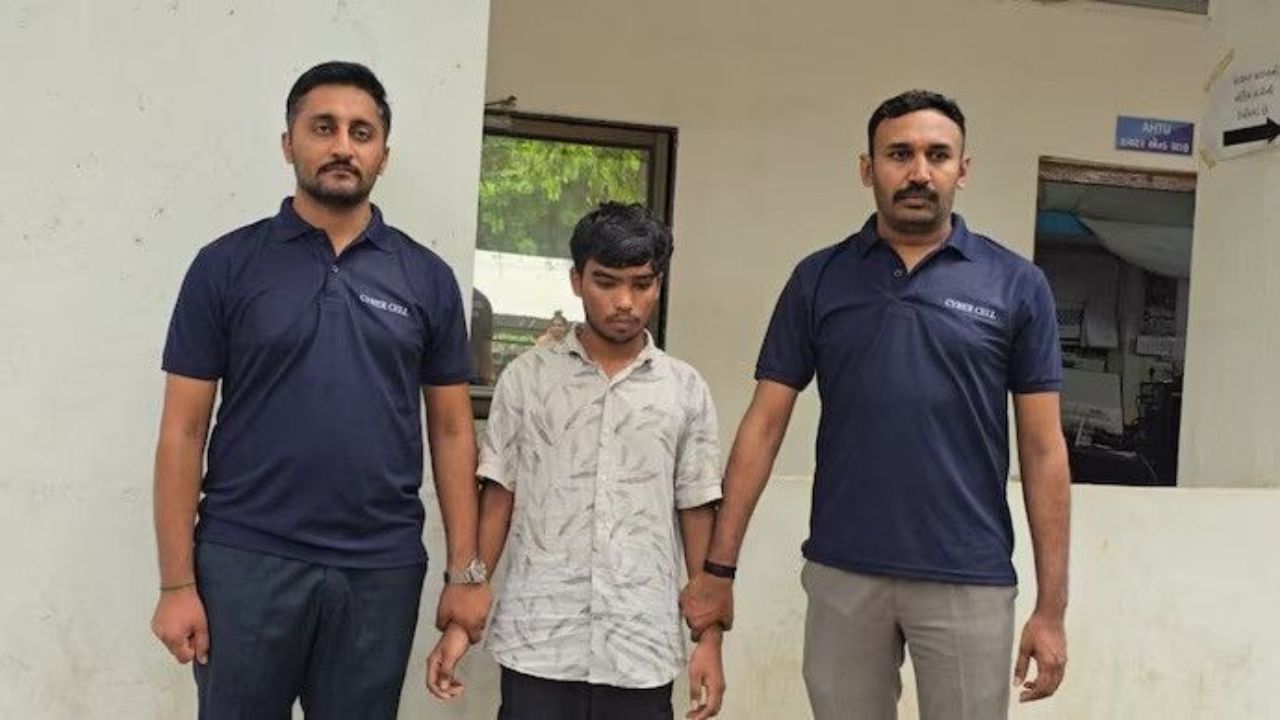
How an 18 year old boy used AI as a weapon and set up a cyber fraud network, this is how he got caught

A big cyber crime network has been busted in Surat, Gujarat. Surat City Cyber Crime Cell has arrested 18-year-old Rohit Virendra Singh Shakya, who created many mobile apps with the help of AI and Telegram through which cyber criminals defrauded crores of rupees across the country. Rohit Virendra Singh created fake apps related to banking and government services, which cyber criminals used to download to common people and gain access to their mobile phones and banking information. Cyber criminals associated with this network allegedly carried out fraudulent transactions worth more than Rs 64 crore.
Where was the accused caught from?
Surat City Cyber Crime Cell arrested Rohit Virendra Singh Shakya from a hotel in Kanpur, Uttar Pradesh. According to the police, the accused is accused of creating malicious APK files and distributing them to cyber criminal gangs. Investigating agencies say that these fake apps were made available to cyber gangs operating in Jamtara, Haryana and Rajasthan of Jharkhand.
According to the police, Rohit Shakya had left studies after 11th class, but by the age of just 16, he had learned a lot in coding. It is alleged that with the help of AI tools and Telegram, he created such applications, which looked like the apps of real banking, government and private companies.
How was malware sold?
Investigation has revealed that the accused allegedly used to provide malware based apps to cyber criminals on a subscription model. According to the police, he used to provide customized malware to cyber criminals at a fee of around Rs 15,000 per month. Through these apps, criminals used to obtain personal and banking information of the victims.
What kind of apps did the accused create?
According to investigators, Rohit Shakya had developed two types of applications. The first was “Victim App”, which common people mistook for a real bank or government app and installed it on their phones. The second was “Admin App”, with the help of which cyber criminals could remotely obtain OTP, banking credentials and other sensitive information from the victims’ mobile phones.
Which government services created fake apps?
1. SBI
2. pnb
3. Axis Bank
4. UCO Bank
5. ICICI Bank
6. Union Bank
7. BigBasket
8. American Express
9. aadhaar services
10. PM Kisan
11. RTO challan payment portal
How did the investigation begin?
The investigation into this entire matter started after the complaint of a resident of Surat. The victim had lodged a complaint on cyber helpline number 1930. According to the police, between May 15 and 18, a fake “PNB One.apk” file was sent to the victim on WhatsApp. Thinking it to be the official app of Punjab National Bank, the victim installed it in his mobile. After this, cyber criminals gained access to his mobile and obtained banking information. It is alleged that the criminals transferred Rs 5 lakh from Prime Co-operative Bank account to Union Bank account.
After the initial complaint, Surat Cyber Crime Police registered an FIR and started investigation. During the investigation, the police came to know that this was not a single cyber fraud but an organized network. In the digital forensic investigation, police reportedly discovered that Shakya had created 121 malicious APK applications. These apps were installed on about 21,672 mobile phones across the country.
Fraud worth how many crores of rupees?
According to the police, investigation revealed that about 2,928 mobile devices were completely hacked. About 54,094 fraudulent banking transactions related to these were revealed, the total amount of which is said to be around Rs 64.38 crore. According to the police, most cases of fraud were reported through fake RTO challan app. After this, fake apps made in the name of SBI and PNB were used.
The malicious APK files created by the accused were delivered to cyber criminal gangs through Telegram. It has come to light that these gangs mainly involve networks from Jamtara, Haryana and Rajasthan. It is reported that this entire system ran on a monthly subscription model, which also included software updates and technical support.

Comments are closed.