
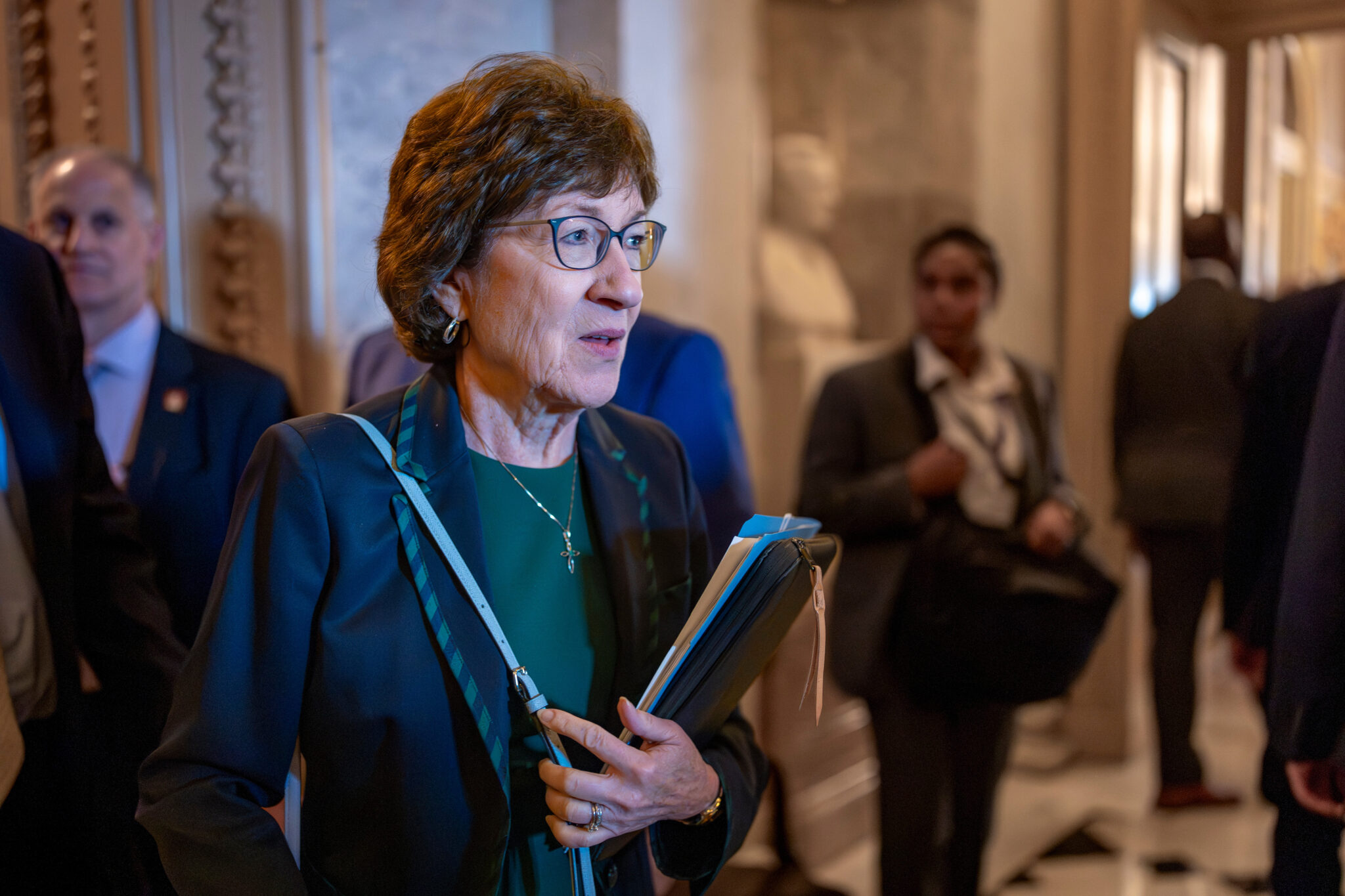

Susan Collins Launches Reelection Bid in High-Stakes Maine Senate Race/ TezzBuzz/ WASHINGTON/ J. Mansour/ Morning Edition/ Sen. Susan Collins has officially launched her reelection campaign in Maine, setting up a pivotal 2026 Senate race. Democrats see the contest as a key opportunity to flip control of the chamber. Immigration enforcement, Trump-era policies, and Collins’ bipartisan record loom large in the campaign.


Susan Collins Maine Senate Race – Quick Looks
- Collins is seeking a sixth term at age 73
- Race could help decide control of the US Senate
- Immigration enforcement backlash shapes early debate
- Democrats need four seats to regain Senate majority
- Collins emphasizes independence from party leadership
Deep Look: Susan Collins Launches Reelection Bid in High-Stakes Maine Senate Race
PORTLAND, Maine (AP) — Republican Sen. Susan Collins announced Tuesday that she is running for reelection, opening what is expected to be one of the most closely watched Senate races of the 2026 midterms.
Collins, 73, is betting once again that her brand of political independence can carry her through a state that has grown increasingly Democratic. The five-term senator has long portrayed herself as a pragmatic centrist — occasionally breaking with Donald Trump while still supporting much of his legislative agenda.
Her decision sets the stage for a bruising contest that could help determine which party controls the U.S. Senate. Democrats need to net four seats nationwide to reclaim the majority, and Maine is one of their top targets, along with races in North Carolina, Alaska, and Ohio.
Immigration Fallout a Central Issue
The campaign begins amid mounting controversy over federal immigration enforcement. A recent operation in Maine resulted in hundreds of arrests and sparked criticism that individuals without criminal records were swept up in the crackdown.
Collins said she intervened directly with Homeland Security Secretary Kristi Noemclaiming credit for halting the deployment of additional federal agents in the state.
Democrats argue that response fell short. They point to Collins’ refusal to call for Noem’s resignation and her vote in favor of a bipartisan Homeland Security funding bill as evidence that she has not sufficiently challenged the administration.
Democratic Field Takes Shape
Among Collins’ leading challengers are Maine Gov. Janet Mills and oyster farmer Graham Platner. Mills has secured backing from many establishment Democrats and progressive groups, while Platner has gained attention with an anti-establishment message focused on economic inequality.
Platner’s campaign has also drawn scrutiny, including revelations about past social media posts and efforts to cover a tattoo resembling a Nazi symbol. Despite the controversy, he recently outraised both Mills and Collins during the latest fundraising period, pulling in nearly $4.6 million. Mills raised $2.7 million, while Collins — who had not yet officially launched her campaign — ended 2025 with more than $8 million in cash on hand.
Mills accused Collins of governing “without any courage” following the senator’s January vote to fund DHS and other federal agencies. Platner has gone further, calling for DHS to be dismantled entirely.
A Complicated Trump Relationship
Collins’ relationship with Trump has been a defining feature of her political career. She did not vote for him in 2016 and supported his conviction during his 2021 impeachment over the Jan. 6 Capitol riot. After she backed legislation limiting presidential war powers, Trump publicly suggested she should never be reelected.
At the same time, Collins has supported major elements of Trump’s agenda, including tax and spending legislation and most of his nominees. She notably voted to confirm Robert F. Kennedy Jr. as health secretary, a decision that has drawn renewed criticism as Kennedy has promoted anti-vaccine policies and dismissed public health officials.
A Proven Survivor in a Bluer Maine
Collins has weathered difficult races before. In 2020, Democrat Sara Gideon spent $69 million attempting to unseat her during a presidential election year. Collins prevailed by more than eight points, even as Democrats won Maine at the top of the ticket.
Still, the state’s political makeup continues to shift. Democrats now outnumber unenrolled voters, who once formed Collins’ strongest base, while Republicans remain a distant third in voter registration.
As the 2026 race unfolds, Collins will again test whether her reputation for independence can overcome a more polarized electorate — and whether Maine voters will once more defy national trends.
More on US News

Comments are closed.