
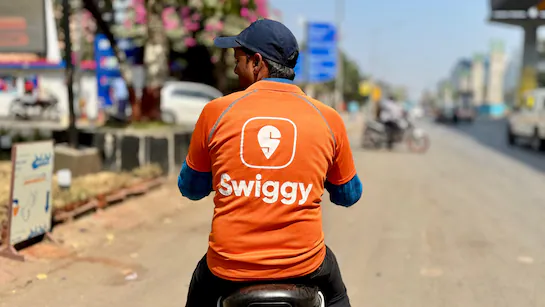

Food delivery just got a little more expensive for millions of users as Swiggy has increased its platform fee per order. The company has raised the charge from ₹14.99 to ₹17.58 (including taxes), marking a hike of around 17%.
The revised fee is now visible on the app and applies to all users, including those subscribed to Swiggy’s membership plans. While the increase may appear small on a single order, it adds up significantly for frequent users who rely on food delivery services regularly. This latest hike follows a series of gradual increases over the past few years. What began as a nominal ₹2 charge in 2023 has now grown nearly ninefold, turning into a key revenue stream for the company.
Follows Similar Move by Zomato:
The timing of the increase is notable, as it comes just days after rival Zomato raised its own platform fee. With both companies now charging nearly identical amounts per order, the pricing gap between India’s two largest food delivery platforms has effectively disappeared.
Industry observers point out that the sector has evolved into a duopoly, with Swiggy and Zomato dominating the market. This has allowed both players to make similar pricing decisions without losing significant market share. The parallel hikes also suggest a broader industry trend where companies are focusing more on profitability rather than aggressive discounting, which had earlier defined the food delivery business in India.
Why Platform Fees Are Rising:
The increase in platform fees is largely driven by the need to improve margins and offset rising operational costs. Food delivery companies incur expenses related to logistics, delivery partners, technology infrastructure, and customer acquisition.
As growth stabilises, companies are now looking at ways to make their business models more sustainable. Charging a small fee per order has emerged as a reliable method to boost revenue without drastically affecting demand.
Analysts note that even a marginal increase per order can translate into significant gains due to the sheer volume of transactions. With millions of orders processed daily, a ₹2–₹3 hike can add substantial revenue over time. At the same time, restaurants have been pushing back against high commission charges. Passing part of the cost directly to consumers helps platforms balance relationships with restaurant partners while maintaining profitability.
Impact on Consumers and Market Sentiment:
For consumers, the immediate impact is straightforward: higher total bills for every order. While the increase may not deter occasional users, frequent customers are beginning to feel the cumulative effect of rising charges, including delivery fees, surge pricing, and taxes.
There has also been visible pushback on social media, with some users questioning the growing cost of convenience and considering reducing their reliance on food delivery apps. Despite this, experts believe that demand is unlikely to drop significantly in the short term, given the convenience and time-saving benefits these platforms offer. Urban consumers, in particular, continue to depend heavily on app-based food delivery services.
The move also comes amid increasing competition, with newer entrants experimenting with lower or zero platform fees to attract customers. However, Swiggy and Zomato’s strong market presence gives them room to maintain pricing power. Overall, the latest hike reflects a shift in the industry’s approach—from rapid expansion to sustainable growth. While users may have to pay a bit more for each order, the change signals a maturing market where profitability is becoming just as important as scale.

Comments are closed.