
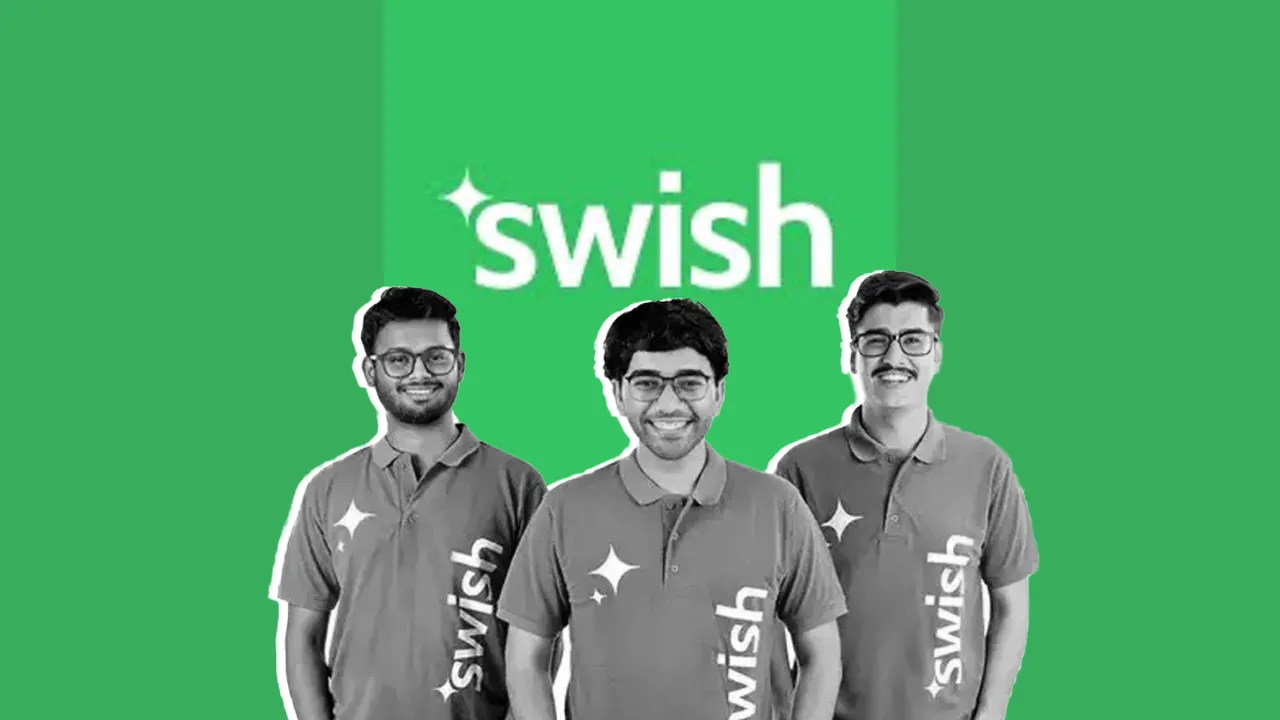

In a fresh boost to India’s evolving quick food delivery landscape, Bengaluru-based startup Swish has raised $38 million in a Series B funding round. The round was led by Hara Global and Bain Capital Ventureswith participation from Accel, Stride Venturesand Alteria Capital.
The latest fundraise values Swish at $139 million post-money—more than doubling its valuation in just a year—and takes its total funding to $54 million. At a time when the ultra-fast delivery model has seen mixed results, this investment signals strong investor belief in Swish’s approach.
Credits: Tech Crunch
A Rapid Rise: $54 Million in Just 14 Months
Swish’s growth story has been nothing short of aggressive. Within just 14 months, the startup has raised three rounds of capital—starting with a $2 million seed round, followed by a $14 million Series A, and now this $38 million Series B.
Notably, its earlier round also saw backing from prominent names like Gaurav Munjal and Sumer Juneja. This consistent funding momentum reflects growing confidence in the startup’s ability to crack the ultra-fast food delivery code.
Today, Swish serves over 20,000 daily users, with demand expanding beyond snacks and beverages to include full meals—an important shift that increases order frequency and ticket size.
Cracking the 10-Minute Delivery Model
Unlike traditional food delivery platforms, Swish operates a vertically integrated model—owning its kitchens, technology stack, and delivery operations. This tight control allows it to promise food delivery within 10 minutes, a claim that has proven difficult for many larger players.
Co-founder and CEO Aniket Shah believes this is the only way to make the model work at scale. By controlling every aspect of the supply chain, Swish ensures consistency, speed, and quality—three factors critical in winning consumer trust.
The company has spent the last 18 months building its supply chain from scratch, focusing on freshness and efficiency. This groundwork now appears to be paying off, with rising consumer adoption and repeat usage.
Where the Money Will Go
The newly raised capital will be deployed across multiple strategic priorities. Swish plans to accelerate its expansion into more neighborhoods and cities, signaling a shift from a single-city focus to a broader urban footprint.
Additionally, the company will invest heavily in kitchen automation and supply-chain infrastructure—two areas that can significantly improve margins and scalability. Strengthening its team is also on the agenda, as it prepares for rapid growth in the coming months.
The goal is clear: not just to compete, but to set a new benchmark in the food delivery experience.
A Tough Market: Lessons from Zomato and Swiggy
Swish’s rise comes against a challenging backdrop. Industry giants like Zomato and Swiggy have already experimented with ultra-fast delivery—with mixed outcomes.
Zomato, for instance, shut down its 15-minute delivery service “Quick” within months due to operational hurdles. It later introduced “Bistro,” but the model has reportedly led to significant losses. Similarly, Swiggy scaled back its rapid delivery initiatives, shutting down its 10-minute service “Snacc” while continuing with a more measured approach through “Bolt.”
These developments highlight a core challenge: ultra-fast food delivery is operationally complex and capital-intensive. Maintaining speed without compromising quality or profitability remains a tough balancing act.
Investor Bet: Expanding the Market, Not Just Competing
Despite these challenges, investors remain optimistic about Swish’s potential. According to Saanya Ojhathe real opportunity lies not just in capturing market share, but in expanding the market itself.
Swish is targeting high-frequency use cases—breakfast, snacks, late-night meals, and solo dining occasions. This positions it differently from traditional food delivery platforms, which are often centered around lunch and dinner orders.
Abhinav Chaturvedi echoed this sentiment, emphasizing that consumers increasingly demand food that is fresh, fast, and reliable—an expectation Swish is aiming to meet consistently.
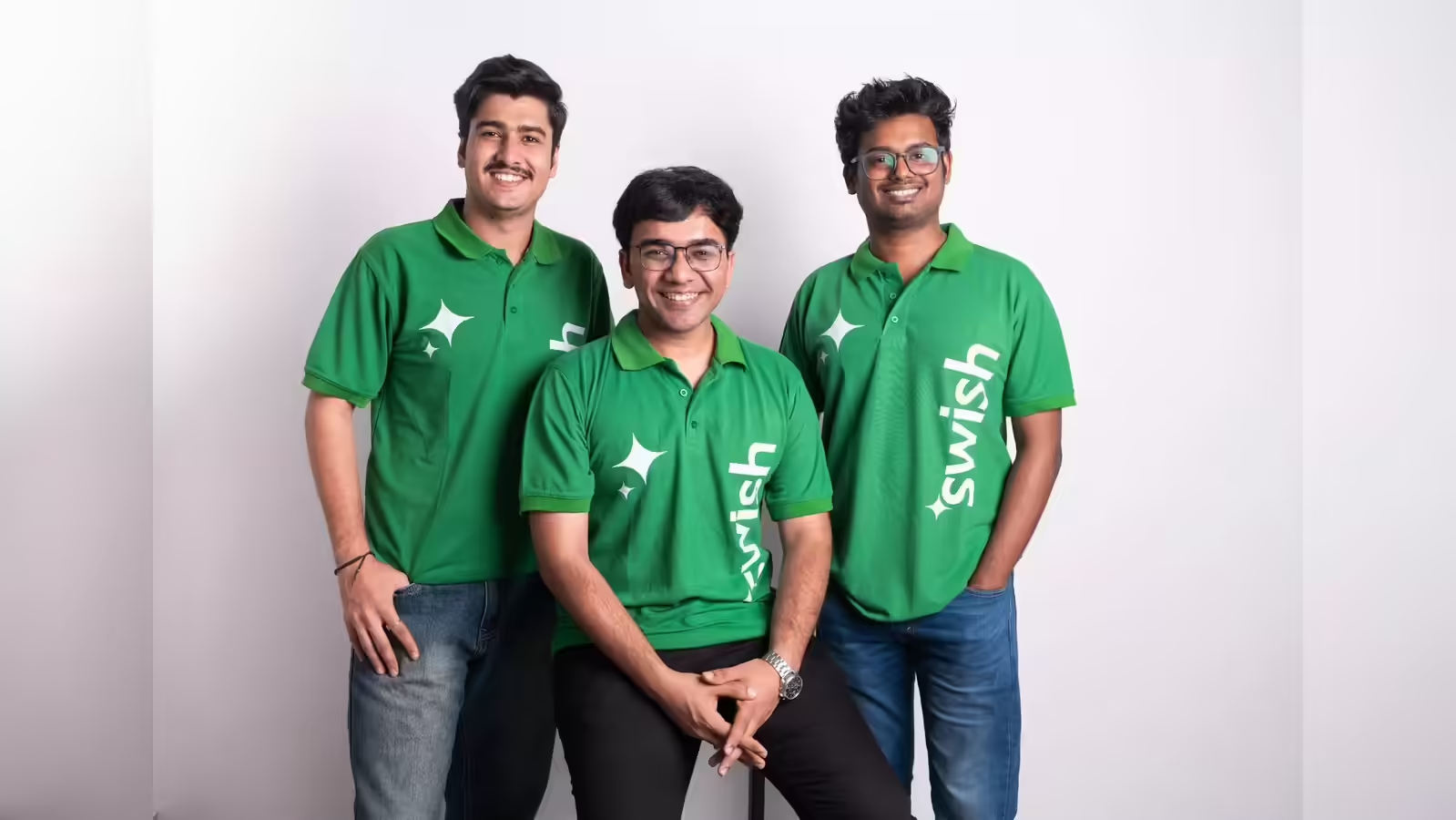
Credits: The Economic Times
The Road Ahead
Swish’s journey is still in its early stages, but its focused execution and vertically integrated approach set it apart in a crowded market. While larger players are recalibrating their strategies, Swish is doubling down on its core proposition.
The coming months will be crucial. If the startup can scale efficiently while maintaining quality and unit economics, it could redefine how urban India consumes food.
For now, one thing is clear: the race to own the “10-minute meal” is far from over—and Swish has just made a powerful move.

Comments are closed.