
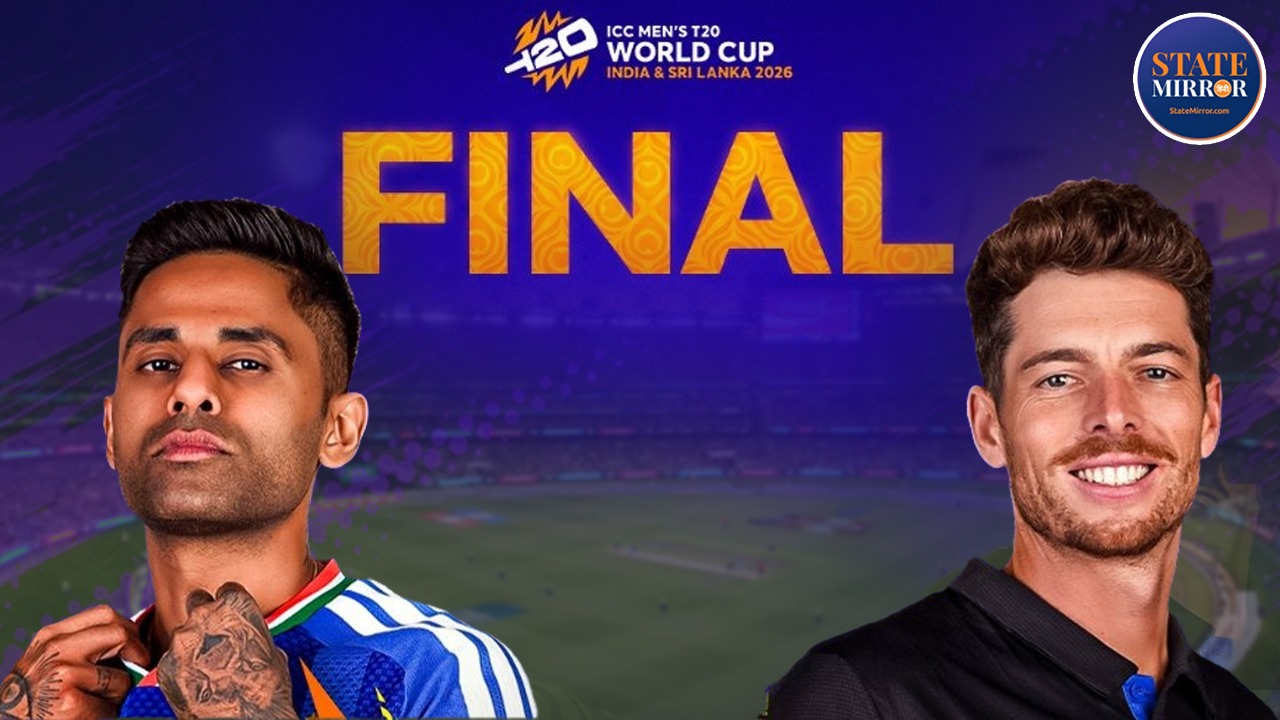

T20 World Cup Final: The stage is set, the heartbeats of crores of cricket lovers are fast and their eyes are fixed on the ground of Ahmedabad. happening on March 8th t20 world cup 2026 The final is not just a match but an opportunity to write history. On one side is India, who wants to create a record by winning the title for the third time, while on the other side is New Zealand, who will enter the field with the dream of lifting the T20 World Cup trophy for the first time.
This tournament started on February 7 with 20 teams and now after a long battle, only two teams are left – India and New Zealand. This great fight between the two can cross all limits of thrill. Although the Meteorological Department has not expressed any possibility of rain, but the game of weather in cricket can change the story at any time. In such a situation, the biggest question is that if the final match is canceled due to rain, then who will get the trophy? Let us understand the rules of ICC.
What will happen if it rains during the India-New Zealand final?
According to the Meteorological Department, there is very little chance of rain in Ahmedabad on the day of the final. Still, the weather in cricket can change suddenly at any time. If rain interferes during the match, ICC has made a provision for extra time to complete the match.
What special arrangements has ICC made for the final match?
An additional time of 120 minutes has been kept for the T20 World Cup final. Its purpose is to ensure that at least both the teams get a chance to play 10 overs each, as this is the minimum condition to make a knockout match official. If the match is stopped due to rain, efforts will be made to complete the game in this extra time.
What if the match is not completed on the same day?
If the match is not completed despite extra time on 8 March, then ICC has kept 9 March as reserve day. On the reserve day, the match will start from where the game was stopped. That means the match will not be played from the beginning again.
If the match is tied then how will the winner be decided?
If the final match ends in a draw, the winner will be decided by a super over. But if both the teams have played at least 10 overs each and the match cannot be completed due to rain, then DLS (Duckworth-Lewis-Stern) method will be applied to decide the winner.
What will happen if the match cannot be held even on the reserve day?
This will be a very rare situation, but if the result of the match is not known due to rain even on the reserve day, then as per ICC rules both India and New Zealand will be declared joint winners. That means the trophy will be shared between both the teams.
Has this ever happened before in an ICC final?
This has happened only once so far in the final of an ICC tournament. In the 2002 Champions Trophy final, the match between India and Sri Lanka could not be completed due to rain. Even the reserve day went in vain and in the end both the teams had to be declared joint winners.
Who will write history on March 8?
India has already reached the T20 World Cup final for the record fourth time and if the team wins, it can win the third title. New Zealand is eyeing its first T20 World Cup. Now the only question is – will the trophy be in the hands of Suryakumar Yadav or will Mitchell Santner create history? Cricket lovers will get the answer to this on the night of March 8.

Comments are closed.