

Over the years, Tamil cinema has trained the mass audience to always root for the loser.
For example, Maan Karate’s protagonist, Peter (Sivakarthikeyan), is the poster boy for this brand of hero. In essence, Peter has no redeeming qualities. He is a lazy and incompetent bloke who lives off a gang that has a premonition that he will win a boxing contest. For a villain, the film features a character who has toiled his entire life to become a professional boxer. Yet, the film encourages the audience to back the hero because he is supposed to be relatable to the masses. Isn’t it easy to imagine a person winning in life without any effort?
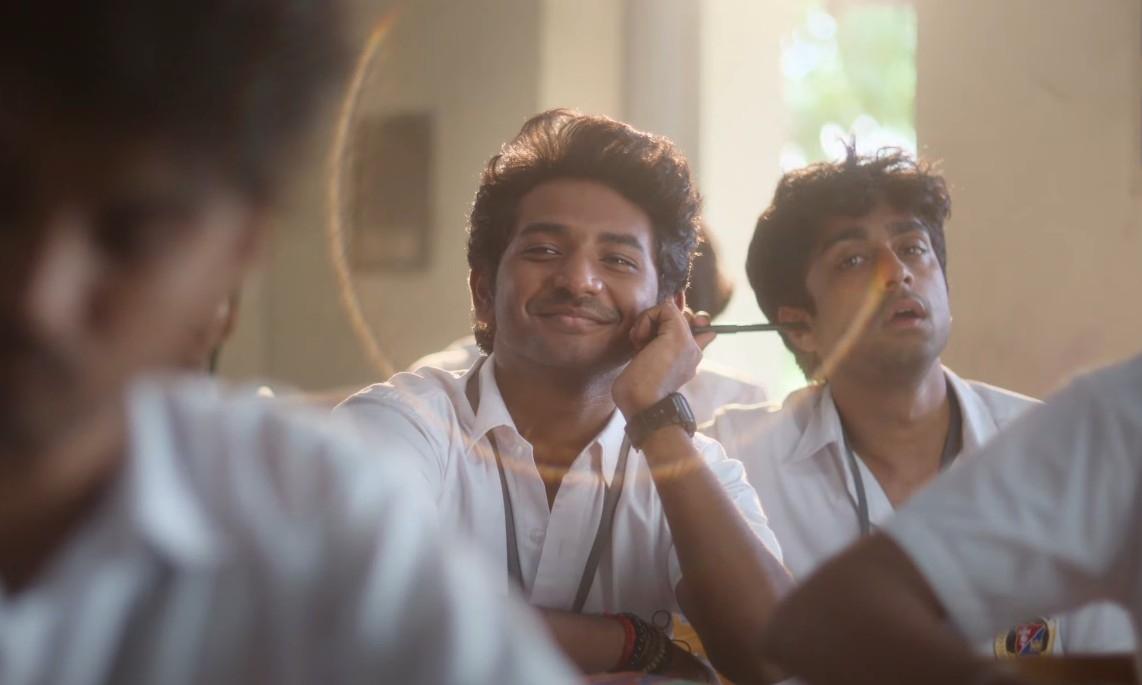
Youthhowever, is not as shallow as Maan Karate. It is a film with greater self-awareness, written and directed by Ken Karunas, who also plays the protagonist.
A hero with no use for anyone
Praveen (Ken Karunas) is a 10th-grade student who clears the board exam with just enough marks. His naive mother (Deva Darshini) spoils him with unconditional love — his total of 200 marks out of 500 in the exam makes her elated. On the other hand, Praveen’s father, Unni Krishnan (Suraj Venjaramoodu), detests his son and discourages him from continuing with his education. He claims Praveen is up to no good and that he is better off working in the family business, a neighbourhood bakery.
However, Praveen has no regard for either of them, and his mission is to find the love of his life, which he confesses to the audience, breaking the fourth wall, because… well, it is a “youthful” film.
Also Read: Dhurandhar | The Revenge has a screenplay mired in clichés, but plays to the gallery
Praveen has a reputation among girls for being a nuisance. Yet, he finally manages to impress a girl from a neighbouring class named Preshika (Meenakshi Dinesh), who happens to be an irregular student like Praveen and the gang. They bond during their punishment of standing outside the classes. Love blossoms. Songs are sung. Preshika then goes out of town for a vacation, and along comes Sonal (Priyanshi Yadav), who claims to have been following Praveen for a long time. Not heeding his friends’ good advice not to two-time, Praveen ends up losing both Preshika and Sonal.
Tokenism and tolerance
And then comes Kanaga (Anishma Anilkumar), the studious girl, the annoying kind who reminds teachers about forgotten homework. Praveen falls in love again, because this time the love feels real; she seems to be a girl from his world. Unlike Preshika, whose name itself is mocked at for being hard to pronounce, and Sonal, a North Indian girl with an accent, Kanaga strikes a chord with Praveen; she becomes the girl he takes home to meet his mother. The parochialism here is subtle but evident. The film never questions why the right girl happens to be the familiar one, the one whose name doesn’t need explaining.
Also Read | Spider-Man Brand New Day trailer: Peter Parker is back to square one
While there are efforts to redeem some of the clichés, giving a heroic twist to a comic character, breaking the template, and showing caution around infidelity, it only amounts to tokenism. Youth doesn’t bother much about anyone else other than the hero. Preshika and Sonal stop existing in the film the moment Kanaga enters the picture. Even Praveen’s friends are used as laugh tracks, reacting to the hero’s every action. Sometimes they behave like a rap battle crowd reaction meme — honestly, it is quite often funny. And even the good-natured Kanaga is reduced to being an opportunist, because nothing stands before a mother’s love, the film claims. And it is bewildering to suddenly see the girl and love become villains, as the hero realises the only people who can tolerate all his shortcomings are his parents. It mistakes tolerance and parental duty for unconditional love.
Shallow message
The film is fun as long as it doesn’t take itself seriously. The silliness of the characters is easily pardonable, given their age and their environment. But it becomes a problem when the film also promotes such shallowness as equating a parent’s love with school infatuation. For a film titled Youthits ‘messages’ are platitudes. As far as form goes, the film doesn’t bother hiding its seams. Every scene is shot as a standalone segment, perfectly cut to cater to reels. Maybe that’s the intention, catering to a reduced attention span. That, at least, is more youthful about the film.

Comments are closed.