
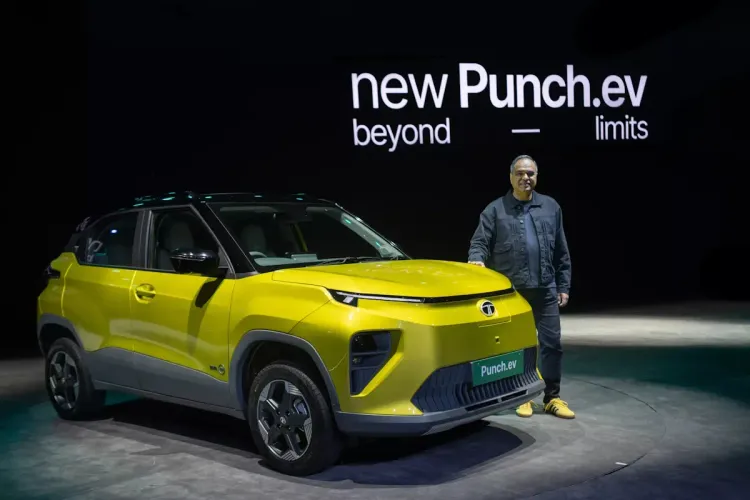

Tata Motors is deliberately sacrificing a portion of its profit margins on electric vehicles to drive long-term adoption and sustain volume growth. Shailesh Chandra, managing director of Tata Motors Passenger Vehicles Ltd and Tata Passenger Electric Mobility, confirmed that the company is absorbing some costs right now to ensure electric vehicles become a mainstream choice. This calculated move is aimed at breaking the pricing barriers that currently limit electric car sales, particularly in the highly competitive budget segment.
Despite taking a margin hit, the company’s electric vehicle business is maintaining a stable financial position. Chandra noted that the overall profitability of the electric vehicle division is not very far from the traditional internal-combustion engine passenger-vehicle business. He also pointed out that heavy discounting is currently prevalent in the petrol and diesel car market. Because ICE vehicles are also seeing margin compression due to these discounts, the financial dynamics between the electric and traditional vehicle segments are quite similar at the moment.
Chasing Volume Over Short-Term Profit
The decision to accept lower margins is closely tied to a much larger goal of dominating the electric vehicle transition over the next few years. Tata Motors is targeting an overall electric vehicle penetration of 30 percent across its entire passenger-vehicle portfolio by 2030. Achieving this ambitious target requires aggressive and disruptive pricing, especially in the entry-level space where buyers are highly sensitive to up-front acquisition costs.
The shift toward clean energy is already highly visible in the company’s current sales data. For the Punch micro-SUV, electric variants currently account for 10 percent of total sales. When combined with the factory-fitted CNG variants, the total clean-energy penetration for the Punch stands at a massive 43 percent. Tata Motors expects the EV share of the Punch to increase to between 15 and 20 percent in the near-term, eventually stabilizing at around 25 to 30 percent by the end of the decade.
Regional data shows that the strategy of keeping prices competitive to boost sales is already yielding strong results in specific pockets. In markets like Jaipur and Kerala, electric vehicles already make up 30 to 40 percent of overall Tata passenger-vehicle sales. This exceptionally high regional adoption is primarily driven by dense urban clusters, reliable home-charging setups, and the increasing use of solar power by consumers to offset charging costs.
Managing Competition And Capacity
The electric vehicle market is expanding rapidly, and Tata Motors is no longer operating without serious rivals. With Maruti Suzuki recently launching its first electric vehicle, the competition for the budget and mid-range EV buyer is heating up. However, Chandra views the entry of rival brands as a highly positive development for the entire industry.
He highlighted that if the top six car manufacturers commit heavily to electric vehicles, the overall segment will expand significantly. Data from recent financial periods shows that the entry of new players and fresh products helped the broader EV industry grow by 75 to 78 percent. During that exact same timeframe, Tata Motors saw its own EV volumes grow by about 45 percent. A larger market pie ultimately benefits the established market leader.
To support this projected volume growth without burning cash unnecessarily, the carmaker is closely managing its production capabilities. Tata Motors currently has an installed passenger-vehicle capacity of 900,000 units per annum, which can be smoothly scaled up to one million units. The manufacturing plants are currently running close to full utilization.
Rather than rushing into new greenfield investments, the immediate plan is to de-bottleneck existing facilities, utilize partner plants like Ranjangaon, and improve production flexibility. By keeping fixed costs in check on the manufacturing side, the company can better absorb the margin sacrifices needed to keep its electric cars competitively priced.

Comments are closed.