
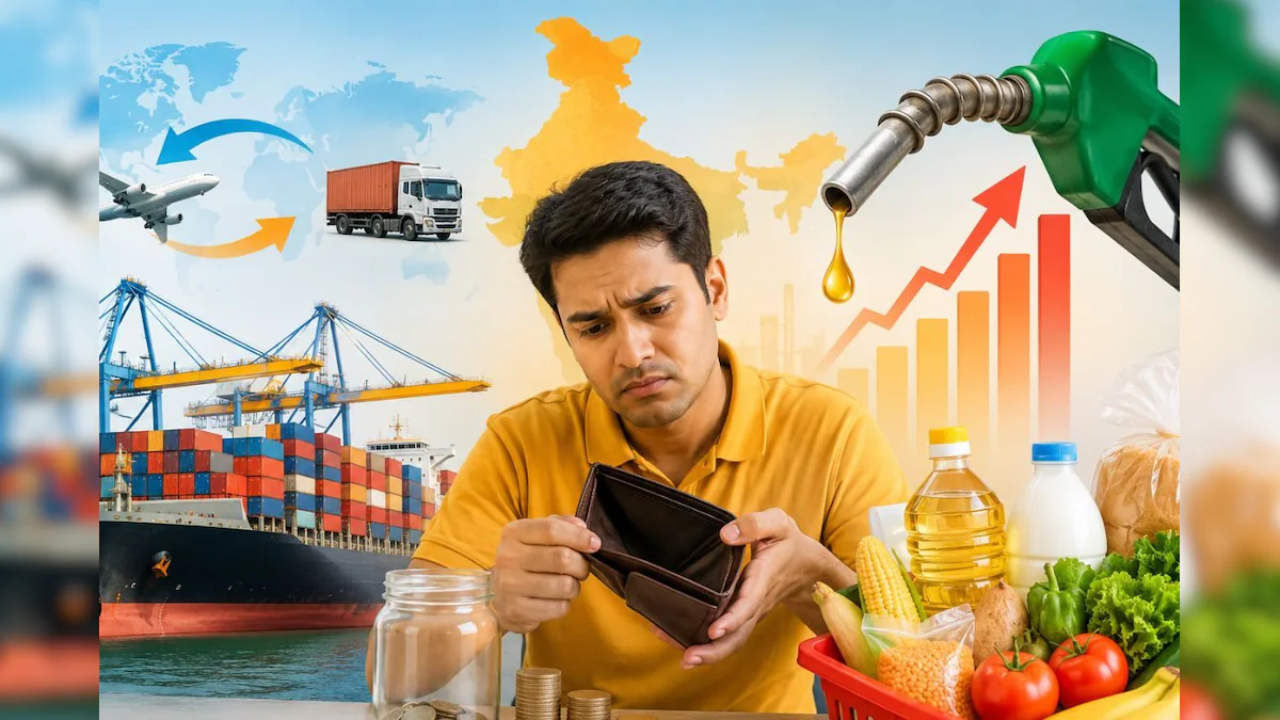
Tax increases abroad, but why does the impact fall on our pockets? What exactly is the game of Import Duty? Let’s understand

- The role of Export-Import is very important in the economy
- Impact of rising prices of import goods on the kitchen
- Why does the increase in tax increase inflation?
What is import duty : The role of Export-Import is very important in the economy of any country. Export means sending goods from India to other countries, while Import involves bringing goods from abroad into the country. India exports a wide variety of products; But it still depends on other countries for many essential commodities like edible oils, certain pulses, electronic goods and crude oil. When the government releases export-import statistics, it shows how much a country is selling to the world and how much it is buying from abroad. Ultimately, these statistics affect inflation, the trade deficit and the spending patterns of the general public. But let’s understand exactly how it works.
Low cost EMI can be a no-brainer for you, know ‘these’ things before buying a TV or Phone
Impact of rising prices of import goods on the kitchen
India meets a major portion of its domestic requirements through imported edible oils. Commodities such as palm oil, sunflower oil, and soybean oil are heavily imported. If the prices of these goods increase in the international market, or if the government increases the import duty levied on them, then the import duty of the companies increases. This additional cost is gradually passed on to the consumer. This has a direct impact on household kitchen budgets. It is precisely for this reason that the prices of cooking oils, pulses and other essential commodities often rise suddenly even when the general public feels that there is actually no shortage of these commodities in the country.
Why does the increase in tax increase inflation?
When governments raise taxes on imported goods, the motive is often to boost domestic industries. But this action also has a secondary effect on the common consumer. For example, if the tax on imported edible oils is increased, companies are forced to buy the same oils at a higher price. Then, this increased price is charged to consumers in the retail market. Similarly, an increase in crude oil prices may increase petrol and diesel prices, making transportation more expensive. When the cost of transport rises, the prices of vegetables, milk, pulses and other daily necessities also start to rise. This entire chain of events leads to an increase in retail inflation.
Direct pressure on the general budget
Middle-class and low-income households are most affected by inflation. If edible oil, pulses, gas cylinders and other daily necessities become expensive, the monthly budget of families starts collapsing. In many households, the situation becomes so dire that people are forced to either cut back on their spending or tap into their savings. According to experts, given the heavy dependence on imports, the effects of changes in the international market are felt rapidly in India’s domestic market as well. For this very reason, economic factors like the value of the dollar, global market trends and government tax policies directly affect the pocketbook of the common man.
It is essential to understand Export-Import statistics
Economic experts assert that export-import statistics are not only for businessmen or investors; So it is very important for common people too. If the volume of imports increases continuously, especially if the flow of essential goods from abroad increases, it may create a risk of inflation in the future. Conversely, an increase in exports brings in foreign exchange to the country and strengthens the economy. In a nutshell, foreign trade statistics give an indication of what could affect your kitchen expenses, fuel prices and family budget in the future. As a result, financial news is no longer confined to big business; So they are inextricably linked with the daily life of every family.
Buy vs Rent: Is buying a house profitable or living on rent? What is the 1% Rule of Real Estate, which can save you millions of rupees!

Comments are closed.