
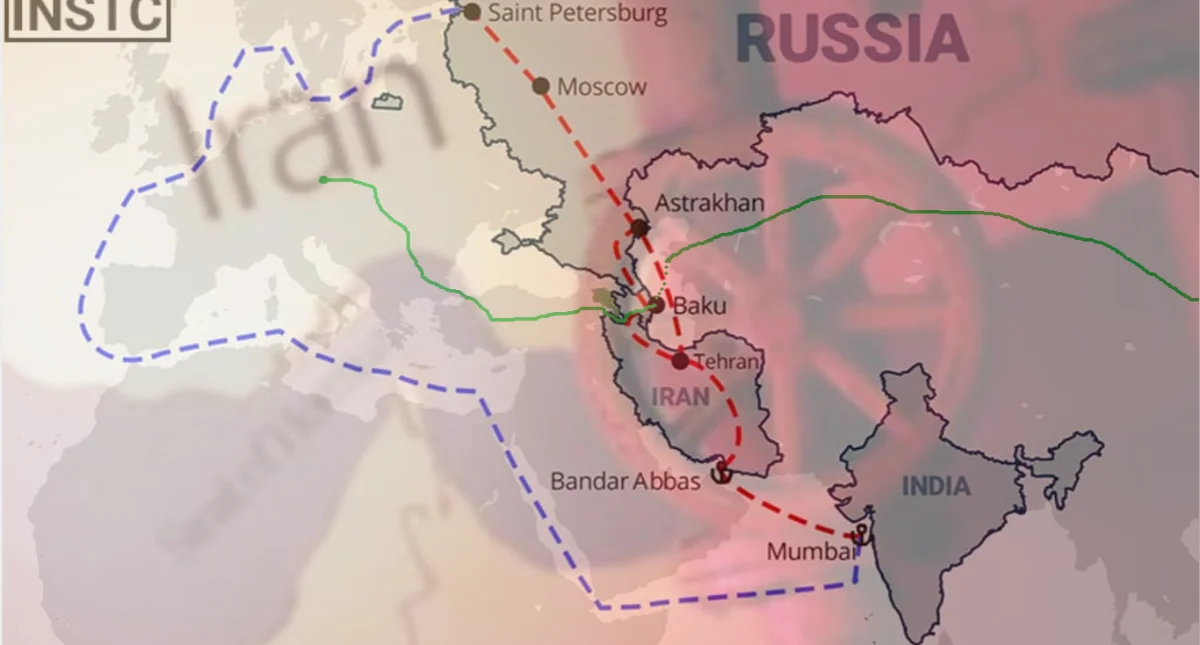

Iran’s “sanctions-survival” strategy is now a hardened geopolitical reality. By developing powerful trade routes through Russia, Central Asia, and China, Tehran asserts that blockades only solidify its position. The Caspian Sea serves as the strategic backbone of this claim, linking Iran to the Russian Volga corridor and wider Eurasian networks.
Alternate Corridor Logic
Tehran’s strategy relies on bypassing the vulnerable Strait of Hormuz. In the event of southern maritime disruptions, trade is rerouted through the International North-South Transport Corridor. This system connects Russian Baltic ports to the Iranian coast and onward to the Indian Ocean. Fact-checks confirm that the Russian-funded Rasht-Astara railway link is nearing completion as of April 2026, eliminating the need for slow, road-based transfers and securing a seamless rail connection to Moscow.
Caspian Sea Value
The Caspian offers a secure inland gateway away from the volatile southern routes. Iranian officials now treat this northern body of water as a top-tier priority on par with the Persian Gulf. It facilitates energy cooperation and port modernization, allowing Iran and Russia to utilize sanctions-resistant shipping. By leveraging these rail, sea, and road links, Iran is effectively turning its northern geography into a diplomatic shield.
Strategic Reality
While these routes prevent total isolation, the claim that a blockade makes Iran “stronger” is primarily political. Alternative corridors are currently slower and have less capacity than deep-water southern ports. However, the strategy successfully converts pressure into bargaining power, proving that Tehran has viable alternatives to the Western-led financial order.

Comments are closed.