

When Elon Musk finally brought Tesla to India in July 2025, expectations were sky-high. The country is the world’s third-largest car market, with a rapidly growing base of affluent consumers and increasing interest in electric mobility.
Yet, the numbers tell a very different story.
Tesla managed to sell just 342 cars in India in the final six months of FY26, after beginning deliveries in late September 2025. That translates to roughly 57 units a month—far below what analysts typically expect from a brand known for creating massive launch hype.
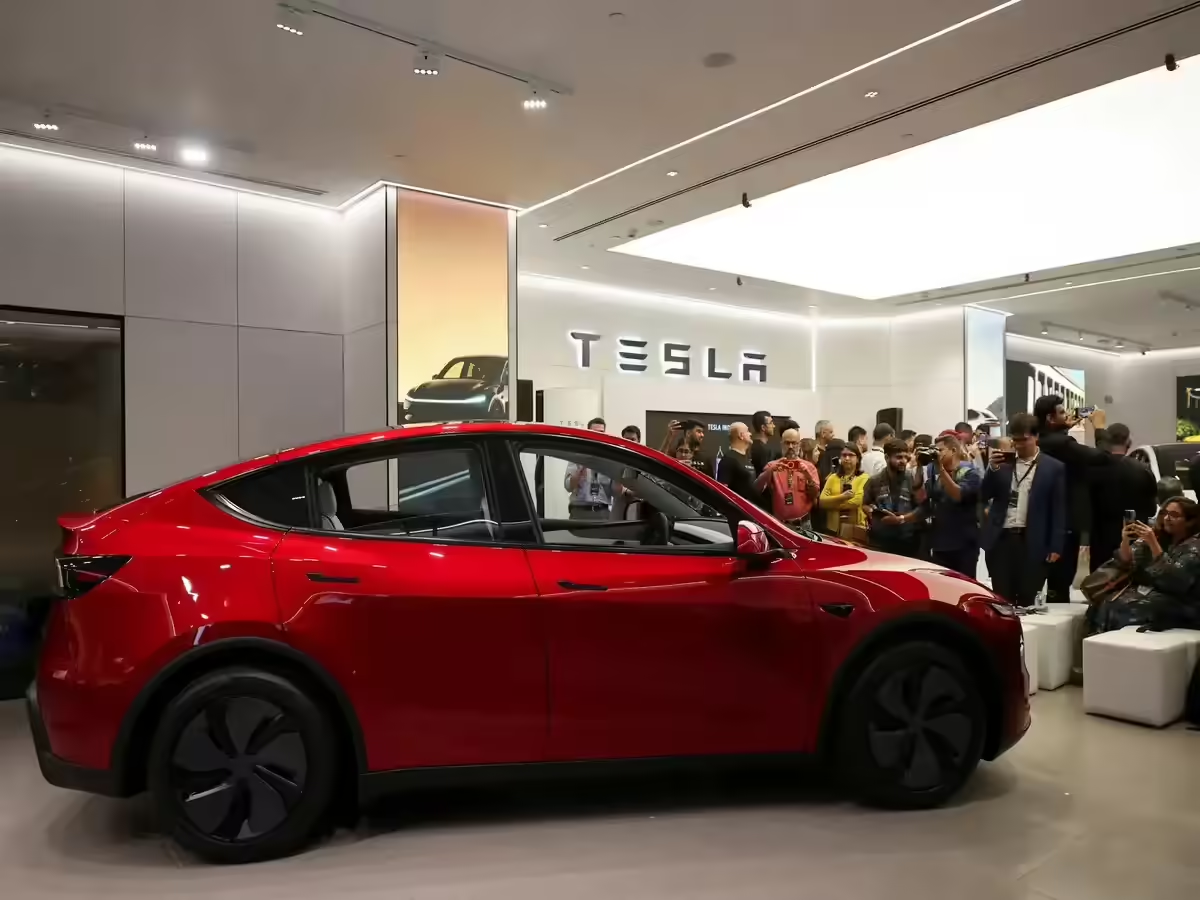
Even the recent launch of the six-seater Model YL on April 22, Tesla’s first major product move in India, hasn’t yet shifted the narrative in any meaningful way.
Falling Behind Other New Markets
What makes India’s performance particularly striking is how it compares with Tesla’s other recent market entries.
In Colombia, where Tesla began operations in November 2025, the Model Y surged to become the best-selling car in March, clocking nearly 1,800 units in a single month—five times India’s six-month total.
Malaysia presents an even stronger case. Since entering in 2023, Tesla has built steady momentum, with around 7,200 Model Y and Model 3 units dispatched in 2025 alone—averaging about 600 cars a month.
Even Chile, a relatively smaller market entered in 2024, outperformed India with around 820 deliveries in 2025, averaging 68 units monthly—still higher than India’s pace.
For a brand that typically thrives on early adopter enthusiasm, India’s muted response stands out.
Dominance of German Luxury Giants
One of Tesla’s biggest hurdles in India is the deeply entrenched presence of legacy luxury automakers like BMW and Mercedes-Benz.
These brands have spent decades building trust, dealership networks, and aspirational value among Indian buyers. More importantly, they have adapted their strategies to local conditions.
BMW currently leads India’s luxury EV segment, selling around 295 electric vehicles per month in FY26. Mercedes-Benz follows with about 87 units monthly—both comfortably ahead of Tesla.
Their advantage lies not just in brand equity, but also in local assembly operations, which significantly reduce costs.
The Pricing Problem
Tesla’s biggest disadvantage in India is pricing—arguably its most critical barrier to scale.
Unlike its German rivals, Tesla imports vehicles from China. This subjects its cars to steep import duties ranging between 100% and 110%, making them significantly more expensive for Indian buyers.
In a price-sensitive market like India, even in the luxury segment, this gap matters.
While the country has nearly a million dollar millionaires, according to the UBS Global Wealth Report 2025, buyers still weigh value, after-sales service, and brand familiarity heavily before making high-ticket purchases.
Limited Competition, Yet Limited Gains
Interestingly, Tesla is not facing its fiercest global rival, BYD, in India at full strength due to regulatory constraints on Chinese firms.
Yet, the absence of aggressive competition hasn’t translated into stronger sales.
This suggests that Tesla’s challenges are less about rivalry and more about structural issues—pricing, infrastructure, and localisation.
Playing the Long Game
Despite the slow start, Tesla is not hitting the brakes.
The company has made it clear that India is a long-term strategic bet rather than a short-term volume play. Tesla India’s country head, Sharad Agarwal, has emphasized that the current phase is about building presence, not chasing numbers.
Tesla is expanding its footprint beyond existing hubs like Mumbai, Gurugram, Pune, and Delhi, with plans to enter Bengaluru, Hyderabad, Chennai, and Ahmedabad.
At the same time, it is investing in charging infrastructure and service networks—critical components for EV adoption in India.
Credits: The Economic Times
The Road Ahead
The next phase of Tesla’s India journey will likely depend on three key factors: localisation, pricing adjustments, and ecosystem development.
Local manufacturing could be a game-changer, helping Tesla reduce costs and compete more effectively. Without it, the brand risks remaining a niche player in a market that demands both aspiration and affordability.
Competition is also set to intensify, with new entrants like Tata Motors-owned Land Rover preparing to launch electric SUVs in India.
For Tesla, the message is clear: India is not a market where brand alone guarantees success.
It’s a complex, evolving landscape—one that rewards patience, adaptability, and deep local integration.

Comments are closed.