
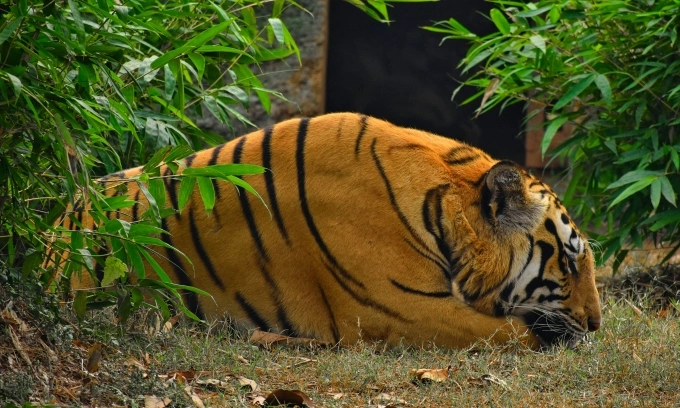

The Department of Disease Control said the workers, based at Tiger Kingdom facilities in the Mae Rim and Mae Taeng districts, cared for or were in close proximity to the tigers between Feb. 8 and 19, Khaosod reported on Feb. 23. They will remain under medical surveillance for at least 21 days. No abnormal symptoms have been reported so far.
Officials have confirmed that the pathogens found in the dead tigers, canine distemper virus (CDV), Mycoplasma bacteria and feline parvovirus, are not known to spread to humans. But the Ministry of Public Health is maintaining precautionary measures, advising residents to avoid contact with sick animals, eat thoroughly cooked food and wash hands frequently.
The outbreak began on Feb. 8 at Tiger Kingdom Mae Taeng, where 31 tigers fell ill at once. The first death came the next day. The crisis peaked on Feb. 12 and 13, when 45 tigers died in just 48 hours across both sites, according to a timeline released by Protected Area Regional Office 16. By Feb. 18, the toll had reached 72: 51 at Mae Taeng and 21 at Mae Rim, wiping out nearly a third of the parks’ 246 tigers.
The Chiang Mai Provincial Livestock Office said tests confirmed CDV combined with Mycoplasma bacteria. Preliminary results also detected feline parvovirus, also known as feline panleukopenia, a highly contagious disease that attacks the digestive system and immune response, the Bangkok Post reported. Avian influenza was ruled out.
But the official explanation has not gone unchallenged. Wisit Arsaithamkul, a veterinarian who was part of the team performing necropsies on the dead tigers, posted on Facebook on Feb. 22 that he was troubled by the disease surveillance and epidemiological management at the sites.
He and other local veterinarians suggested the infections may have entered through contaminated raw chicken meat from a private farm, according to Thai PBS. Wisit warned that sweeping the issue aside would prevent any improvement in the industry.
The Department of Livestock Development has also pointed to inbreeding among the captive tigers as a factor that likely weakened their immune systems. Officials noted that tigers rarely show visible signs of illness until a disease is already severe, delaying early detection.
Authorities initially cremated the carcasses on-site but switched to burial when cremation facilities ran short, according to Kritsayam Kongsatree, director of Conservation Area Management Region 16. Each burial site at the Mae Taeng compound was flagged and marked with the tiger’s identification number, Thairath reported. No parts such as skin or teeth were permitted to be removed.
The 124 surviving tigers have been relocated to a quarantine center in Mae Taeng, where they are classified into five severity levels from asymptomatic to critical. Each group is receiving tailored treatment including immune boosters, fever reducers, anti-seizure medication and antibiotics, Thai PBS reported. Vaccination campaigns are being prepared.
Both Tiger Kingdom facilities remain closed, with disinfection ongoing. The parks, operated by Khum Sue Trakarn Ltd., will only reopen once the outbreak is fully contained. The company also runs Tiger Kingdom in Phuket and three Tiger Park attractions in Phuket and Pattaya.

Comments are closed.