
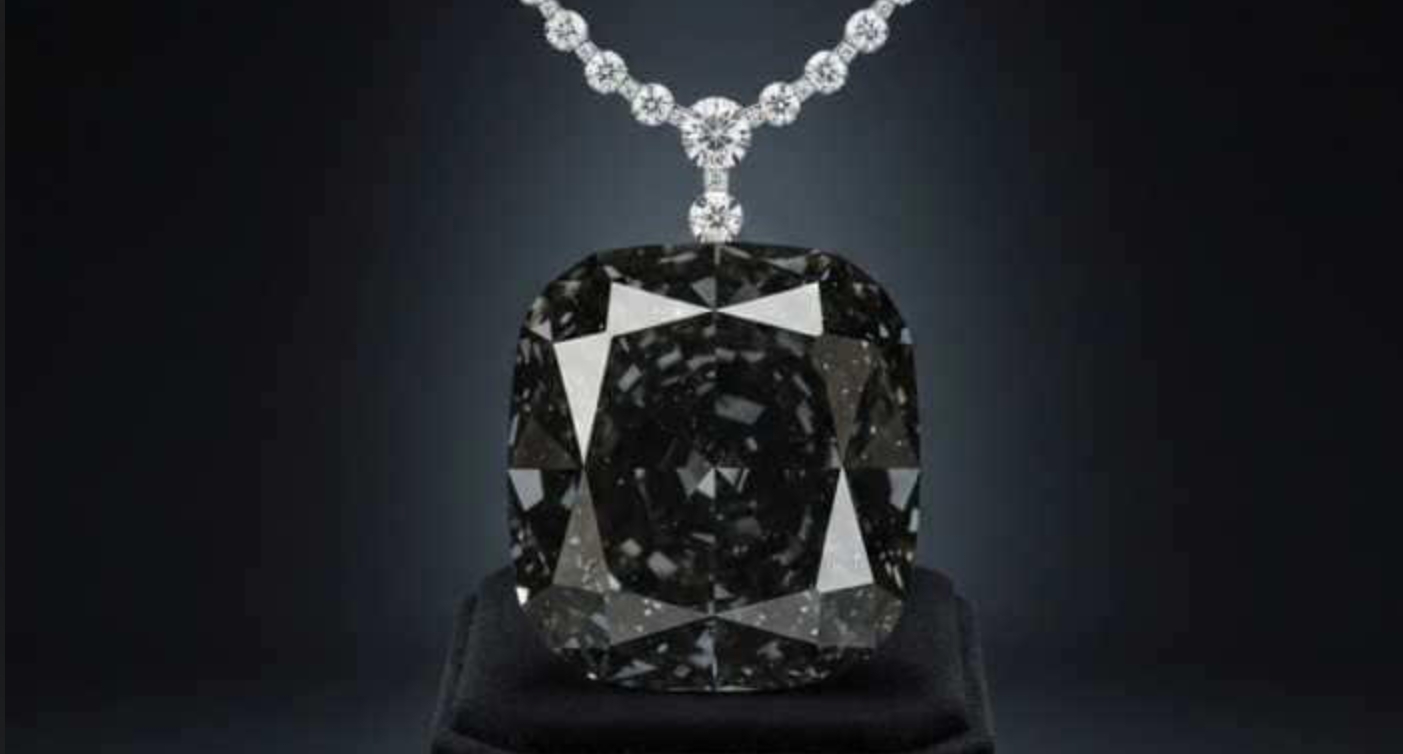

The **Black Orlov**, a 67.50-carat cushion-cut fancy black diamond, is the seventh largest known black diamond. It is set in a platinum pendant surrounded by white diamonds and hangs from a necklace, often shown in museums such as the American Museum of Natural History.
Its alleged curse comes from an apocryphal story: it was a 195-carat uncut stone stolen as the “Eye of Brahma” from a Hindu statue in Pondicherry (Puducherry), India in the 19th century, which was believed to bring bad luck to its owners.
Gem experts completely reject the idea of Indian theft. There is no historical record of production of black diamonds (carbonado) in India, which mainly come from Brazil or the Central African Republic. Black is considered negative in Hindu culture, so it is unlikely to be used in a temple. There is no evidence of theft by the Pondicherry temple or the Jesuits/monks.
There is no verification of the tragedies fueling the curse:
– Reportedly dealer **J.W. Paris** jumped from a New York skyscraper in 1932 after selling it – no official record exists.
– Russian princesses **Nadia Vygin-Orlov** (for whom it is named) and **Leonila Galitsyn-Baryatinsky** reportedly committed suicide by jumping in the 1940s – no historical princesses match them, and one eponymous princess died naturally in 1918.
In the 1950s, owner Charles F. Vinson cut the stone into three pieces to “break” the curse (the largest piece became the modern Black Orlov) – according to experts, this was a marketing ploy. Subsequent owners, including Dennis Petimezas (2004–2006), reported no misfortunes.
The “Curse” of Black Orlov is a 20th century invention that blends superstition and propaganda to increase rarity and value. Its opaque, metallic luster is real, but its dark story is fabricated.

Comments are closed.