
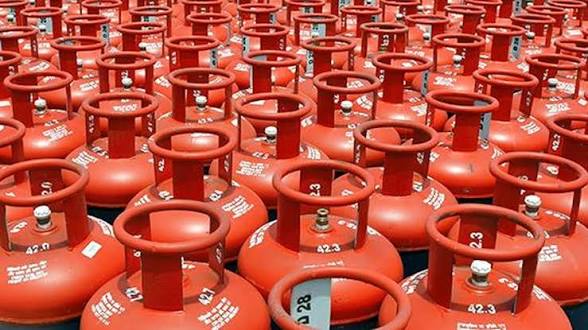

The blue flame in Indian kitchens is flickering, not for a lack of culinary ambition, but due to a geopolitical firestorm thousands of miles away.
As the conflict in West Asia intensifies—specifically the fallout from tensions involving Iran and the critical Strait of Hormuz—India is grappling with an escalating Liquefied Petroleum Gas (LPG) crisis.
What began as a distant tremor in global energy markets has transformed into a high-pressure situation for over 33 crore domestic consumers and the backbone of India’s hospitality industry.
Boiling Over: The Bengaluru and Chennai Emergency
The crisis has hit the commercial hubs of South India with the force of a sudden pressure cooker whistle. In Bengaluru, the situation reached a breaking point on March 9, 2026, when the Bangalore Hotels Association warned that many of the city’s 24,000 eateries might be forced to shut down starting March 10 due to a total halt in commercial LPG supplies.
The association highlighted that nearly 70% of hotels were already struggling with irregular stock.
Parallelly, the Tamil Nadu Hotels Association in Chennai has petitioned the Prime Minister’s Office, warning of a “dire shortage” that threatens the livelihoods of lakhs of workers. Hoteliers fear that distributors are diverting stocks to the black market, citing war-time scarcity as a convenient cover.
For a region that relies heavily on “eating out” for daily sustenance—from students to medical professionals—the prospect of darkened kitchens is a looming social emergency.
Chokepoints and Cargoes: The Source of the Shortage
India’s vulnerability is a matter of geography and math. The country imports roughly 60% to 65% of its LPG requirements. Crucially, about 85% to 90% of these imports must navigate the Strait of Hormuz, the narrow waterway between Iran and Oman that is currently a theatre of war. With Iran effectively closing or disrupting this chokepoint, cargoes are “trapped” in the Persian Gulf, unable to reach Indian ports.
Historically, Qatar has been India’s largest supplier, but its facilities have recently come under attack, leading to a temporary suspension of cargoes.
While the government has invoked emergency powers under the Essential Commodities Act, 1955, directing domestic refiners to maximize LPG production from propane and butane streams, domestic output (roughly 12.8 million tonnes) cannot immediately bridge the 31.3 million-tonne demand gap.
The Price of Conflict: A Heavy Bill for Households
The “war premium” has already arrived at the doorstep. In March 2026, oil marketing companies (OMCs) like IOCL and BPCL announced significant price hikes:
Domestic (14.2 kg): Prices rose by ₹60, bringing a cylinder in Delhi to ₹913 and in Chennai to ₹928.50.
Commercial (19 kg): Prices surged by a staggering ₹114.50 to ₹115, pushing costs in Chennai to ₹2,043.50.
To prevent panic-buying and hoarding, the government has implemented a mandatory 21 to 25-day lock-in period between refills for domestic users.
This “rationing-by-stealth” aims to stretch current stocks, which officials estimate can last between 25 to 30 days.
Procurement Pivots and Prospects
India is now “scouting for alternative suppliers for everything”. Diversification efforts are underway, with shipments being secured from more distant—and expensive—geographies like the United States, Canada, Algeria, Norway, and Australia.
While these sources offer a lifeline, they come with higher freight costs and longer transit times; US shipments, for instance, often take weeks to arrive compared to the short hop from the Gulf.
The trend for the coming months is one of cautious “demand management.” If the Strait of Hormuz remains blocked for more than four weeks, analysts warn that even domestic rationing might tighten further.
For now, the Indian government remains “reasonably comfortable” with its 25-day strategic reserve, but for the hotelier in Bengaluru or the homemaker in Chennai, the comfort is cold as they watch the global burner with a wary eye.

Comments are closed.