


Highlights
- Subscription gaming reshapes industry economics with recurring revenue and broad access.
- Ownership concerns persist: preservation, autonomy, and cultural value remain critical.
- Hybrid future likely: subscriptions dominate discovery, ownership sustains long-term play.
The quick rise of subscription gaming services has completely changed the traditional beliefs regarding players’ access and interaction with video games. Microsoft’s Xbox Game PassSony’s extended PlayStation Plus tiers, and third-party catalogues such as EA Play and Ubisoft+ have brought the industry into a moment of structural transition. The key issue now is not whether these services will have an impact on the market but whether they are the ultimate model for the future. The economic and cultural aspects involved are quite significant: the financing of video games, their consumption by players, and the digital-first scenario that may or may not still call for traditional ownership to be relevant.
The Commercial Rise of Subscription Gaming
Subscription services have transitioned from experimental add-ons to major economic pillars for platform holders. Xbox Game Pass, the most mature example, now generates close to $5 billion annually, an extraordinary figure for a service only a few years old. Microsoft’s last reported subscriber count stood at approximately 34 million, and industry estimates suggest sustained growth as the service spreads across console, PC and cloud platforms.
Sony goes about the situation differently in terms of structure but similarly in terms of ambitions. Its redesigned PlayStation Plus scheme takes the old online-services tier and adds the new “Extra” and “Deluxe/Premium” tiers, which provide extensive game libraries and cloud-streaming options. Although Sony has not done the same as Microsoft in terms of putting first-party blockbuster titles in the subscription right from the start, it has drawn long-term subscribers with its vast back catalogue. The two companies have set a new industry standard: access instead of ownership is now a major aspect of platform economics, and thus sales revenue will be steady and recurring.
Competitors’ subscription service,s the third-party will boost the above-mentioned trend of access through subscription rather than ownership. EA Play and Ubisoft+ give publishers the option to have direct control over the management of their catalogues, while bundling with Xbox Game Pass and PlayStation Plus opens up new markets. Research predicts that there will be a constant year-on-year growth in subscription gaming as recurring revenue models continue to outperform the traditional single-purchase sales pattern.
Why Players Gravitate Toward Value-Driven Models
The growth of subscriptions reflects a shift in consumer behaviour. Video games have become more expensive, and the cost of high-end hardware remains prohibitive for many. Subscriptions compensate for these barriers by reducing the marginal cost of experimentation. Access to hundreds of games for a predictable monthly fee encourages exploration of genres a player might otherwise ignore.
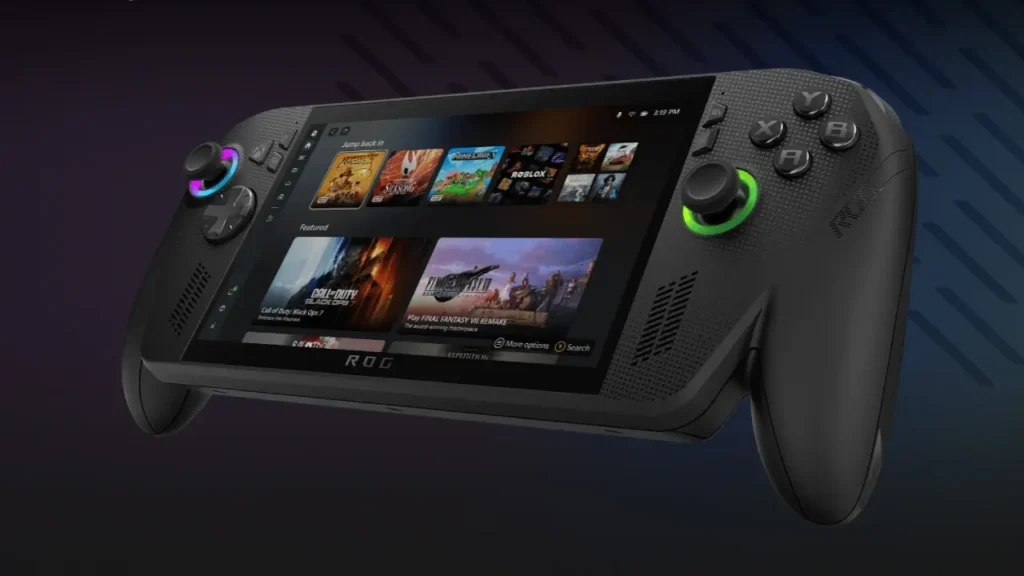
Subscriptions are no-risk options for the purchase of the gaming ecosystems that are usually expensive for beginners or occasional users. Non-casual players would still want to play demos of the games before they go for the full price. The combination of comfort, low cost and versatility reminds us of the past changes in the music and film industry that streaming made accessible to the point of disconnecting content consumption from ownership.
The same goes for the platforms’ point of view; there is no doubt about its validity. Revenue that can be anticipated and is recurring can easily be integrated into financial planning, investment in exclusive titles over a long period is justified, and user retention is improved. The advantages of subscription: discounts, cloud plays, cross-device syncing—all contribute to ecosystem lock-in and make switching to a competitor less appealing. The strategic reasoning is similar to that of the broader “service-ification” of digital markets, where continuous interaction is more crucial than individual transactions.
Ownership in Question: Cultural and Legal Concerns
Yet this value proposition comes with trade-offs, the most visible being the erosion of permanent ownership. In subscription ecosystems, licences supersede traditional consumer rights. Access exists only as long as the subscription remains active, and catalogue rotation can remove titles with little notice.
For those who consider replayability for a long time, modding, or even game preservation, the main aspects of the game, then the model may come off as an unsettling one. Not to mention, even buying digital copies other than subscriptions might need the server to validate the purchase and the use of DRM, which would, in effect, make the ownership even more complicated. However, subscriptions will magnify this reliance, making the players prisoners not of the platform alone but also of the company’s decision-making with respect to the selection, licensing and content rotation.
Developers and the Economics of Discovery
Subscriptions’ impact on developers is just as intricate as their effects on the publishers’ sides. Big game developers are usually more than happy to take the additional revenue that comes from licensing agreements with the platform owners. For these projects with massive budgets, being included in a subscription service can partially cover the costs and also provide a guaranteed income floor. For instance, a day-one launch on services like Xbox Game Pass can instantly make a game available to tens of millions of players, which might lead to the sales of DLC, microtransactions, or even interest in sequels.
On the other hand, the indie developers are never sure about the subscription model. Very few developers would speak up against the visibility that comes from the sometimes-difficult-to-achieve-in-crowded-digital-stores placement under subscription. Still, the same number of developers who see subscription availability as a way to kill direct sales, especially during the launch period, when sales are most crucial, is also quite large. What is more, subscription revenues’ sharing policies are seldom easy to comprehend. A lot of things determine the ranking of a game, like the algorithms of the platforms, their editorial choices, and marketing partnerships, which, in turn, give platform owners stronger bargaining power over the smaller studios’ creators.
Academic analyses of subscription ecosystems have underscored this tension: subscriptions expand reach but compress margins, and increase dependence on platform-level curation. The overall creative impact varies by genre, budget scale and the degree to which a developer’s revenue relies on long-tail purchases.

Will Subscriptions Replace Ownership Entirely?
Projecting subscription services as the ultimate rulers of the market in the long run requires reexamining the old comparisons. The same scenario of streaming in motherhood and film, where the rise of streaming did not completely wipe out ownership, is vivid in the case of gaming, too, but the opposite is true, in that the industry’s followers continue relying on access models. In the game industry, however, the situation is a lot more difficult due to the technical dependency aspects, server demands, multiplayer infrastructure, and continuous updates that all make the product and service Campbell Soup kind of one.
Nevertheless, ownership will still play a role. A good number of gamers still prefer to make a one-time payment, particularly for engaging narratives that can be replayed many times, for independent games that rely on direct support, and for collectable physical copies. A probable scenario is one where the two methods coexist, a hybrid one where the subscriptions become the major means of discovering and consuming new things, while the ownership acts as a secondary channel for personalised and carefully selected libraries.
Regulation, Competition, and the Risks of Consolidation
The sharp-spiked growth in the number of subscribers for various platforms under one roof has created a situation that regulatory bodies are taking a closer look at. Once one player on the market already has a great library, connects exclusive launches with its subscription, and offers cloud-gaming alongside the main platform, it will certainly have a very strong position in terms of competition. The authorities that deal with anti-competition laws are becoming more and more alert to such risks that exist in the digital world.

The balance between both innovating and competing will indicate if the subscription ecosystems are going to be open and beneficial or, on the contrary, if they are going to be transformed into gatekeeping structures that exclude smaller vendors and reduce customer choice. If subscriptions are to escape falling into anticompetitive practices, then transparency in licensing, changes in catalogues and contractual terms will be crucial.
A Future Defined by Choice, Not Replacement
Subscription gaming services have already transformed the industry’s economic foundations. They offer unprecedented access and value, support ambitious development cycles and lower the cost of entry for millions of players worldwide. Yet they also amplify concerns surrounding ownership, preservation, developer compensation and platform power.
Are Subscription Gaming Services the Future? A Look at Xbox Game Pass, PS Plus, and MoreOwnership would not be meaninglessly gone, but its cultural significance and practical use are changing. The gaming world of the future will not be a battle among the models, but rather a coexistence of different access forms. Subscription will be the people’s choice in the ubiquitously habit-formed ways, while ownership will still be the main resource for preservation, autonomy and diversity of play.

Comments are closed.