
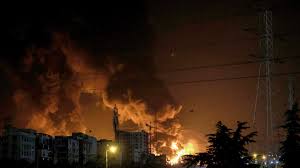

Whenever tensions flare up in the Middle East, the first thing most of us worry about is the price of petrol and gas. With the ongoing conflict involving Iran, Israel, and the US, it is easy to assume that India is about to face a massive energy crisis. But if you look closely at the data, the reality is quite surprising.
While the attacks on oil wells and gas fields have definitely shaken the global market, India is actually in a much better position than you might think. Let’s break down exactly what is happening, why the supply chain is freezing up, and which countries are taking the heaviest hits right now.
The Choke Point: What is going wrong in the Middle East?
Right now, heavy strikes from the US and Israel on Iranian oil infrastructure, combined with Iran’s retaliation on countries like the UAE, Saudi Arabia, and Qatar, have created a massive bottleneck. The biggest issue is the disruption around the Strait of Hormuz. If you follow global trade, you know that almost 20% of the world’s oil passes through this narrow stretch of water.
When trade here gets blocked, the impact of the Iran Israel conflict on global oil prices is immediate. Crude oil prices are comfortably sitting above the $100 mark, and the supply chain is a mess.
Who is actually suffering the most?
You might think India is struggling, but countries like Pakistan, Japan, Thailand, and South Korea are the ones facing a genuine nightmare.
Pakistan is currently the largest importer of Gulf oil relative to its needs. The situation there is so bad that they have had to restrict school and office hours just to save fuel, encouraging people to stay at home. Following Pakistan, the countries most affected by Iran US tensions are Japan, Thailand, and South Korea. They rely heavily on this specific region and simply do not have enough backup plans in place to handle a sudden drop in supply.
Why India is surviving the crisis
So, how did India avoid the worst of this? It all comes down to smart planning and not putting all our eggs in one basket.
India is currently the fifth-largest buyer of Gulf oil, but here is the catch: we only get about 40% of our oil from the Middle East right now. Over the past few years, India has heavily diversified its energy sources. We are actively buying from Russia, the US, and Norway. Because we have these solid backup options, the direct how the Middle East war affects the Indian economy is somewhat cushioned. If Gulf supplies drop further, India can simply increase its orders from other nations.
However, it is not all smooth sailing. While our oil strategy is solid, gas is a different story. India still imports around 80% of its natural gas from the Gulf. This is why you might be noticing a global gas shortage creeping in, specifically affecting the supply and pricing of LPG cylinders at home.
The unexpected winners and the broader impact
Interestingly, Europe is barely feeling the heat from this specific crisis. Even with their ongoing issues, Europe still gets a lot of its gas from Russia, along with strong, steady supplies from the US and Norway.
But for the rest of the world, the side effects are very real. There is a noticeable shortage of jet fuel right now, which is directly causing thousands of flight cancellations and delays globally.
At the end of the day, this crisis is a wake-up call. It shows exactly why countries cannot rely on just one region for their energy needs. India played it smart with crude oil, but our heavy gas dependency proves there is still work to do to secure our daily energy needs.
Read More: The Iran-Israel War Is Crushing These 4 Countries And Why India Is Safe

Comments are closed.