

The geopolitical shockwaves from the escalating conflict involving Iran, the United States and Israel are now reaching the most basic unit of the Indian economy: the household kitchen. In a move that signals growing pressure in global energy markets, India’s state controlled fuel companies have increased the price of liquefied petroleum gas used for cooking for the first time in roughly a year.
The decision by refiners led by Indian Oil Corporation, alongside Bharat Petroleum Corporation Limited and Hindustan Petroleum Corporation Limited, reflects the immediate market consequences of a war that has begun to disrupt hydrocarbon flows from the Middle East.
For a country that relies heavily on imported energy, the price adjustment is more than a routine revision. It is a stark reminder of how deeply India’s domestic energy security remains tied to geopolitical stability in West Asia.
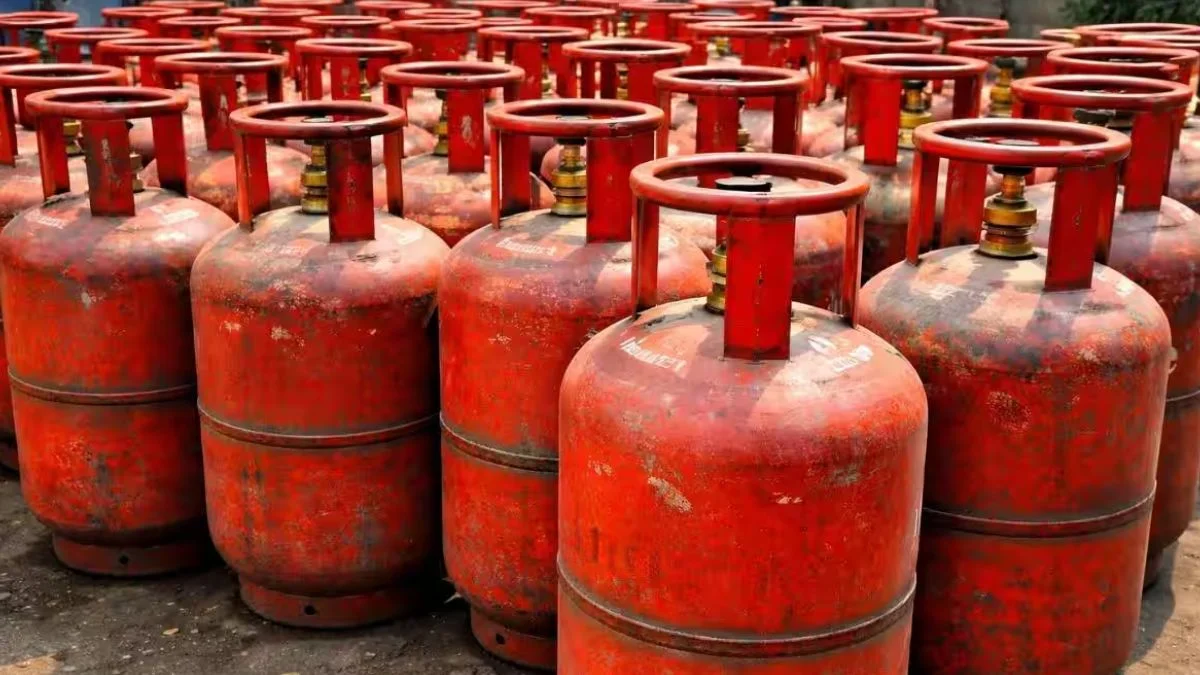
India’s most widely used household cooking cylinder, the 14.2 kilogram LPG unit, has increased by around seven per cent in the national capital New Delhi. The price now stands at approximately 913 rupees, compared with earlier levels that had remained largely stable for months.
Commercial users have faced an even sharper adjustment. The 19 kilogram LPG cylinder used extensively by hotels, restaurants and small businesses has risen to roughly 1,883 rupees from about 1,768.50 rupees.
Although the absolute increase may appear modest in global energy terms, the implications within India are substantial. LPG serves as the primary cooking fuel for hundreds of millions of households, particularly following the expansion of government backed access schemes over the past decade.
Any increase therefore reverberates directly through household expenditure, small business operating costs and inflationary expectations.
The price shock exposes a structural vulnerability within India’s energy system.
India is the world’s second largest importer of liquefied petroleum gas, consuming more than 33 million metric tonnes annually. Domestic production satisfies only a fraction of demand. Imports account for roughly two thirds of the country’s total LPG consumption.
Even more significant is the geographical concentration of those imports. Approximately eighty five to ninety per cent of India’s imported LPG originates from Middle Eastern producers.
This means that any geopolitical disturbance affecting supply routes, production facilities or maritime transport in the region can rapidly translate into higher domestic prices.
The current war involving Iran represents precisely such a disruption.
Conflicts in the Middle East historically send shockwaves through global oil markets. However, the current crisis carries a particular risk for the LPG trade.
Iran sits at the centre of a complex network of energy shipping routes that connect Gulf exporters with Asian markets. Any military escalation that threatens tanker traffic or maritime infrastructure could quickly tighten supply across the region.
Energy traders are already factoring in higher insurance costs for vessels transiting the Gulf and nearby strategic waterways. Freight premiums and risk surcharges inevitably raise the landed price of LPG cargoes delivered to Asian importers such as India.
The price rise announced by Indian refiners therefore reflects not only immediate market conditions but also forward expectations of tighter supply.
Recognising the potential for shortages, the Indian government has reportedly instructed domestic refiners to maximise LPG production.
Companies such as Indian Oil, Bharat Petroleum and Hindustan Petroleum operate refineries that produce LPG as a by product of crude oil processing. Increasing output, however, is not a simple lever. Production volumes depend heavily on refinery configuration and crude throughput levels.
In other words, while domestic output can cushion supply disruptions to some extent, it cannot fully compensate for large scale import volatility.
This reality underscores why policymakers in India view the current crisis with increasing concern.
Beyond household budgets, rising LPG prices carry wider macroeconomic implications.
Commercial cylinders are used extensively in the hospitality sector. Hotels, restaurants and catering services rely on LPG for daily operations. An increase in fuel costs is therefore likely to feed into higher food prices, especially in urban markets.
Small eateries and street vendors are particularly vulnerable. For many such businesses, energy costs represent a significant share of operating expenditure. Even moderate increases can compress margins or force price adjustments.
Given that food inflation remains a politically sensitive issue in India, sustained LPG price volatility could become an economic and policy challenge for the government.
For trade and energy analysts, the current price adjustment highlights a deeper strategic question. How resilient is India’s energy supply architecture in the face of geopolitical shocks?
The answer remains mixed.
On one hand, India has diversified crude oil imports over the past decade, sourcing from multiple regions including Russia and the United States. On the other hand, LPG supply remains heavily concentrated in the Middle East.
This imbalance exposes the country to precisely the kind of volatility now unfolding as the Iran conflict intensifies.
Expanding LPG import sources, investing in alternative cooking fuels and strengthening strategic energy reserves will therefore remain central to India’s long term energy security strategy.
Energy markets often provide the earliest economic signals of geopolitical instability. The latest LPG price increase demonstrates how quickly global conflicts can ripple into domestic life.
For millions of Indian households, the consequences of a distant war are now measured not in diplomatic statements or naval deployments but in the price of the next cooking gas cylinder.
That reality captures a fundamental truth of modern trade and energy systems: in an interconnected world, geopolitical crises rarely stay confined to the battlefield. They inevitably arrive at the kitchen table.

Comments are closed.