
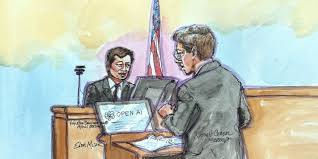

Elon Musk spent more than seven hours on the stand this week in a courtroom in Oakland, California. His testimony sits at the center of a high-stakes legal fight over the future of OpenAI. Musk framed his lawsuit not as a business dispute, but as a matter of principle. He argued that OpenAI drifted away from its original purpose and broke a core promise to the public.
At the heart of Musk’s case is a simple claim: OpenAI began as a nonprofit with a clear mission to serve humanity, not private interests. He described it as a “charity,” even though that word did not appear in the group’s original 2015 announcement. Musk said the intent was always clear.
The organization, in his view, was meant to develop artificial intelligence in a way that benefits everyone, not shareholders.
Elon Musk’s Vision for OpenAI vs. the Microsoft Era
Musk accused Sam Altman and Greg Brockman of changing that vision. He said they moved toward a for-profit model and accepted large investments that altered the balance of control. He pointed to the multibillion-dollar backing from Microsoft as a turning point. Musk described this shift as a “bait and switch,” suggesting that early supporters backed one idea but received another.
He also made bold claims about his own role in OpenAI’s creation. Musk said the organization would not exist without him. He told the court that he came up with the name, helped shape the concept, and brought in key talent.
One example he highlighted was Ilya Sutskever, whom he recruited from Google. According to Musk, this move strained his relationship with Google’s founders, including Larry Page.
Musk also stressed his influence in securing resources. He said his connections with leaders like Satya Nadella and Jensen Huang helped OpenAI gain access to computing power and funding. These relationships, he argued, gave OpenAI a strong start at a time when building an AI lab required both talent and scale.
The courtroom discussion went beyond business structure. It touched on the risks tied to artificial intelligence. Musk recalled past talks with Larry Page about the future of AI. He claimed Page showed little concern about scenarios where AI could harm humanity. Musk said this difference in outlook helped drive his push to create OpenAI as a counterbalance an organization focused on safety and openness.
Musk vs. Altman and the Future of AI Governance
Tension rose when the case turned to more recent events. Musk spoke about a 2022 exchange with Altman regarding Microsoft’s $10 billion investment. He said Altman later offered him a chance to buy shares in OpenAI. Musk rejected the offer and told the court it “felt like a bribe.” This moment added a personal edge to what is already a complex legal battle.
The defense pushed back during cross-examination. Lawyers questioned Musk’s consistency, especially given his own AI venture, xAI. They asked why he would use OpenAI’s tools to train his systems if he believed they posed risks. Musk answered that this practice is standard in the field. He also defended his decision to run xAI as a for-profit company, stating that such firms can still deliver social value.
The exchange grew tense at times. Musk accused opposing counsel of cutting him off and shaping his answers. The judge allowed firm questioning but also stepped in when interruptions went too far. The tone in court showed how deeply both sides contest not just facts, but intent.
The Legal Battle Over OpenAI’s Soul
The issue of AI safety remained a strong theme throughout the trial. Musk’s legal team tried to raise the risk of human extinction linked to advanced AI. The judge limited how far this line of argument could go. She also noted an apparent contradiction: Musk warns about AI risks while building a company in the same space.
This case goes beyond one company or one dispute. It raises wider questions about how AI should be built, funded, and controlled. Should powerful technology sit within nonprofits, or can for-profit models serve the public good? Can early ideals survive once large investments enter the picture?
Musk’s testimony offers a clear view of his stance. He sees OpenAI’s shift as a break from its founding promise. The defense sees evolution, not betrayal. The court now has to decide which version holds up under law.
The outcome could shape how future AI ventures balance mission and money. It may also set a tone for how founders, investors, and the public define trust in an industry that moves fast and carries real risk.

Comments are closed.