
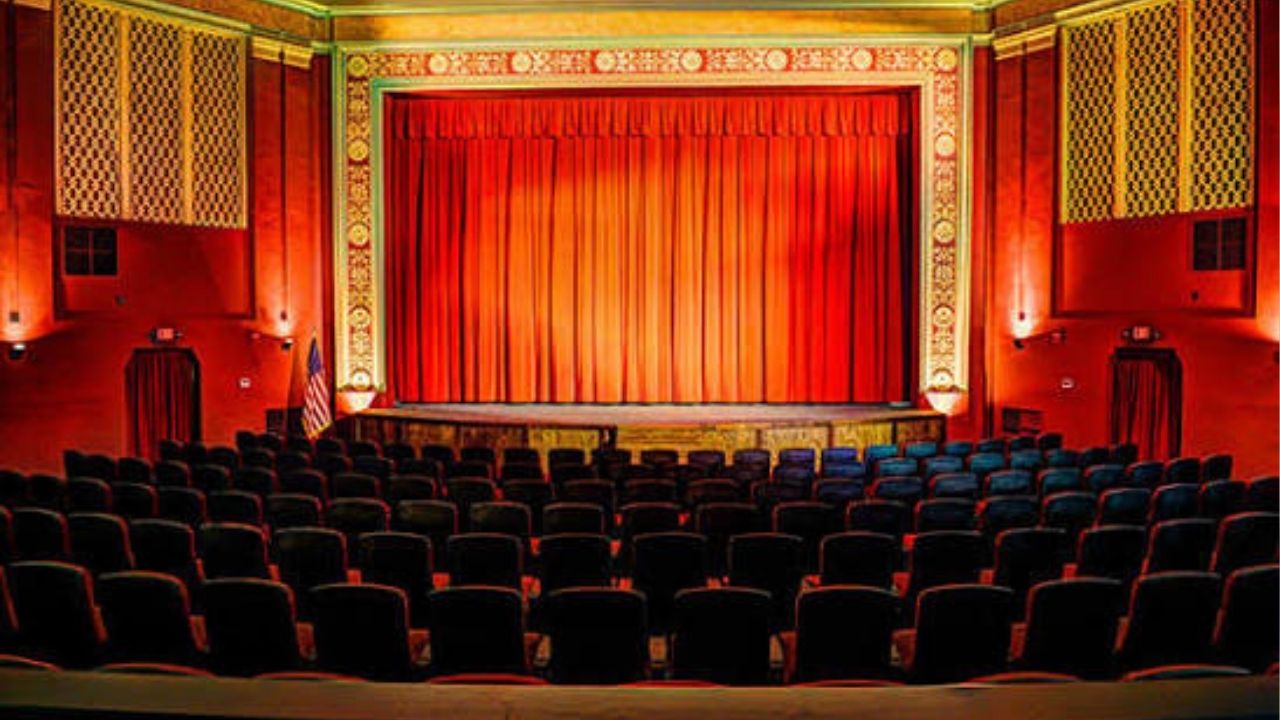

Theatre: The tradition of Indian theater is established on a very ancient and philosophical basis. Its ideological roots are found in Natyashastra, which was composed by Bharatmuni.
Theatre: The tradition of Indian theater is established on a very ancient and philosophical basis. Its ideological roots are found in Natyashastra, which was composed by Bharatmuni. In this book, theater has been considered not only as a means of entertainment but also as a medium of public education, moral awareness and social balance. The concept of ‘Rasa’ makes it clear that the aim of the drama is to generate emotional and intellectual awakening within the audience. With time this tradition expanded to Sanskrit plays, folk theater forms and modern experimental theatre.
But in the 21st century, when there was unprecedented expansion of cinema and digital mediums, new questions were raised on the role of theatre. Has screen-based entertainment reduced the need for the platform? Or has theater redefined itself in new contexts? The answer to these questions is not simple, but multidimensional.
Impact of the digital age and changing audience behavior
The digital revolution has changed both storytelling styles and audience habits. OTT platforms like Netflix, Amazon Prime Video and Disney+ Hotstar have made content personalized and on-demand. The audience can now choose the subject as per their convenience, be it political thriller, social reality, feminist discourse or historical fiction.
This change has democratized entertainment, but with it the audience’s attention span has also decreased. Fast editing, visual effects and a fast-paced plot pose a challenge to patient and conversational theatre. Even from an economic point of view, theater remains dependent on limited resources, while digital mediums have massive investment and global reach, yet it would be an incomplete conclusion to assume that theater has become irrelevant.
Specialty of theatre: Power of direct experience
The basic element of theater is liveliness. Here the actor and the audience are present in the same time and place. Communication, silence, body language and expressions, everything is born in the same moment and ends in the same moment. This ephemerality is its strength.
In cinema the scene is edited and controlled; The story can be watched again and again in OTT. But presentation in theater is different every time. The energy of the actors, the reaction of the audience and the atmosphere of the stage combine to create a unique collective experience. This collectivity gives birth to social dialogue.
Theater makes the audience an active participant, not a passive consumer. He not only sees, but also feels and sometimes even questions. This quality makes it a medium of democratic expression.
Interrelationship of theater with modern values
Modern Indian theater challenged traditional structures and brought issues such as social justice, gender equality and political freedom to the stage. Girish Karnad exposed contemporary political and moral crises through mythological stories. Vijay Tendulkar made a scathing attack on power, violence and exploitation of women. Rabindranath Tagore made freedom and human dignity the subject of drama.
Today theater is also giving space to topics like Dalit discourse, tribal identity, environmental crisis and democratic rights on the stage. This trend shows that theater is not just a cultural heritage, but a medium of active social intervention.
Role of theater at local level: personality building and social consciousness
In this age of digital distraction, the role of theater at the local level has become even more important. In small cities and towns, theater is becoming the basis of personality development of children and youth. The role of theater becomes particularly important in the context of Chhattisgarh, as the cultural identity of this state has been deeply linked to folk theater and community traditions. In such an environment, institutions like The Faces Film and Art School, Raipur are developing a new cultural consciousness by connecting children and youth with the stage. This institution develops self-confidence and discipline in children by training them in acting, speech style, physical expression and communication skills. This is a platform, especially for the children of small cities and towns, where they are able to identify their talent and give it the right direction.
When children perform plays based on social topics, such as education, environment, gender equality or social evils, they not only act but also learn to understand and consider the problems around them. This process develops leadership abilities, sense of teamwork and social responsibility in them. Communicating in Chhattisgarhi and other local languages also keeps them connected to their cultural roots.
Today, when mobile and social media are having a deep impact on children’s time and attention, such institutions provide them with creative and positive direction. Theater teaches them freedom of expression, clear oratory and the art of democratic dialogue. Thus, in Chhattisgarh and Madhya Pradesh, theater is not just an art but is becoming a powerful medium for creating aware, confident and sensitive citizens.
When children present a play on a social topic on stage, they do not just speak dialogues, they understand the problem, think of its solution and get the experience of collective work. This develops leadership abilities and social responsibility in them.
Today, when mobile and social media are dominating children’s time and attention, such institutions provide them with creative direction. Theater teaches them freedom of expression and the art of dialogue, which is essential for any democratic society.
Model of coexistence: not competition, mutual complementarity
Instead of viewing cinema, OTT and theater as competing mediums, it is more appropriate to understand them as complementary mediums. Theater teaches the artist the basic depth and discipline of acting. These same artists later expand their talent in cinema and web-series. Many scripts and plots first mature on stage, then reach digital mediums. From this point of view, theater is a creative laboratory, while cinema and OTT are its wide spread.
Essentiality of theater in modern times
Cinema and OTT have made entertainment global and accessible, but no medium has yet been able to provide an alternative to the liveliness and collectivity of theatre.
Theater is both the mirror of the society and also its conscience. He doesn’t just tell us a story, but inspires us to think, question and change.
From local institutions to national platforms, if theater remains connected to social concerns and continues to provide a platform for expression to the new generation, its relevance will never end.
Amidst the fast pace of the digital age, theater teaches us the art of pausing, watching, listening and feeling and this is its biggest strength.

Comments are closed.