
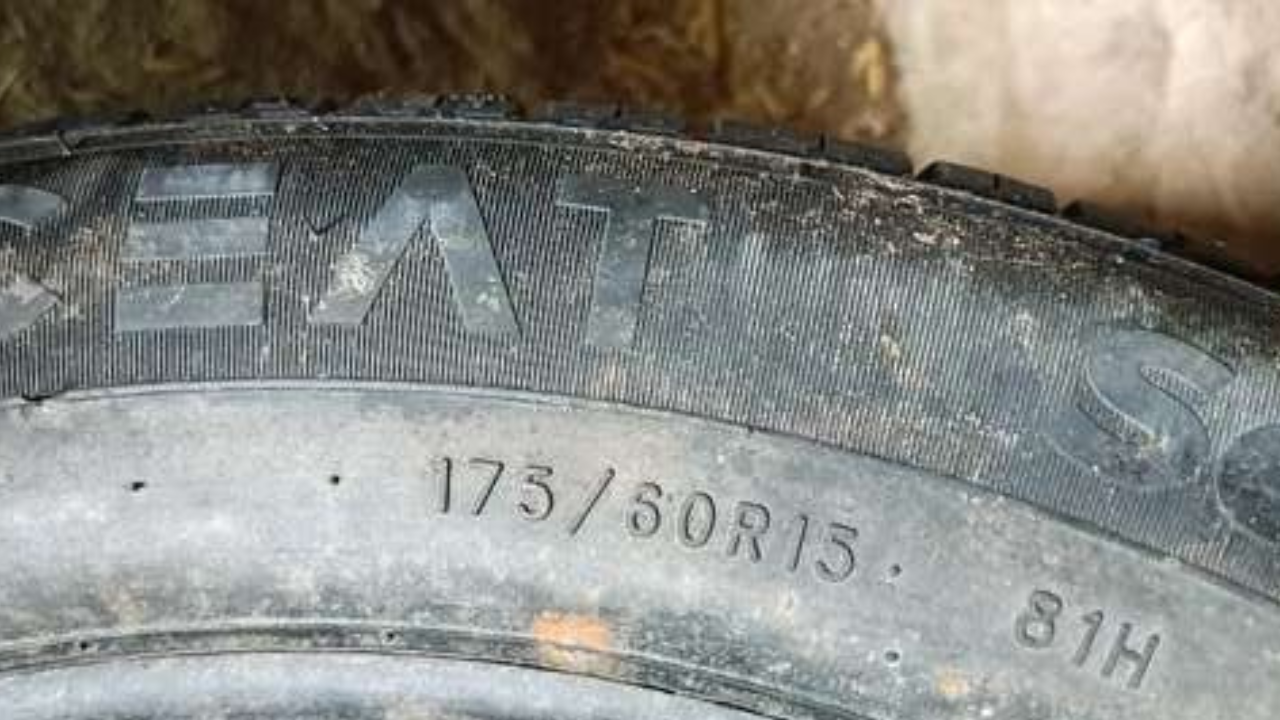
The secret of the numbers on the tire! How to identify the right tire for safety and good mileage? Learn the math of choosing the right tire

No matter how powerful a car’s engine is, the only direct contact with the road is the tire. We often only look at the brand or price when replacing a tire, but there are some mysterious numbers and letters written on the side of the tire, such as 195/55 R16 87V. The safety, mileage and performance of your car is hidden in this coding. Let us understand in detail what these numbers mean in simple terms,
‘195/55 R16 87V’ What is the simple meaning of?
Let’s break this code down into parts-
195 (Tire Width – Width): These first three numbers indicate the tire’s overall width in millimeters. That means this tire is 195 mm wide. The wider the tire, the better the grip on the road, but the mileage is a little less.
55 (Aspect Ratio – Aspect Ratio): This number represents the height of the tire as a percentage of its width. Here 55 means that the tire height is 55% of its 195mm width. If this number is low, the car looks like a sports car, but bumps more in potholes.
Citroen India Introduces New ë-C3X; The BaaS option makes buying an electric car more affordable
R (structure): ‘R’ stands for Radial. Most of the cars these days use only radial tires, which are considered the best for long life and good mileage.
16 (Rim Size – Rim Diameter): This figure is in inches. This means this tire will fit on a 16 inch wheel rim (Wheel Rim/Alloy).
87 (Load Index – Load Index): This number is a code that indicates the maximum weight this tire can carry. The code ’87’ means that a single tire can safely carry up to 545 kg.
V (Speed Rating – Speed Rating): This letter indicates the maximum speed the tire can run. A ‘V’ rating means that the car can be driven safely at a maximum speed of 240 km/h on this tyre.
Car Discount : Golden opportunity to buy a car! Bumper offers on Citroen cars, discounts up to 1.4 lakhs, know how much discount on which models
How to identify the right tire for your safety and mileage?
Choosing the wrong tire can reduce vehicle mileage and pose a safety hazard. When purchasing new tires, keep the following in mind:
1. Manufacturer’s recommendation ((OEM Specs) Always follow
There is a sticker in your car’s manual book or on the door frame of the driver’s seat that says the correct tire size. It is best for mileage and engine health to use tires of the same size as recommended by the company.
2. Tire width (Width) And the relation of mileage
If you fit tires wider than the size recommended by the company, the friction with the road increases. This gives the car better grip, but the mileage of the car can decrease by 5 to 10 percent and the steering feels a little heavy.
3. Manufacturing Date (DOT Code) Check it out
A tire has a 4 digit code (eg 2426). This means that this tire was manufactured in the 24th week of 2026. Even if the tire looks brand new, never buy a tire that is more than 3 years old; Because the grip of old rubber weakens.
If you do a lot of highway travel, always choose tires with a higher speed rating such as ‘H’ (210 km/h) or ‘V’ (240 km/h). These tires can withstand the heat generated while running at high speed and avoid the risk of tire burst.

Comments are closed.