
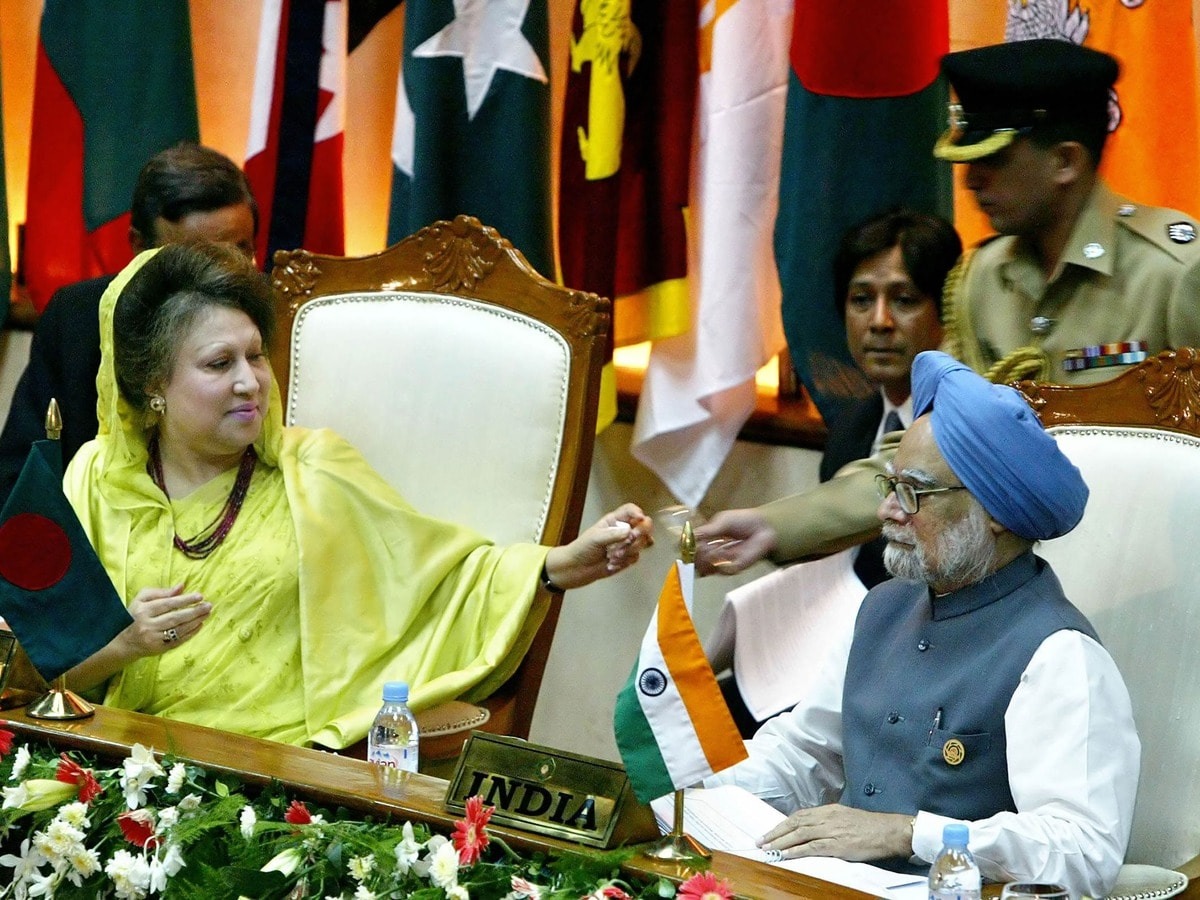
The story of three countries and a Begum with three identities, what was Khaleda Zia’s real connection with India?

News India Live, Digital Desk: Today when we hear the name of Khaleda Zia, the image of a strong and slightly strict politician of Bangladesh emerges in our mind. In the diplomatic circles, she was seen as a leader who kept distance from India, but very few people know that the existence of Khaleda Zia is deeply connected with the history of these three countries, India, Pakistan and Bangladesh. That childhood, which was spent in today’s West Bengal, very few people pay attention to the fact that Khaleda Zia was born in 1945 in Jalpaiguri of united India (British India). It is today part of West Bengal, India. His family is basically a product of the era of undivided India, when there were no barbed wires on the borders. Her childhood was spent amidst the same hills and greenery which we call ours today. One journey, three countries. If we look at Khaleda Zia’s life on a map, it is very interesting: India: Where she opened her eyes and spent her childhood. Pakistan: After the partition of 1947, when she moved to Dinajpur (East Pakistan) with her family. During that period, she was a citizen of Pakistan and grew up under its shadow. Her husband Ziaur Rehman was also a senior officer of the Pakistan Army at that time. Bangladesh: When a new country was formed after the 1971 war, she became a citizen there and later took over the reins of that country. The irony of history: Why the connection with India yet the distance? Often people ask this question that why did a person who was born in the soil of India become so bitter towards India after coming into politics? In fact, Khaleda Zia’s politics followed the radical path of ‘nationalism’ in which excessive closeness with India was considered a threat to its autonomy. He always created his image as a ‘patriotic Bangladeshi’, which benefited him in strengthening his party (BNP). That is why in his political legacy, relations with India were always ‘tense’, even though his personal history had its roots in India. A memory that will always remain. After the demise of Khaleda Zia, the discussion is again hot on how these leaders of South Asia contained within themselves the history of the entire subcontinent. From being a housewife to witnessing a political trip to three countries, her personality has also been a part of the shared culture of India-Bangladesh. She was the daughter of Jalpaiguri, whose destiny made her the Sultan of the neighboring country.

Comments are closed.