
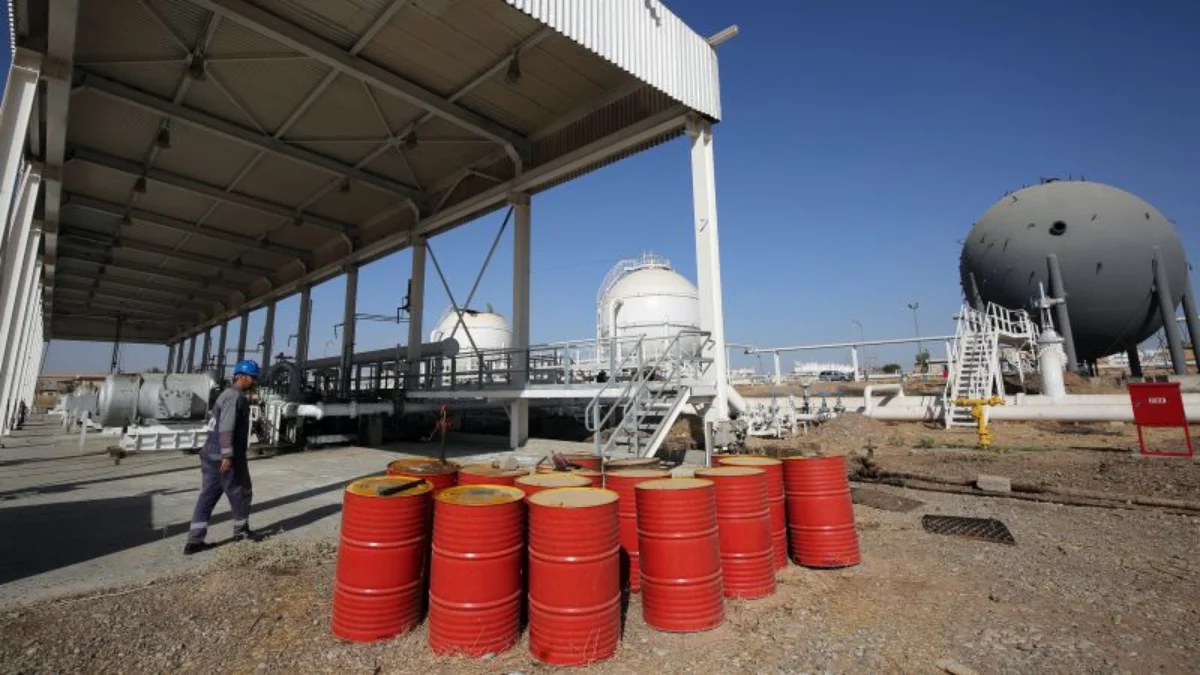
The United States Iran conflict leads to the largest oil supply disruption in modern history

The escalation of hostilities between the United States and Iran has generated what analysts describe as the largest oil supply disruption in modern history, surpassing the scale of the energy shock that occurred during the geopolitical turmoil of the mid twentieth century Middle East crises. According to assessments by the energy consultancy Rapidan Energythe interruption of oil flows linked to the conflict has exceeded the historical supply disruptions that reshaped global energy markets during earlier regional conflicts. From both a legal and international relations perspective, the implications of such a disruption extend far beyond the battlefield. The interruption of energy supply chains engages complex legal frameworks governing the use of force, maritime navigation, global trade stability, and the security of strategic natural resources. It also exposes the fragile relationship between geopolitical conflict and the stability of international economic systems. The magnitude of the disruption has forced governments, international institutions, and energy markets to confront the legal and strategic consequences of warfare that intersects with critical global infrastructure.
International legal constraints on the use of force in resource-rich regions
At the centre of the legal debate surrounding the conflict lies the framework established by the Charter of the United Nations. Article 2(4) of the Charter establishes the prohibition on the use of force in international relations, declaring that states must refrain from threats or acts of force against the territorial integrity or political independence of any state. Exceptions to this rule exist under two circumstances. The first arises when the United Nations Security Council authorises collective military action to restore international peace and security. The second involves the inherent right of self-defence recognised under Article 51 of the Charter, which allows states to respond to an armed attack. In situations where military operations significantly disrupt global energy supply routes or damage resource infrastructure, the legality of the initial use of force becomes particularly relevant. If the conflict were to be interpreted as falling outside the scope of lawful self-defence or Security Council authorisation, the broader economic consequences could reinforce claims that the use of force violated the foundational principles of the international legal order. Furthermore, international humanitarian law imposes additional constraints on the conduct of hostilities. Energy infrastructure such as refineries, pipelines, and export terminals may constitute civilian objects under the Geneva Conventions unless they are directly contributing to military operations. The deliberate targeting of such facilities raises legal questions regarding proportionality and military necessity.
Energy infrastructure as a strategic target in modern warfare
The extraordinary scale of the reported oil supply disruption reflects the central role of energy infrastructure in contemporary geopolitical conflict. Oil production facilities, maritime export terminals, and shipping routes function not only as economic assets but also as strategic instruments capable of shaping global power dynamics. Modern military doctrine often recognises that control over energy infrastructure can influence the economic resilience of adversaries and alter the balance of international power. However, the deliberate disruption of energy supply networks carries profound humanitarian and economic consequences for states far removed from the immediate conflict zone. International humanitarian law seeks to mitigate these risks by requiring parties to distinguish between legitimate military targets and civilian infrastructure. Even when energy facilities contribute indirectly to a war effort, attacks must still satisfy the proportionality requirement. This principle prohibits military operations expected to cause excessive civilian harm in relation to the anticipated military advantage. Given the global dependence on energy flows from the Persian Gulf region, large-scale disruption inevitably affects populations and economies across multiple continents. As a result, legal scholars increasingly debate whether strategic attacks on energy infrastructure should face stricter scrutiny under international humanitarian law.
The historical comparison with earlier Middle East crises
The claim that the current disruption exceeds the previous record established during mid twentieth century crises invites comparison with earlier geopolitical episodes that transformed global energy markets. During the 1950s and subsequent decades, political instability in the Middle East triggered several supply disruptions that forced consuming nations to reconsider their energy security strategies. The historical significance of those events lay in the recognition that regional conflicts could rapidly cascade into global economic shocks. Governments responded by creating strategic petroleum reserves, diversifying supply routes, and establishing international energy coordination mechanisms. The present crisis appears to exceed those historical disruptions in scale due to the vastly increased global demand for petroleum and the central role of Gulf export routes in meeting that demand. Modern energy markets are highly interconnected, meaning that even limited interruptions in production or shipping can reverberate through global supply chains.
Maritime law and the vulnerability of strategic shipping corridors
A substantial portion of global oil exports travels through narrow maritime corridors that function as chokepoints in the international trading system. When military conflict threatens these corridors, international maritime law becomes critically important in preserving the principle of freedom of navigation. The legal regime governing such waterways seeks to ensure that commercial vessels can pass through international straits without interference. However, military operations near these routes often generate risks that extend beyond deliberate blockades. Naval confrontations, missile attacks, and maritime mines can all disrupt shipping even when not directly targeting commercial vessels. Shipping companies and insurers must therefore evaluate security conditions in real time when determining whether vessels can safely transit contested waters. Increased insurance premiums, rerouted shipping lanes, and delayed cargo deliveries frequently accompany periods of heightened conflict. From a legal standpoint, deliberate interference with commercial shipping in international waterways could potentially violate maritime law as well as the broader prohibition on unlawful interference with international trade.
Global economic repercussions and the governance of energy security
The economic consequences of a disruption on the scale reported by Rapidan Energy are profound. Oil remains a central input for transportation, industrial production, and global logistics networks. Sudden reductions in supply can generate price volatility that affects national economies across the world. Energy-importing nations are particularly vulnerable to such disruptions because they rely heavily on stable supply chains to maintain economic stability. Governments often respond by releasing oil from strategic reserves, adjusting import policies, or coordinating emergency energy sharing arrangements with allied states. International institutions also play a role in managing such crises. Multilateral cooperation mechanisms attempt to stabilise markets and prevent panic-driven price spikes that could destabilise global financial systems. From an international relations perspective, the disruption demonstrates how military conflict can rapidly transform into a systemic economic crisis. The interconnected nature of global energy markets means that geopolitical decisions taken in one region can trigger cascading consequences across the international system.

Comments are closed.