
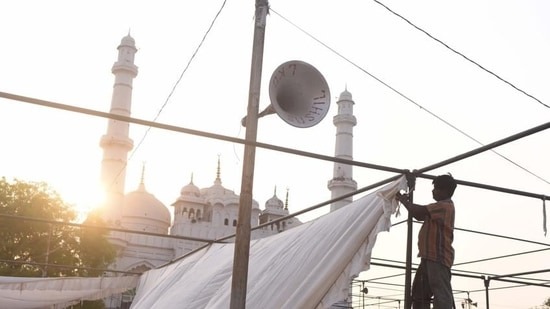

With the holy month of Ramzan just around the corner, the political temperature in Uttar Pradesh is already soaring. If you’ve been following the news lately, you might have heard some noise about a “loudspeaker ban.” But is that the whole story, or just another political firestorm?
Let’s talk about what actually happened in the UP Assembly and why things are getting heated.
How the Dispute Started
The spark was lit in the Assembly when Samajwadi Party (SP) MLA Kamal Akhtar raised a demand. He asked the government to grant special permission for mosques to use loudspeakers during Ramzan to announce Magic (pre-dawn meal) and Iftar (breaking the fast). His logic? The government often gives relaxations during festivals, so why not now?
However, the response from the government side was firm. Parliamentary Affairs Minister Suresh Khanna pointed out that loudspeakers aren’t a necessity in the age of digital clocks and smartphones. He reminded everyone that the current restrictions are simply about following Supreme Court guidelines to keep noise pollution in check.
“Muslims are being Misled”: Minister Danish Ansari
Today, the Minority Welfare State Minister, Danish Azad Ansari, stepped into the ring with a strong message. He didn’t hold back, accusing the Samajwadi Party of trying to “scare and mislead” the Muslim community for political gain.
His main point? There is no blanket ban on loudspeakers.
Ansari clarified that whether it’s a mosque, temple, gurudwara, or church, anyone can use a loudspeaker as long as they follow the set decibel limits and have the proper permission from the local administration. To prove his point, he mentioned that the Maghrib Azaan (evening call to prayer) can still be heard clearly near the Assembly gates, proving that the sound hasn’t been silenced—it’s just been regulated.
The Real Rules: It’s About Noise, Not Religion
The minister emphasized that the Yogi government is strictly adhering to the Supreme Court’s directives, which prohibit high-decibel noise after 10:00 PM. These rules apply to everyone equally, regardless of religion.
The message from the government is clear: they want to maintain peace and order without hurting anyone’s religious sentiments. They’re urging the community not to fall for the “imaginary fear” being sold by opposition parties and to cooperate in following the law.
The Bottom Line
As the debate continues, it’s important to look past the headlines. It’s not about stopping a tradition; it’s about balancing religious practices with modern legal standards. While the SP sees this as an issue of religious freedom, the BJP government frames it as a matter of judicial compliance and public convenience.
For the common citizen, the takeaway is simple: you can still hear the calls to prayer—just at a volume that respects the peace of the neighborhood.
Read More: The UP Loudspeaker Debate Politics vs. Reality Ahead of Ramzan

Comments are closed.