
The War After Ceasefire: US Strikes, Iran’s Gulf Retaliation And Threat To Global Energy

The US-Iran conflict escalated sharply on Saturday as both countries widened their attacks beyond military targets, hitting infrastructure linked to water, transport and energy across Iran and the Gulf. The latest exchange came after the collapse of last week’s fragile ceasefire, with the United States carrying out its seventh consecutive night of strikes inside Iran while Tehran retaliated by targeting American military-linked facilities in Kuwait and Bahrain. The expanding battlefield has also disrupted shipping through the Strait of Hormuz, pushed oil prices higher and raised fresh fears of a broader regional war.
Washington said its latest attacks targeted surveillance sites, military logistics infrastructure, underground weapons storage and maritime capabilities. Iran, meanwhile, claimed responsibility for a series of strikes against US military assets and support facilities in Gulf states, signalling that the US-Iran conflict is increasingly drawing America’s regional allies into direct danger.
US-Iran conflict spreads from military sites to civilian infrastructure across the region
Iranian state media reported that the Revolutionary Guards struck Camp Arifjan, described as a US military support centre in Kuwait, and destroyed a radar facility at Ali Al Salem Air Base. The Guards also claimed they targeted Sheikh Isa Air Base in Bahrain, where US combat aircraft were reportedly stationed, along with an intelligence data centre identified as Batelco.
Additional strikes reportedly hit a US naval fuel-support pier at Al Ahmadi Port and a US signals and communications centre in Kuwait. In response to repeated missile and drone threats, Kuwait suspended operations at Kuwait International Airport. Authorities also confirmed that a power generation and water desalination plant had been struck, marking the second attack on Kuwaiti desalination facilities within two days.
Explaining its retaliation, Iran’s Revolutionary Guards said, “Since there is no international institution to prevent the savagery of the U.S. military, we have no path before us except the Quranic command: ‘Whoever attacks you, attack it in the same manner’.” The statement also warned US allies across the region to expect further attacks as the US-Iran conflict continues.
US-Iran conflict leaves civilian casualties and widespread damage inside Iran
Iran also reported extensive damage from continuing US air strikes. According to Iranian media, attacks in Hormozgan Province killed three people and wounded eight others, while two bridges and a road tunnel were damaged.
Earlier strikes reportedly destroyed at least five bridges in southern Iran. Seven people were killed in attacks on bridges in Bandar Khamir, where the local train station was also hit. An airport in Iranshahr, near Iran’s border with Pakistan, was also struck.
Civilian infrastructure has increasingly become part of the fighting. Iranian media said missiles damaged power facilities and desalination pumps in Jask, leaving nearly 10,000 residents across 20 villages without water. UN Secretary-General Antonio Guterres expressed concern over the growing escalation, particularly the attacks on civilian infrastructure in Iran and across the wider region.
US-Iran conflict threatens global energy supplies as Strait of Hormuz tensions grow
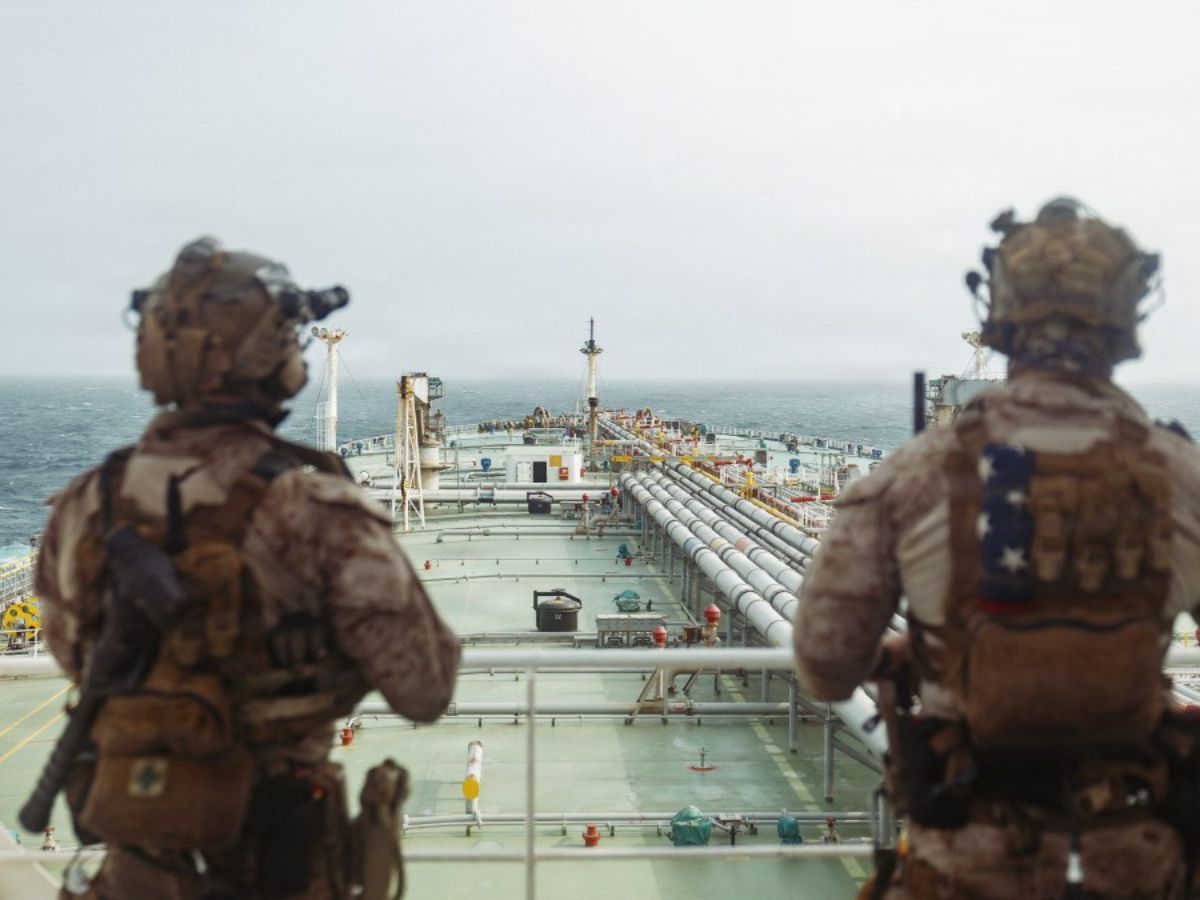
The fighting has also spread to one of the world’s most critical energy corridors. On Friday, both countries targeted commercial shipping around the Strait of Hormuz. The United States said it was enforcing a naval blockade, while Iran claimed it targeted vessels that violated its navigation rules in the strategic waterway.
The Strait of Hormuz accounts for almost one-fifth of the world’s total oil trade. This is one reason why the US-Iran war has become a major worry for energy markets worldwide. There was a surge of over 4% in the oil prices on Friday, hitting a one-month high.
US President Donald Trump has continued to raise the stakes, repeating threats to target Iran’s energy infrastructure and bridges while refusing to rule out broader air strikes or even a ground assault along Iran’s coast or islands. US officials have said operations in southern Iran are intended, in part, to preserve military options. Analysts warn that any further escalation could trigger more attacks on Gulf infrastructure or renewed assaults on commercial shipping, deepening the economic impact of the US-Iran conflict well beyond the region.
(Via agency inputs)
Also Read: Who Is Andy Burnham? Meet the Labour Leader Set to Become Britain’s Next Prime Minister
Khalid Qasid is a media enthusiast with a strong interest in documentary filmmaking. He holds a Master’s degree in Convergent Journalism from AJK MCRC. He has also written extensively on esports at Sportsdunia. Currently, he covers world and general news at NewsX Digital.
The post The War After Ceasefire: US Strikes, Iran’s Gulf Retaliation And Threat To Global Energy appeared first on NewsX.

Comments are closed.