
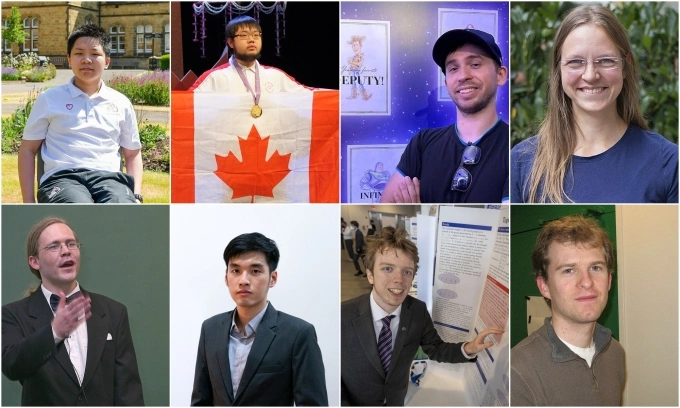
These are the only 8 people to have won four gold medals or more in 66 years of the International Math Olympiad

Only eight contestants have achieved the feat across the IMO’s 66-year history.
Chuiborn in 2008, is a Year 12 student at Tonbridge School in England. He has competed at the IMO six times for two different teams, first representing Hong Kong, China in 2020 and 2021, earning a silver and a gold, then switching to the United Kingdom from 2022, where he added another silver and three more golds. His fourth gold came at the Sunshine Coast in Australia.
Alex Chui. Photo courtesy of Tonbridge School |
The only person to surpass him is Zhuo Qun Songa Canadian born in Tianjin, China, in 1997, who remains the most decorated IMO contestant in history with five gold medals and one bronze across six appearances from 2010 to 2015.
Song achieved a perfect 42/42 in his final year. After earning a bachelor’s degree in mathematics from Princeton University, he worked as a quantitative researcher at Citadel. He is currently a graduate researcher in number theory at the University of Illinois Urbana-Champaign.
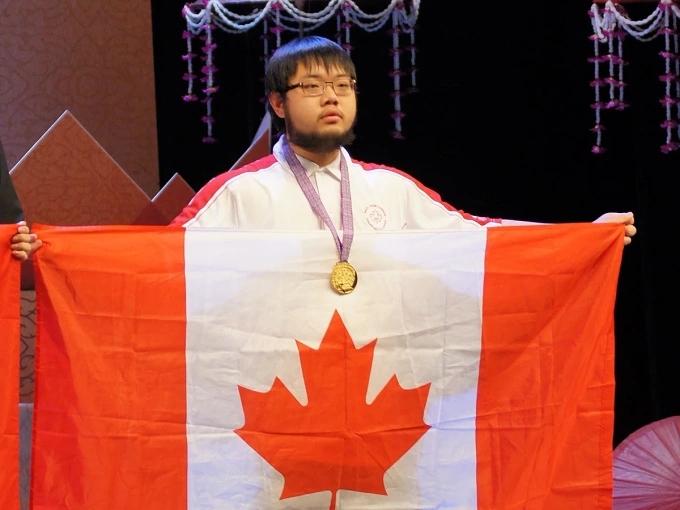 |
Zhuo Qun Song. Photo courtesy of Wikimedia Commons |
Song’s career path reflects a broader pattern: the eight legends have scattered across academia, finance and tech, with several pivoting away from pure mathematics entirely.
Reid W. Barton42, of the U.S. was the first person to win four IMO golds, doing so consecutively from 1998 to 2001 with a perfect score in his final year.
That same year, he also placed first at the International Olympiad in Informatics, one of two IOI golds he earned. Barton studied at MIT as an undergraduate and completed a PhD in mathematics at Harvard.
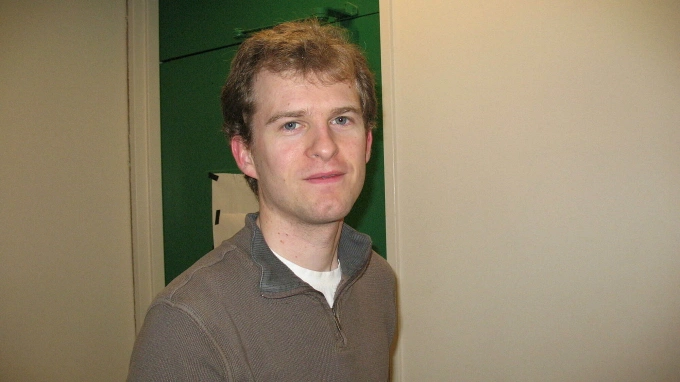 |
Reid W. Barton. Photo courtesy of MIT |
Lisa Sauermann of Germany is the only woman among the eight.
The 33-year-old won four golds from 2008 to 2011 along with a silver in 2007, and was the sole contestant to achieve a perfect score in 2011.
Her undergraduate work at the University of Bonn focused on algebraic geometry before she shifted to extremal combinatorics for her PhD at Stanford, which she completed in 2019.
After stints at the Institute for Advanced Study in Princeton and as assistant professor at MIT, Sauermann returned to Bonn in 2023 and now holds a Hausdorff Chair at the university’s Institute of Applied Mathematics.
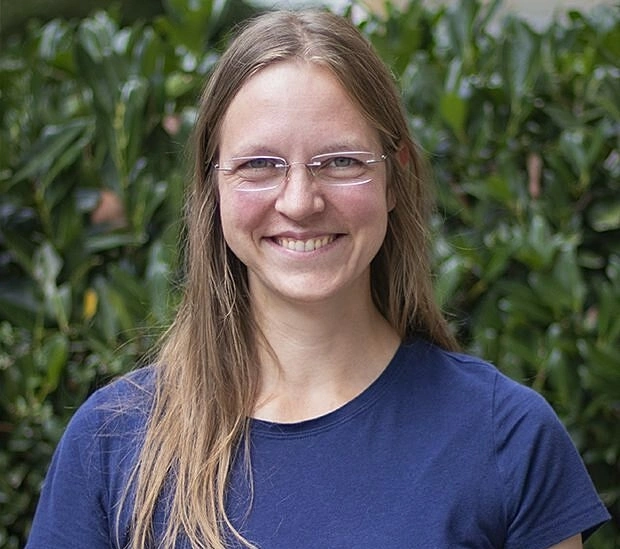 |
Lisa Sauermann. Photo courtesy of European Women in Maths |
Fellow German Christian Heron41, won four golds from 2000 to 2003, plus a bronze in 1999.
He earned his doctorate at the University of Rostock in 2010 and is now a professor at the University of Hamburg, specializing in extremal combinatorics and graph theory.
 |
Christian Reiher. Photo courtesy of University of Rostock |
Serbia’s Teodor von Burg competed from seventh grade, winning four golds, one silver and one bronze over six consecutive years from 2007 to 2012.
After studying mathematics at Oxford, he returned to Belgrade, where he now teaches specialized math at a high school and works as a private tutor preparing students for the IMO.
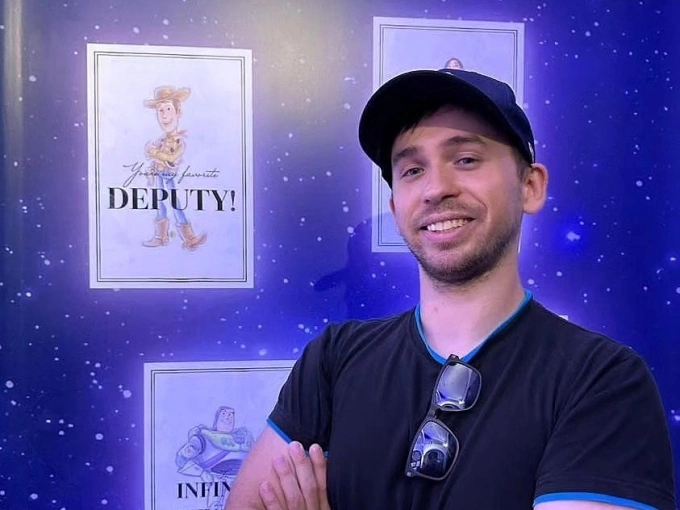 |
Teodor von Burg. Photo courtesy of Facebook |
Nipun Pitimanaaree of Thailand is the only Southeast Asian in the group.
He won four golds and a silver across five appearances from 2009 to 2013, then headed to MIT, where he earned a bachelor’s and a master of engineering in electrical engineering and computer science.
He pivoted to blockchain, co-founding Alpha Finance Lab and currently serving as co-founder and CTO of INFINIT, a decentralized finance venture.
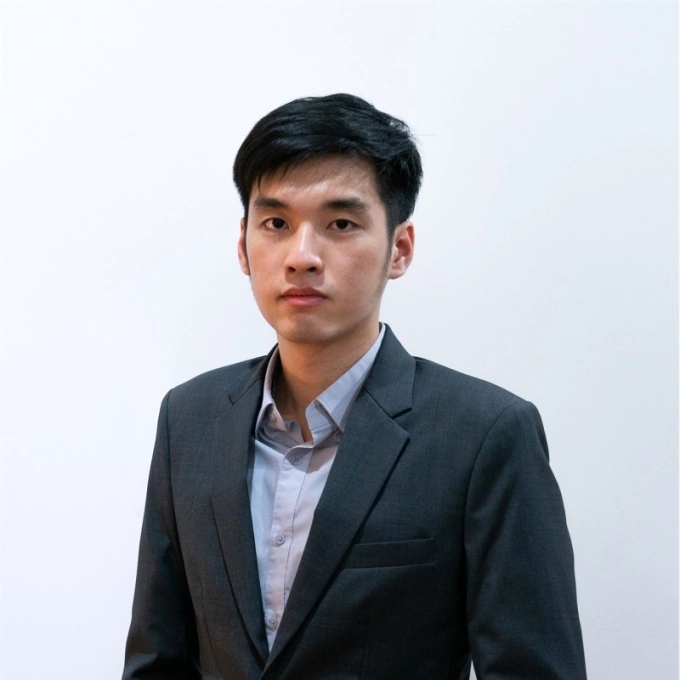 |
Nipun Pitimanaaree. Photo courtesy of LinkedIn |
Luke Robitaille of the U.S. went gold in all four of his appearances from 2019 to 2022.
Homeschooled from a young age, he was exploring university-level math by age eight and became the only person to win the national MATHCOUNTS competition twice, in 2017 and 2018.
He currently studies mathematics and physics at MIT.
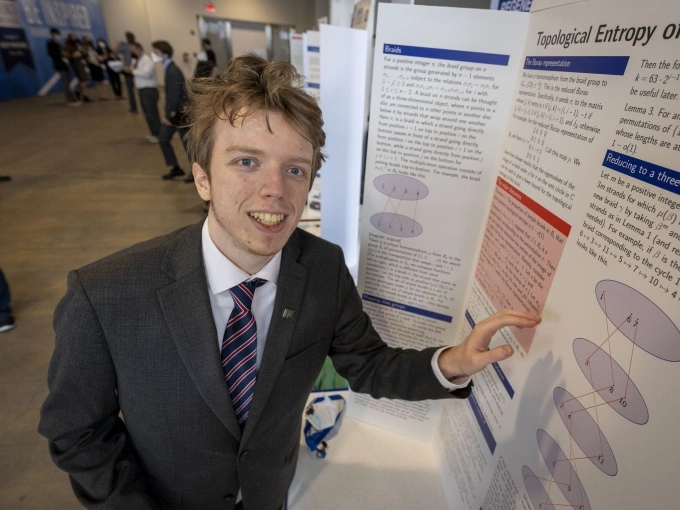 |
Luke Robert Robitaille. Photo courtesy of Regeneron Science Talent Search |
The IMO was first held in Romania in 1959 and has grown to include more than 100 participating countries and territories each year.
The competition consists of six problems over two days, each scored out of seven points for a maximum of 42. Roughly half of all contestants receive a medal.
Comments are closed.