
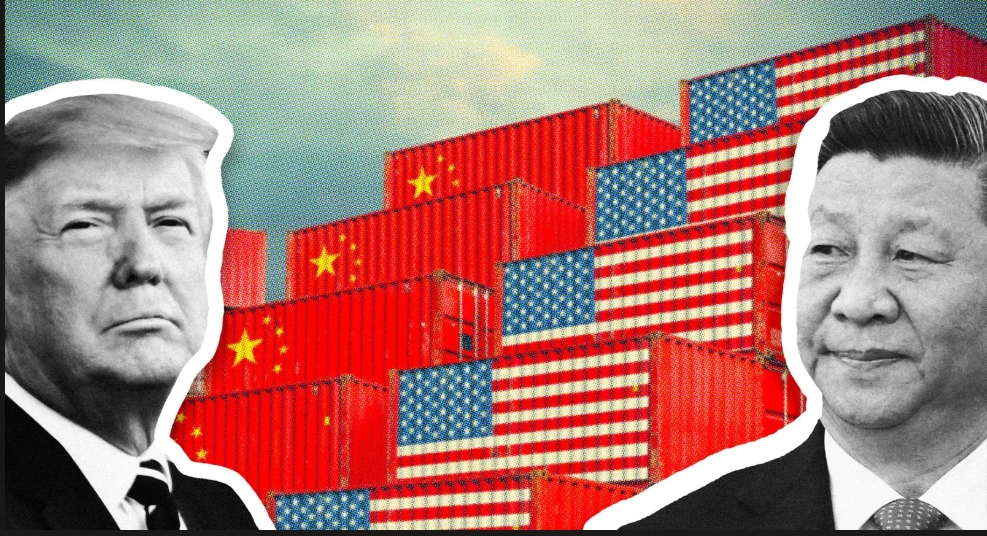
Impact of Trump’s trade war, these countries are taking advantage in the global market

The global market remains volatile after President Donald Trump’s aggressive tariff strategy and a major blow by the Supreme Court.
On February 20, 2026, the US Supreme Court ruled 6–3 that the International Emergency Economic Powers Act (IEEPA) does not authorize presidential tariffs, thereby invalidating major “reciprocal” and emergency levies imposed on China, Canada, Mexico, and other trading partners in 2025. Chief Justice Roberts’ opinion was that tariffs constitute taxation, a power of Congress under Article I—not delegable through IEEPA’s “Regulate Importations” clause.
Trump responded by using Section 122 of the Trade Act of 1974 to impose a temporary global import surcharge—starting at 10% (effective February 24, exempting essential goods such as energy and pharmaceuticals), then increasing to 15%—limited to 150 days unless Congress extends it. This settles alleged balance-of-payments issues but invites further legal scrutiny.
The decision has created uncertainty: businesses are grappling with compliance, potential refunds of $130-175 billion in past collections, and planning has been disrupted. Trading partners are re-evaluating deals; The EU put off ratifying the previous agreement for clarity, while reports suggest India has postponed talks amid the ups and downs. Some countries (e.g., China, India, Brazil) saw significant rate reductions without any new concessions following the decision, although prior agreements remain to be renegotiated.
Allies and adversaries alike could benefit from Washington’s limited authority in negotiations and the midterm politics that hinder extension. China could strengthen its position in any future talks (assuming a Beijing visit has not been confirmed), which could slow down concessions on US exports or rare earths.
Overall, the decision prohibits unilateral executive intervention, but in other ways maintains trade tensions, leaving global supply chains in limbo ahead of the midterms.

Comments are closed.