

We may receive a commission on purchases made from links.
If you’ve worn down the sticks on the controller for your Xbox Series X or S, and you’re thinking of getting a new one, you might consider something other than the typical option. Many Xbox gamers find the bundled controller to be the best gamepad for them, and others may enjoy the more premium Xbox Elite Wireless Controller Series 2 for its enhanced customizability. But if you’re looking to venture outside Microsoft’s umbrella, there’s never been a better time to be in search of a third-party controller to enable things you never knew your Xbox could do. There is healthy competition in the space from the likes of established players like Razer and Scuf in addition to up-and-comers like GameSir and 8BitDo.
The controller that is best will depend largely on the kinds of games you play and how much mileage you can get out of enthusiast features like stick and trigger curve tuning, button remapping, and extra paddles or bumpers. But which controller is the best overall? That’s a bit easier to answer. To be the best, a controller has to work not only on your Xbox hardware, but anywhere you can access Game Pass from the cloud. It has to feel solid in the hand, with precision sticks and smooth buttons, and it must be customizable enough to meet nearly any player where they’re at. It also can’t be too overpriced compared to similar alternatives. We compared premium options across buzzy brands to separate the hype from the humdrum and looked at a number of reviews to figure out the top option for most players. If our top pick doesn’t suit your fancy, we’ve got a runner-up and a budget option to choose from.
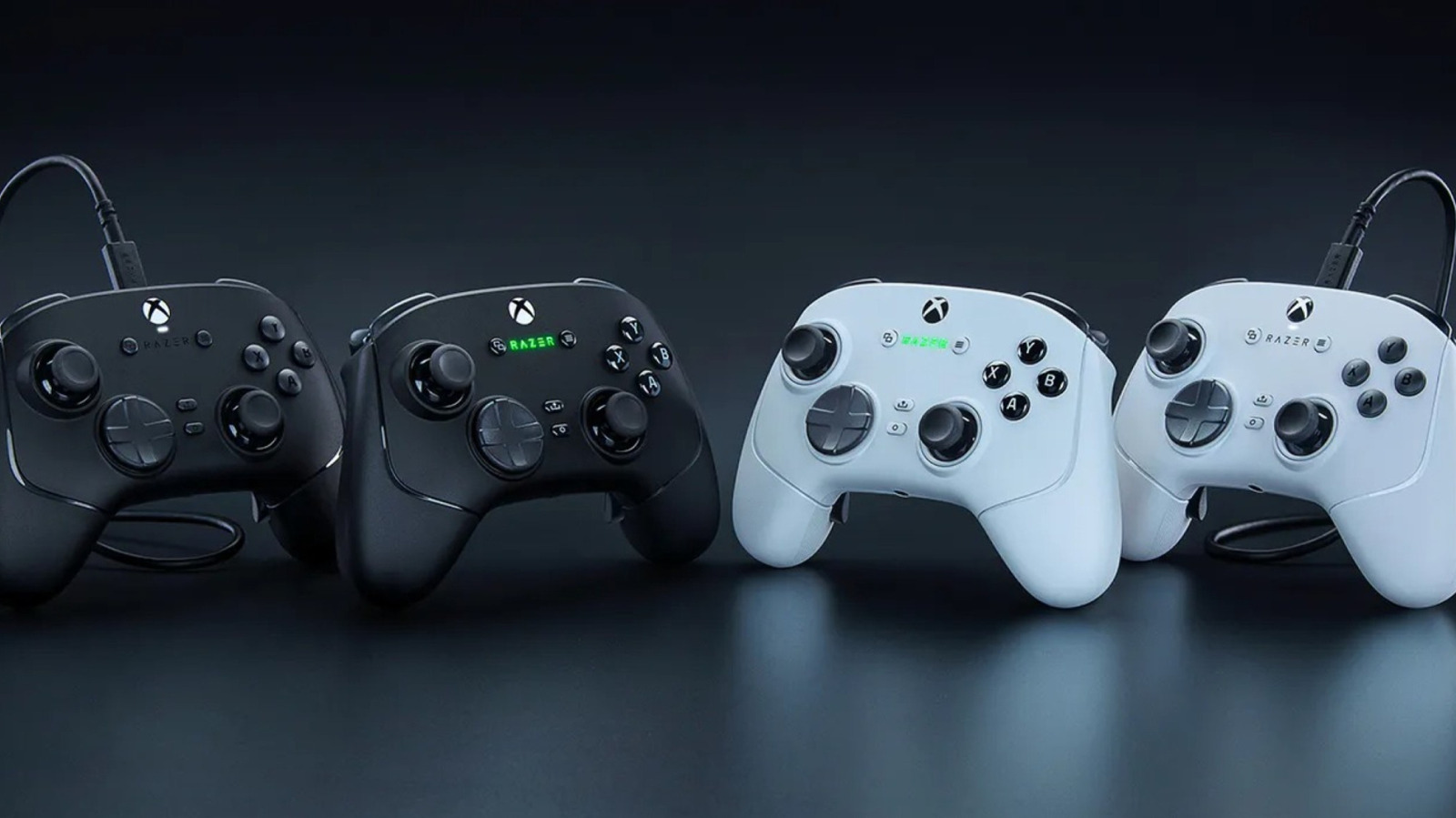
The Razer Wolverine V3 Pro is the best Xbox controller for most
For many players, finding a third-party Xbox controller better than the Razer Wolverine V3 Pro would be a difficult challenge. At $200, it’s got everything you could want when you’re plopped in front of your Xbox, but it can flex even more muscle when connected to a PC. Unlike traditional Xbox controller sticks, which are prone to stick drift and wear out within a few years of heavy use, the Wolverine V3 Pro uses Hall effect joysticks and triggers. They use magnetic fields to create input, which means you’re not stressing extra mechanical parts every time you move your character in a game. The triggers have hair-lock, meaning you can slide a switch to make them more like mouse keys. In a competitive shooter, that means you’ll be firing your weapon a drop faster than the competition, giving you an advantage. The face buttons, including the four back paddles, use microswitches, which give them a satisfying and tactile click when pressed (sort of like clicking a mouse or a low-profile keyboard with Cherry blue switches). The bumpers are nothing special, but there are two extra bumpers for claw-grip players.
Speaking from experience, time with Hall sticks, hair-lock triggers, and microswitch buttons will make it impossible to go back to a normal controller. The Wolverine V3 Pro supports wireless Xbox connectivity — still somewhat of a rarity. But it also works with PCs, both via the included 2.4 GHz dongle. On a wired PC connection, the Wolverine V3 Pro has a nifty trick: a 1,000 Hz polling mode that reduces latency to give you an edge in competitive games. The main downside is the D-pad, a reportedly mushy affair that eschews microswitches for membrane.
Our runner-up and budget picks
The Razer Wolverine V3 has been lauded by many as the best third-party Xbox controller, but it’s not for everyone. For some, the cost is prohibitive. We’ve seen it as low as $140 on Amazon, but the full price of $200 will put it out of reach for some. Plus, there’s no Bluetooth support, and some reviewers complained that it’s too small for large hands.
We waffled between the Wolverine and the Scuf Valor Pro Wireless for the top spot, and the latter is a close contender. It has slightly worse battery life (17 hours to the Wolverine’s 20) but makes up for that with TMR thumbsticks, a slight innovation on Hall effect sticks that provides better sensor resolution to pick up on micromovements in games where every millimeter of control matters. The Valor Pro Wireless also has that PC-only 1,000Hz polling rate found on the Wolverine. However, it has microswitches in the bumpers but lacks them in the face buttons, a reverse of the Wolverine’s microswitch placements. Crucially for some users, it has Bluetooth. There are also two volume knobs for game and chat audio. And let’s be honest, aesthetics matter. The Valor Pro Wireless comes in a variety of styles and features removable faceplates.
Lastly, those on a tight budget should take a gander at the GameSir G7 SE. It’s wired-only, but it has those coveted Hall effect thumbsticks and triggers, which make it a decent upgrade to the bundled Xbox Series X gamepad. At $45 on Amazon, it’s a shockingly cheap way to get superior controls. Plus, it has two customizable back paddles and can be customized on a PC.
How these controllers were chosen
Each of the third-party Xbox controllers recommended in this article were selected based on extensive knowledge of the gamepad/controller market in concert with hands-on testing and a preponderance of positive user sentiment from trusted reviewers. Multiple reviews were compared for each to ensure that experiences were consistent across the board. No company or brand influenced this coverage.

Comments are closed.