
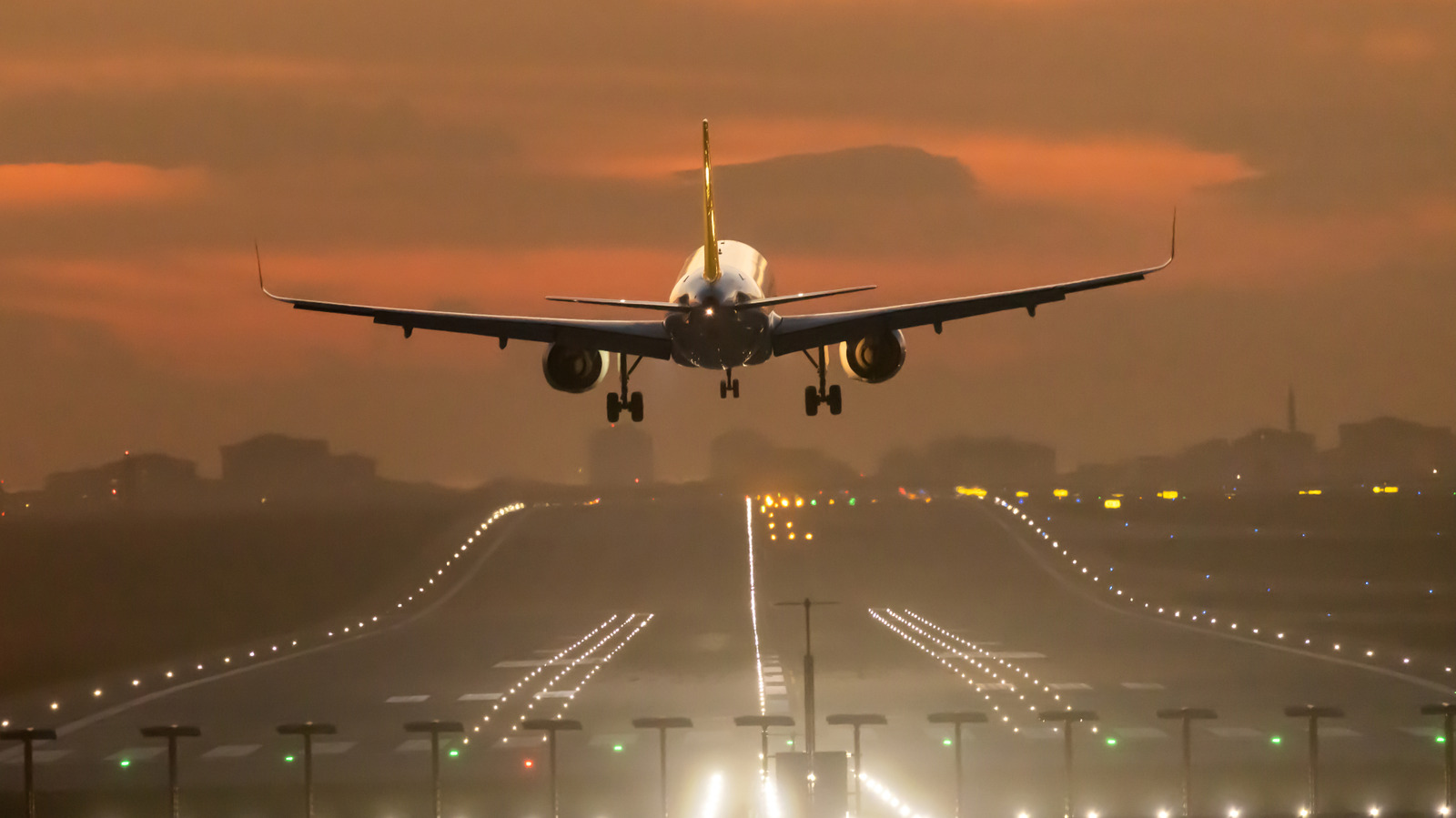

From runway collisions to engine explosions to door plugs blowing out in mid-air, the seemingly ever-increasing number of aircraft accidents in recent years has probably made you think twice about boarding a commercial airline. However, based on all available evidence, the old adage is still true: it’s safer to fly the friendly skies than it is to climb into your car and go to work every day. Still, knowing which passenger jets have the worst safety record isn’t a bad idea.
According to USAFacts, during the 20-year span between 2003 and 2023, only 675 serious injuries aboard domestic airlines (about 32 per year) were documented. Before shouting that’s too many, ponder this: more than 47 million passenger vehicle occupants were hurt on highways in the U.S. during that same period, which breaks down to 2.2 million per year. In 2023 alone, commercial airplanes in the U.S. flew more than 773 billion miles, yet only 33 passengers were injured. For the mathletes out there, this shakes out to just 0.004 injuries for every 100 million miles flown. By comparison, vehicle occupant injuries in 2023 occurred at a far greater clip — 42.2 per 100 million miles driven.
One of the many safety measures the Federal Aviation Administration (FAA) mandates to help keep air passengers safe specifically concerns airport runway safety. Unless you’re an aviation geek, you’ve probably never heard of the Engineered Materials Arresting System (EMAS). This key safety feature can literally stop an aircraft after it’s touched down in mere seconds, which might seem hard to fathom given the speeds at which these big commercial airplanes are going when they land (between 130 and 160 mph), but it’s true.
The EMAS will catch ’em
If a plane shoots past the end of a runway, EMAS will rapidly stop it thanks to lightweight, crushable material that lies beyond. The most common form — currently installed on 116 runways at 69 airports – is known as “EMASMAX” and uses collapsible cellular concrete blocks. The newer version is called “greenEMAS” — installed on four runways at just one airport — and uses silica foam made from recycled glass poured into a plastic mesh attached to the pavement, covered by cement, and topped with a layer of sealant.
A plane going as fast as 80 mph will be caught and stopped, its own weight causing the wheels to sink deeply into the crushable material, regardless of how the jet’s suspension works. Think of it as the airplane’s version of a runaway-truck ramp found at the bottom of steep highway grades. According to the FAAthis system has safely stopped 25 planes carrying a total of 491 crew and passengers.
EMAS has only been around since 1996, when it was first installed at New York’s JFK International Airport. It’s actually one part of a broader safety feature you may not be aware of, one that was first adopted in the 1980s after the FAA concluded that pre-existing obstacles like water, dense population, train tracks, and highways constricted existing runway safety areas (RSAs). All-encompassing RSAs surround the runway and can range between 250 and 500 feet to either side and 1,000 feet at both the beginning and end of the airstrip. When an airport doesn’t have the necessary land available to create the required RSA zone, they install the engineered materials.

Comments are closed.