

We may receive a commission on purchases made from links.
How we listen to music and enjoy media in general has changed radically over the past few years with the growing dominance of streaming. However, the allure of a vast on-demand library of songs has turned out to be something of a devil’s bargain. From underpaid artists to rising subscription fees and disappearing songs, there are numerous reasons why people are increasingly taking a second look at CDs and other physical media. This is where the FiiO DM15 R2R and other new players for physical media come in, offering modern features to breathe new life into aging formats.
On the face of it, the DM15 R2R is a beautiful and alluring device, decked out with all the ports and controls which most users may desire. At least on paper, it is capable of doing anything you might want a portable CD player to do. For the many folks now dipping their toes into the world of CD collecting and discovering fresh the joys of physical media, the FiiO DM15 R2R (provided by FiiO for testing for this review) could be the perfect tool to get the most out of their library of shiny disks.
Gorgeous and durable design
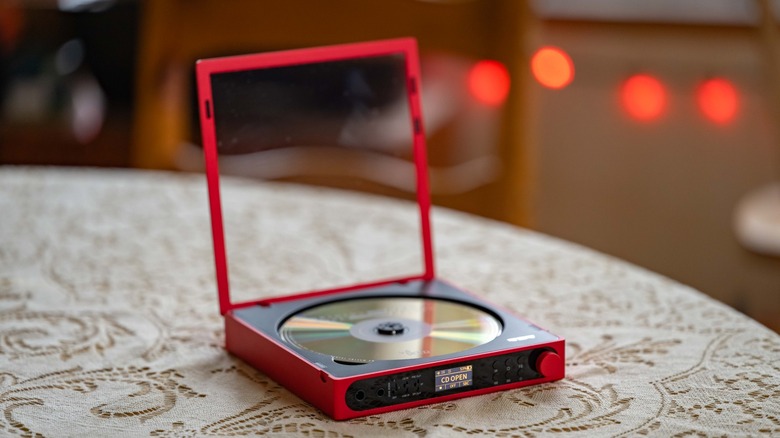
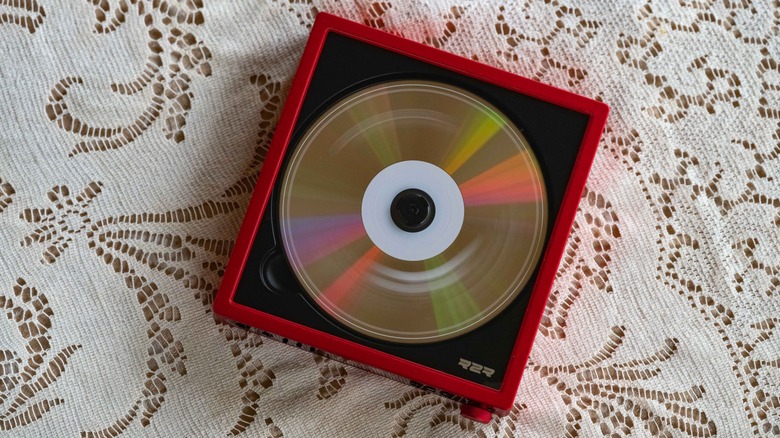
The build quality of the DM15 R2R is the first thing which really jumped out at me upon unboxing the CD player. It’s a truly gorgeous device, and it has a reassuring weight to it which is an indication of the metal and glass from which it is mostly composed. I opted for the red color over the white, black, and silver variants, and I’m quite happy with that decision. It very much looks the part of a premium audio device, and looks great on a desk next to a PC, or really on any shelf or other location you might want to place it. It’s small enough to be unobtrusive and fit in any space, and stylish enough not to clash with the decor.
 Andy Zahn/Read
It’s also obviously durable enough to stand up to being used as a portable device, and FiiO has put some thought into such a use case as they’ve included a protective stick-on layer for the glass panel on top of the CD player. This alleviates the concern of potentially scratching or breaking the most significant weak point on the DM15 R2R. Extra rubberized feet are included should the pre-installed ones become worn or dislodged, and a remote control and USB-C charging cable are included in the box.
The lid of the player is opened manually by hand, and has some weight to it so you’re not going to be popping it open by accident. I would have liked some sort of stopping mechanism when it is raised to prevent it from closing unintentionally when jostled, and unless you are very careful you are likely to smudge the glass while opening it.
What’s under the hood, and which headphones I used during testing
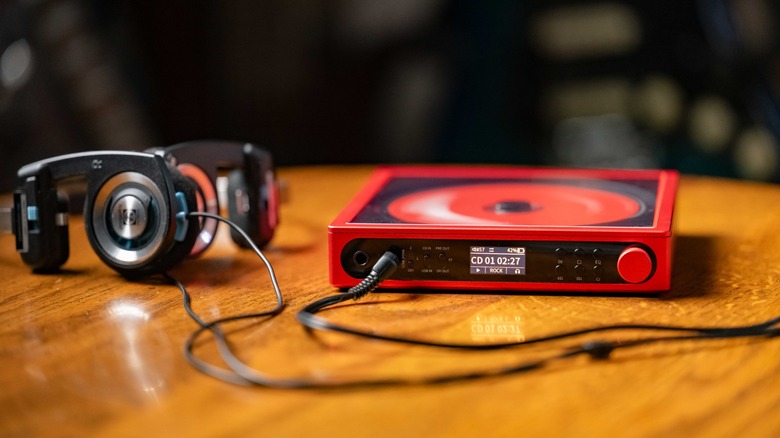
It’d be hard to imagine getting better sound out of a portable CD player than what is delivered by the DM15 R2R. The “R2R” in the product name isn’t a mere acronym, or meaningless numbers and letters, but rather it is referring to the R2R Digital to Audio Converter (DAC). This DAC uses a resistor ladder to convert digital files into analog waveforms, resulting in a more organic sound. It does this while also minimizing noise and distortion to a remarkable degree. As a result, if you’re someone like me who typically just listens to music on a phone or computer, the DM15 R2R offers a subtle improvement in audio quality over what you might be used to. For me, it gives me a reason to prefer listening directly to CDs on the player than to simply load up lossless audio files on my PC.
 Andy Zahn/Read
For battery life, you can expect about 7 hours of playback, so it would likely get you through most of the average work day without needing to be recharged. It can also be used in desktop mode, in which the battery is bypassed by USB-C power input.
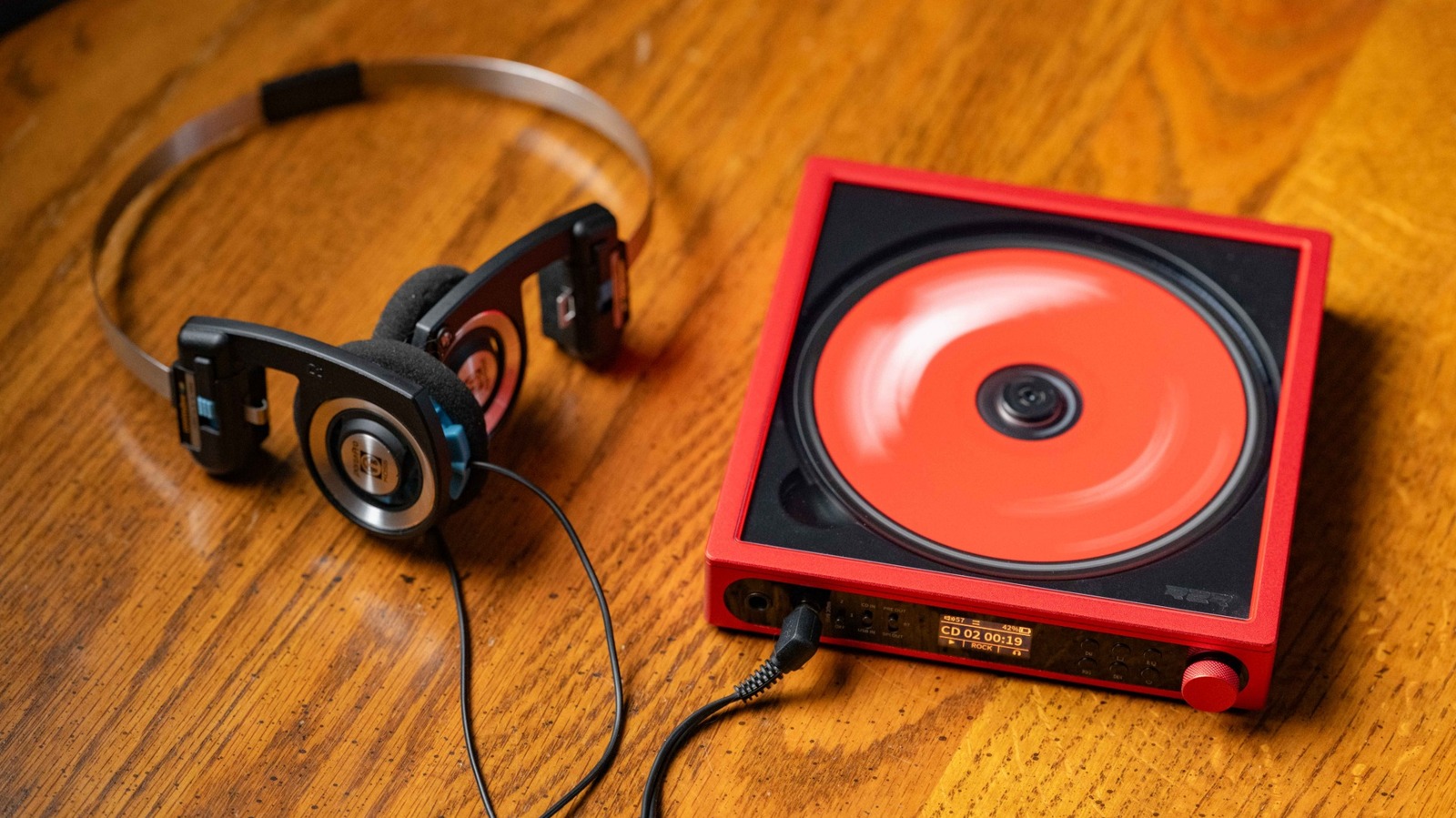
I tested the audio playback performance of the FiiO DM15 R2R primarily using my Koss Porta Pro wired headphones, and the Samsung Buds 3 Pro. The Koss Porta Pro are very simple, affordable, on-ear headphones that deliver really excellent audio quality for their size and price point. They are also exceptionally portable, so they pair well with a portable CD player like DM15 R2R. Seeing as the Koss Porta Pro has been in production since the early 1980s when audio CDs first became available, they seemed especially appropriate to use as part of this review.
Superb audio quality
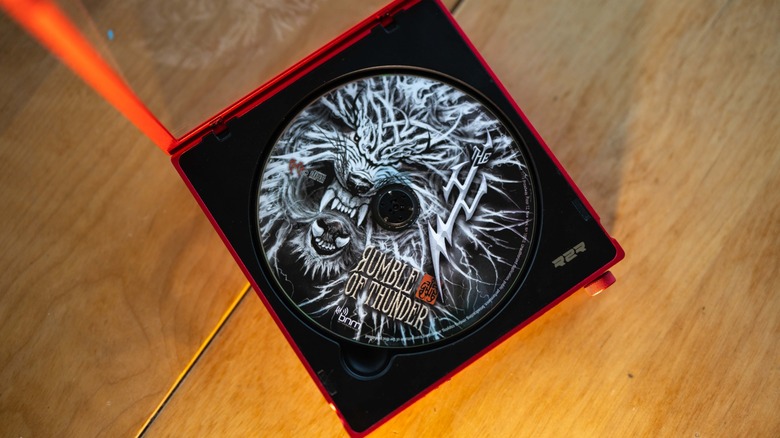
I listened to a wide range of music with the DM15 R2R, from Yo Yo Ma and Bobby McFerrin’s “Hush” album, to the punk rock jams of The Dropkick Murphy’s “For The People,” to the heavy riffs and growling vocals of the Halo Effect’s “March of the Unheard.” The DM15 R2R lent a wonderful, natural warmth to “Hush,” reproducing the unique dynamics of that album in a very pleasant manner. It also helped to accentuate the inspiring earnest quality of Ken Casey’s songs in “For The People.” The DM15 R2R was also no slouch when delivering the necessary clarity to fully enjoy and appreciate the complexity and savagery of the melodic death metal in “March of the Unheard.”
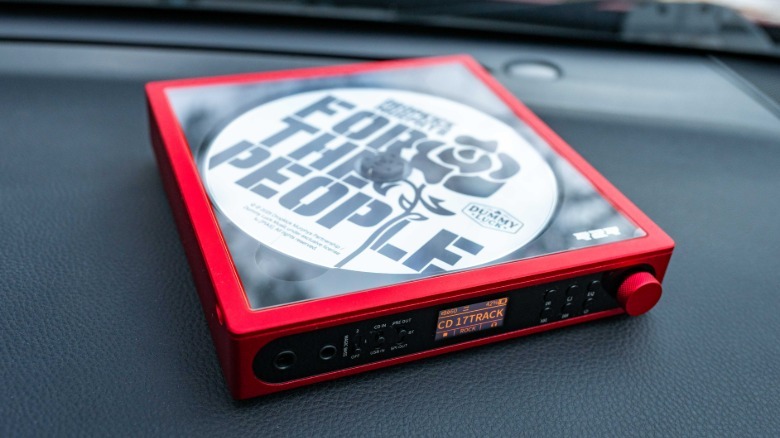 Andy Zahn/Read
Onboard you will find a number of useful EQ profiles. Personally, I preferred the “rock” preset for most of the music I listened to, and it’s nice to have a portable CD player with this fine-tuning capability. It really serves to enhance some of my favorite albums, such as Bayside’s “There Are Worse Things Than Being Alive” and “Free Reign to Passions” by The Dirty Nil. I also enjoyed listening to some of my favorite Creed songs, as well as classics from The White Stripes.
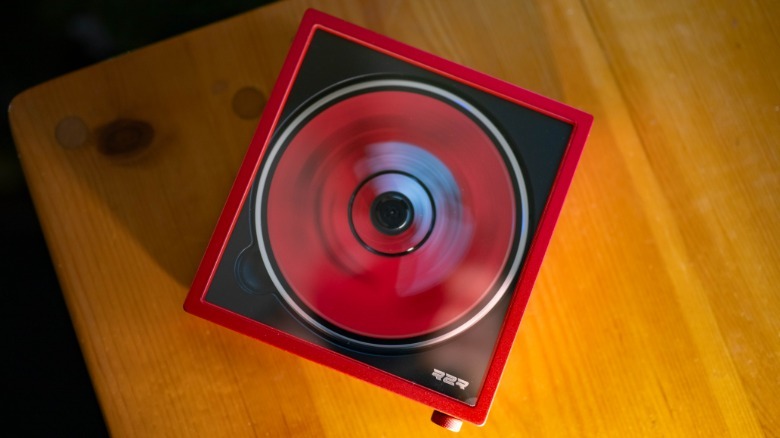 Andy Zahn/Read
One thing I loved about the DM15 R2R is just how quiet it is in operation. Whereas the CD/DVD drive I use for my PC roars away while in use, the DM15 R2R sits there spinning discs in near complete silence. If you’re sitting nearby to the player listening with speakers or open back headphones, it’s an enormous improvement. You can also use the DM15 as a simple DAC by passing audio through it from your computer, smartphone, or other device.
Festooned with inputs, outputs, and controls
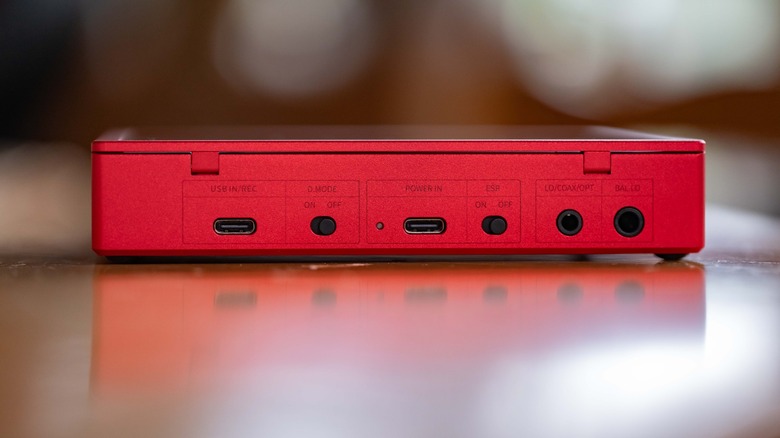
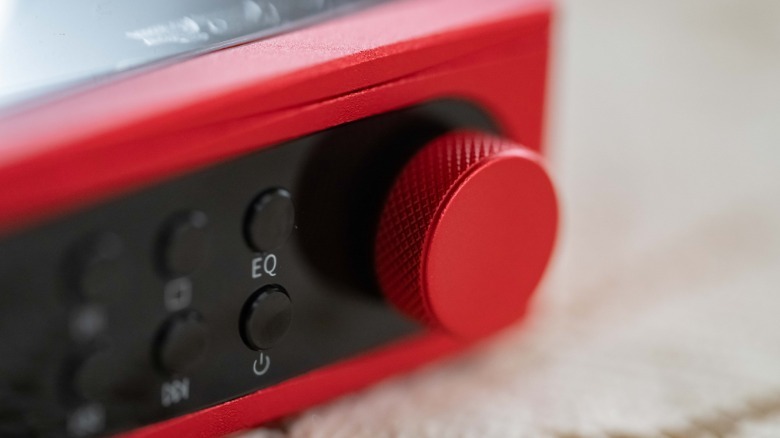
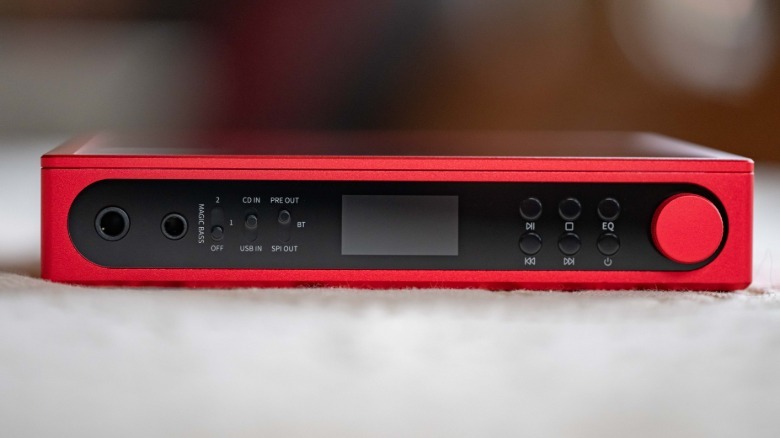
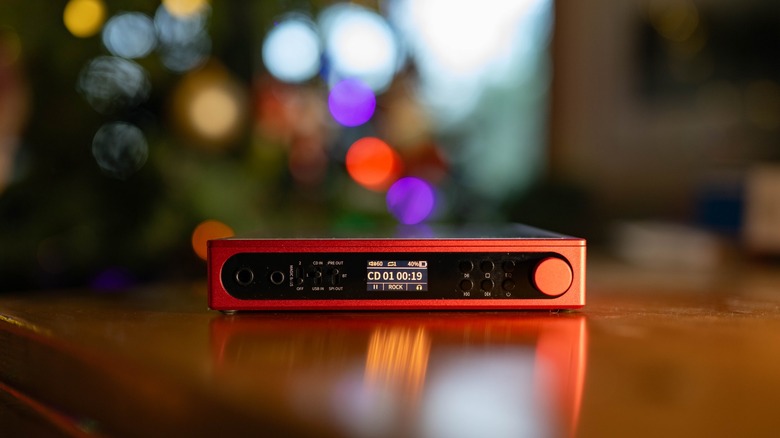
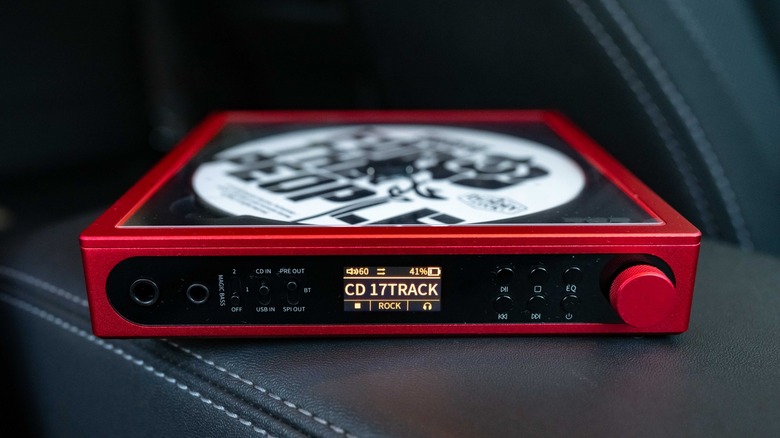
One thing I love about the FiiO DM15 R2R is just how extensive its onboard controls and ports are. Both the front and the back are equipped with pretty much everything you need. The metal volume wheel doubles as menu navigation, and the display is bright with high resolution, making it easily readable. Play/pause/stop, EQ, power, and skip forward/back are all clustered together next to the volume wheel (tracking forward/back is controlled by holding the skip buttons down). On the left side of the display you’ll find output and input switches, as well as a switch to control the bass boost. On the rear you’ll find switches to control ESP (skip protection) and desktop mode toggles.
 Andy Zahn/Read
For ports, the DM15 R2R is equipped with a 4.4mm balanced headphone PO output and a 3.5mm headphone PO output on the front. On the back you’ll find a 3.5mm headphone LO output, coaxial output (an adapter is included), USB in/REC interface, and the power in port, both of which are USB Type-C.
My one significant quibble with the design of the FiiO DM15 R2R is that having the controls on the front of the player makes them a little difficult to access, and the device has a tendency to slide backwards when they are pressed. A top-mounted control panel, or perhaps an angled control panel, would have been preferable on such a small, relatively light weight device to prevent movement when the controls are operated. For this reason, I preferred to use the included remote control.
Bluetooth compatibility is spotty
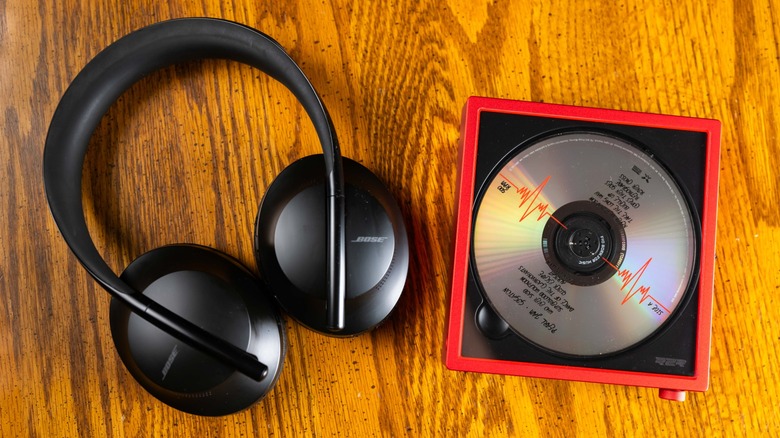
One aspect of the FiiO DM15 R2R which could use improvement is in regard to Bluetooth compatibility. While the player worked flawlessly with the Samsung Buds 3 Pro, it didn’t work so well with my Bose NC700 headphones. While it connected just fine, the volume output from the DM15 R2R immediately increased to its maximum setting upon connecting to the NC700, and resisted all attempts to reduce the volume to a listenable level. I tried changing the volume using the onboard controls of the headphones, I tried connecting the Bose app to the headphones from my smartphone while the headphones were simultaneously connected to the CD player, and I tried changing the volume using the remote control, as well as playing around with every setting in the player and the headphones, but nothing worked. FiiO didn’t have a fix for the issue when I contacted them about it, and it seems that the Bose NC700 is simply incompatible with the FIIO DM15 R2R.
The upshot is that there is a possibility your Bluetooth headphones or speaker may not work with the FiiO DM15 R2R. Given the high volume to which the NC700 defaulted to when connected to the DM15 R2R, I recommend connecting Bluetooth headphones and beginning playback prior to putting them on your head, just in case. When connected to compatible wireless headphones, the player sounds amazing, and the Bluetooth connection is reasonably strong.
A case for physical media in 2026
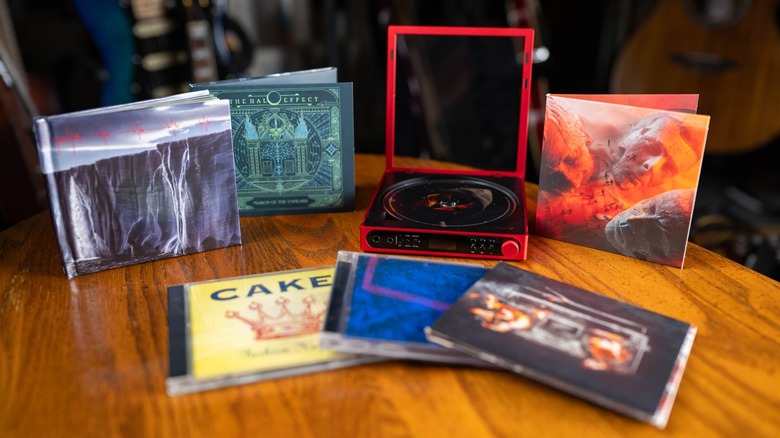
By the time I became interested in music, it was well and truly the age of streaming, so for many years I was quite happy to gorge myself on the nearly endless repository of music that is Spotify. In those early days, it was cheap, convenient and, in the ignorance of youth, guilt free. However, with the cost of a streaming subscription rising precipitously, I’ve realized that every penny I throw at subscription services is merely tossed into a black hole, with nothing permanent in return. Then there’s the fact that the pittance which streaming services pay out to artists makes them little better than piracy.
The $11.99 you pay per month for a Spotify subscription is roughly equal to that of a brand new album from your favorite artist. Every time you stream a song on Spotify, on the other hand, the artist receives roughly $0.004. For an artist to receive $1 for a song, you would need to stream that song 25,000 times. For a 12 song album, if we say the average song is 3.5 minutes long, you would need to stream that album on repeat for about 4 years in order for the artist to receive $12. Of course, an artist only receives a fraction of the sale of a CD, perhaps $2 or $3, but that’s still equivalent to between 50,000 and 100,000 playbacks of their songs.
2025 was an incredible year for new music, but even then there were only around a dozen albums released that I enjoyed enough to want to own. You might be surprised how close the cost of purchasing music the music you really enjoy each year compares with the cost of subscription services.
Some advice on building your physical media library
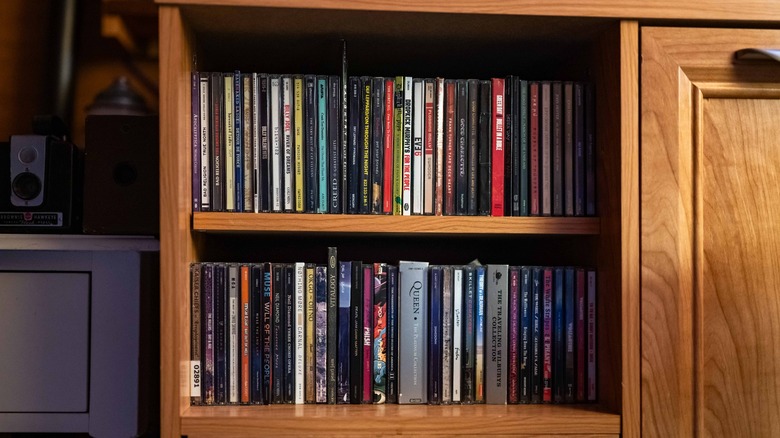
The challenge to CD collecting is not going overboard, which is something I’ve struggled with myself. In my haste to get to a point where my spotify subscription is superfluous, I’ve acquired a number of titles which I will probably never bother to play again; I thought I wanted them in the moment, only later realizing that in fact they aren’t as good as I’d imagined. Others were purchased as part of lots with CDs I actually wanted. The problem is that it’s not as easy to resell disks after you’ve changed your mind, because while they do sell, they don’t sell fast. You need to realize that once you’ve acquired a CD, that CD’s going to hang around for a good long time.
The key is to be highly selective about what you buy. Make a list of all the albums you listen to the most, and focus on acquiring those. Keep in mind that if you’re like me, the journey of discovery involved with CD collecting means you are likely to stumble across forgotten albums you loved long ago, or ones you never knew existed. Streaming is great for content discovery, but I’ve found collecting physical media to be equally conducive to this.
The best thing is that once you own a CD and have it safely backed up, no one can ever take it away from you. Remember that just because your favorite song is on Spotify today, it might not be there tomorrow, but if the whole internet were to crash and burn, your CDs (and the DM15 R2R) would still be perfectly functional. CD collecting is a bit like being a prepper, except that unlike a trash can full of rice, CDs don’t go moldy.
Using the FiiO DM15 R2R to build your own personal streaming service
One great aspect of the DM15 R2R is that it’s capable of ripping CDs to lossless WAV files as you listen, making it an attractive option for backing up your collection. Regardless of whether you’re using digital files or physical media, it’s always a smart idea to have at least one backup. Keep in mind that this device can only rip CDs at the same rate as playback, and it can only rip them to the WAV format. Also, it doesn’t give you some of the advantages of PC software such as Exact Audio Copy, but EAC has a somewhat steep learning curve, and to do it with the DM15 R2R is literally a plug-and-play process.
Once your discs are ripped and filed away on a hard drive, they don’t need to just sit there as an untouched backup. I personally transfer mine to the FiiO Snowsky MP3 player, which is more convenient if I’m out doing farm chores or hiking. However, just because you’ve decided to cut off your Spotify subscription and buy physical media instead doesn’t mean you can’t still enjoy the perks of music streaming.
So long as it’s only for personal use and you’re not sharing it around, it is perfectly legal for you to use software such as Jellyfin to set up your own personal music streaming service. I’m personally assembling a home media server in my basement which will allow me to access all my music, movies, and other files anywhere in the world, without paying a subscription fee to anyone. There is a wonderful sort of liberation in owning not only your own media, but also your own hardware, and using open source software not tied to a mega-corporation.
You get what you pay for, but there are more affordable alternatives
At $269, the FiiO DM15 R2R is anything but cheap, though it’s actually much less expensive than the portable CD players which Shanling recently launched, the least expensive of which will set you back $349. The FiiO DM15 R2R absolutely delivers the quality you would expect at its price point, and if you can afford one you won’t be disappointed.
With that said, less expensive options do exist. At the very low end, for around $30 you can pick up a CD/DVD drive for your PC from BestBuy that will work great if all you want to do is rip audio or listen through your PC. However, that is hardly ideal from an experiential point of view, and those drives can be quite obnoxiously loud. The FiiO DM13 offers much about what makes the DM15 great, and will set you back just $154 on Amazon. I like how it has top-mounted controls, and the spring-driven hatch mechanism of the lid is attractive. However, many aspects of its design are notably less-premium in quality than the DM15, so if you want the best of the best, you do get what you pay for with FiiO’s new flagship portable CD player.
Conclusion
Wrapping up this review, I’m sitting here with my laptop in a big comfy chair listing to the incredible throat-singing Mongolian metal of The Hu’s “Rumble of Thunder” album, with the disc spinning in the corner of my eye beneath the glass lid of the FiiO DM15 R2R. The music is warm, and organic, with the presence of that spinning disc adding an element of motion to the experience that breathes extra life into the experience. My headphone cable tethers me mentally as well as physically to the music. Simply put, it’s glorious.
The DM15 R2R has its flaws, and I have a number of minor nitpicks. I wish it could rip to FLAC file format or be used with EAC when connected to a PC, and the inconsistent Bluetooth compatibility is certainly a concern. However, ultimately these factors pale in comparison to what is fundamentally a beautiful device that delivers a wonderful listening experience in a highly compact and portable form factor. It’s packed full of features, and has some very thoughtful accessories included in the box. While it’s absolutely great for taking on the road for on-the-go listening, I grew to love it most for home listening; perched on my desk next to my CD collection and headphones. It has elevated my experience of intentional listening, and made it more likely for me to reach for a CD than to go running to the internet for my music.
The FiiO DM15 R2R is currently somewhat difficult to find in the U.S., and at time of writing the only retailer with units available appears to be Apos.audio where the black and silver versions are available for $269.99.

Comments are closed.