
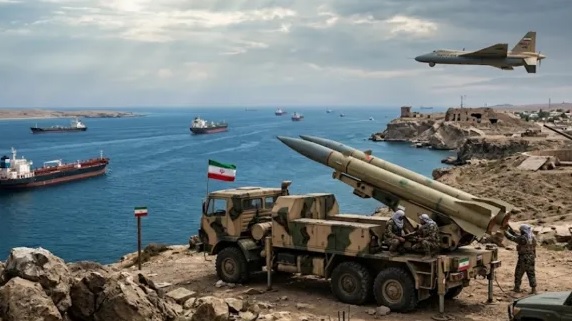

New Delhi: Despite the armistice between Iran and the United States, the future of peace in the Gulf countries appears bleak. US intelligence reports have revealed that even after weeks of fierce fighting, Iran’s military infrastructure has not been completely destroyed. According to the latest analysis by US military and intelligence officials, Iran still has 40% more combat drones and more than 60% more missile launchers than before the war, fully intact and operational. Furthermore, the report claims that Iran has brought out nearly 100 new missile systems from its secret bunkers and tunnels, dramatically increasing its strike capability.
Threat Looms Over the Strait of Hormuz
Experts believe this large stockpile of weapons could pose a serious threat to the Strait of Hormuz, a sea route considered a lifeline for global oil supplies. According to a New York Times report, if Iran repairs its damaged weapons, it could quickly regain 70% of its old drone stock.
Russia also issued a warning.
Meanwhile, former Russian President Dmitry Medvedev’s statement is also making the rounds. He stated that the ceasefire between the US and Iran may only be a temporary pause. Medvedev stressed that Iran has proven that its strategic strength, particularly its hold on the sea lanes, remains strong.
Will history repeat itself?
History shows that Iran has always used the Strait of Hormuz as a weapon. During the Iraq War in the 1980s, it laid landmines there. However, Iran’s strategy has now changed. Instead of mines, it has the capability to target ships with modern drones and missiles.
Last year, when Israel and the United States pressured Iran, then-Supreme Leader Ayatollah Ali Khamenei exercised restraint. But this time, the situation is challenging. Following Khamenei’s death early in the conflict, Iran’s leadership has adopted a tough stance. Officials believe that while the exact numbers are unclear, Iran still has enough strength to pose a significant threat to global trade.

Comments are closed.