
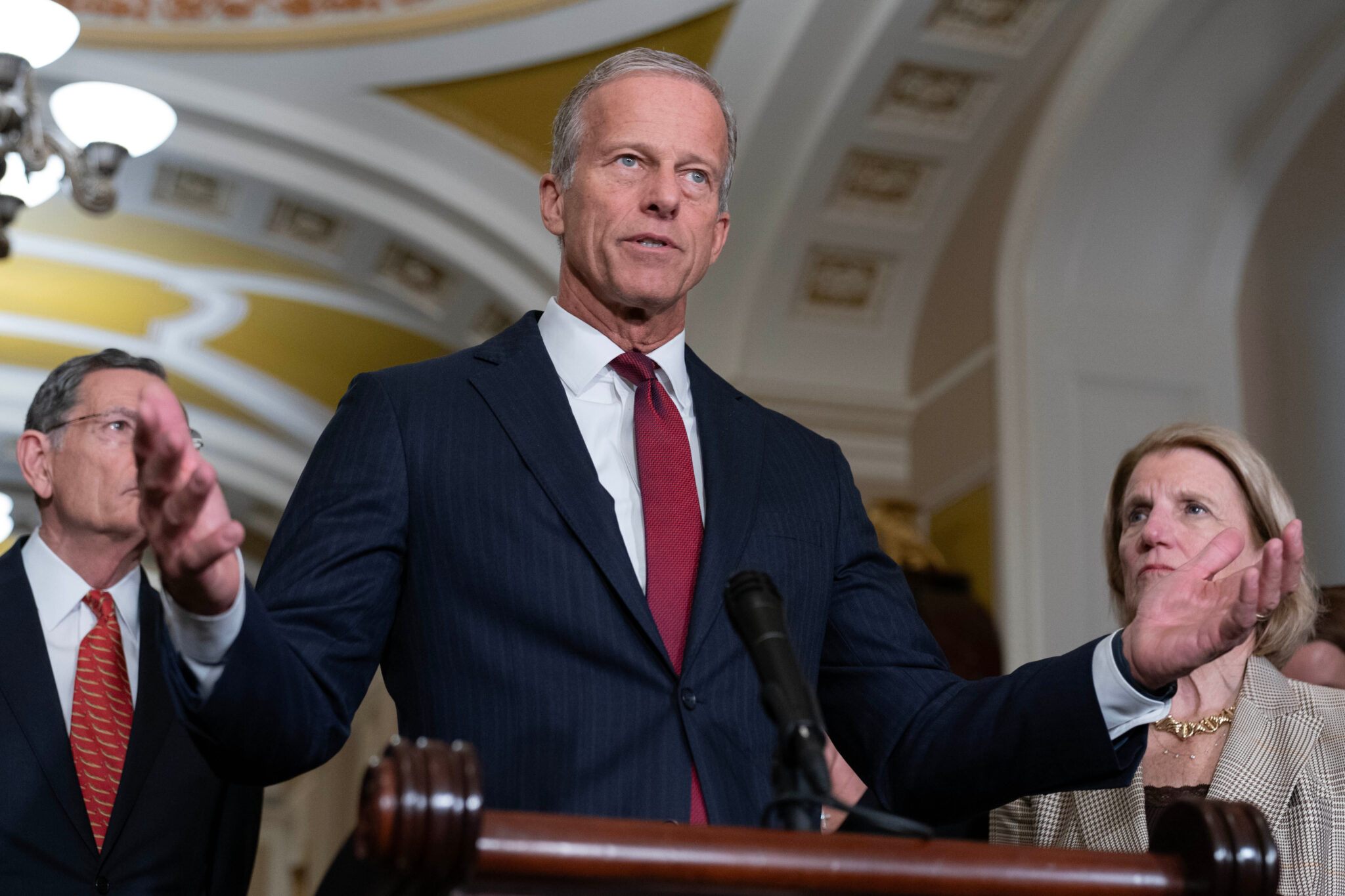

Thune: Senate to Consider Voting Bill but Rejects ‘Talking Filibuster’/ TezzBuzz/ WASHINGTON/ J. Mansour/ Morning Edition/ Senate Majority Leader John Thune says the Senate will consider the SAVE America Act but rejects using a “talking filibuster” to pass it. President Donald Trump has demanded the voting bill become Congress’ top priority before the midterm elections. Republicans are preparing a vote that is expected to fail due to unified Democratic opposition.
Senate Voting Bill Debate Quick Looks
- Senate Majority Leader John Thune says the Senate will debate the SAVE America Act.
- The bill would require proof of U.S. citizenship to vote in federal elections.
- President Donald Trump is pushing aggressively for the legislation.
- Democrats unanimously oppose the bill.
- Republicans currently hold 53 Senate seatsshort of the 60 needed to overcome a filibuster.
- Trump has urged Republicans to use a “talking filibuster” to force passage.
- Thune says there are not enough votes to change Senate rules.
- GOP senators are instead planning a standard Senate vote.
- Trump also wants to add provisions limiting mail-in voting and transgender policies.
- The debate comes ahead of the 2026 midterm elections.
Senate to Debate SAVE America Act
Senate Majority Leader John Thune says the Senate will move forward with debate on a Republican-backed voting bill, even as he rejects demands from President Donald Trump to use unusual procedural tactics to pass it.
The legislation, known as the Safeguard American Voter Eligibility (SAVE) America Actwould require voters to provide proof of U.S. citizenship when registering to vote in federal elections.
Trump has made the bill a central political priority ahead of the upcoming midterm elections, arguing that tougher voting requirements are necessary to prevent election fraud.
However, the measure faces steep challenges in the Senate.
Filibuster Rules Stand in the Way
Under current Senate rules, most legislation requires 60 votes to advance past a filibuster.
Republicans hold 53 seatsmeaning they would need support from at least seven Democrats to pass the bill.
Democrats have uniformly opposed the legislation, arguing it could prevent millions of eligible Americans from voting if they lack easy access to documents such as birth certificates or passports.
Trump has pushed Senate Republicans to bypass the hurdle through procedural changes, including eliminating the filibuster or forcing Democrats into a so-called talking filibuster.
But Thune says the votes for those strategies simply do not exist.
“That is just a function of math,” Thune told reporters. “For better or worse, I’m the one who has to be a clear-eyed realist about what we can achieve here.”
Trump Pushes Aggressive Strategy
Trump has repeatedly pressured Republican lawmakers to prioritize the SAVE America Act above all other legislation.
He has even threatened to refuse signing any other bills until Congress passes it.
Speaking at a retreat with House Republicans in Florida, Trump argued that the legislation would help secure Republican victories in upcoming elections.
“It’ll guarantee the midterms,” Trump said. “If you don’t get it, big trouble.”
Supporters of the bill say requiring proof of citizenship would strengthen election integrity.
Federal law already requires that voters in federal elections be U.S. citizens, but the proposed legislation would impose stricter documentation requirements.
GOP Leaders Favor Standard Vote
Rather than pursuing a rule change, Senate Republican leaders are preparing to bring the bill to the floor under normal procedures.
That approach would likely lead to a vote that fails because Democrats can block it through a filibuster.
Still, Thune said Republicans want to force Democrats to publicly vote on the issue.
“We’re going to have a fight on the floor,” he said. “We’ll let the American people see where senators stand.”
Several GOP senators say the party should move forward with debate even if the legislation ultimately fails.
“There’s been enough dithering,” said Sen. John Kennedy of Louisiana. “It’s time to go and let the chips fall where they may.”
Talking Filibuster Proposal Divides GOP
The “talking filibuster” idea has been championed by some conservativesincluding Sen. Mike Lee of Utah.
Under that approach, Democrats would have to continuously hold the Senate floor and speak in order to block the bill.
Supporters believe that eventually Democrats might give up, allowing the legislation to pass.
But Thune warned that the strategy could backfire.
It would allow Democrats to introduce an unlimited number of amendments on unrelated topics, potentially forcing Republicans to take politically difficult votes during an election year.
“We can’t find a piece of legislation in history that’s been passed that way,” Thune said.
Republicans Reluctant to End Filibuster
Many Republicans also oppose eliminating the filibuster entirely.
For years, GOP lawmakers have defended the rule as an important protection for minority rights in the Senate.
Sen. Thom Tillis of North Carolina said changing the rules could have long-term consequences.
“There’s a right way to do it, there’s a wrong way to do it,” Tillis said. “Nuking the filibuster doesn’t work.”
He added that forcing a talking filibuster could turn the Senate into what he described as a “goat rodeo.”
Trump Seeks Additional Provisions
Trump has also proposed expanding the SAVE America Act with additional policies.
Among the ideas he has suggested are:
- A ban on now mail-in ballots
- A prohibition on transgender women competing in women’s sports
- Restrictions on gender-affirming surgeries for minors
House Speaker Mike Johnson said Republicans are exploring ways to incorporate those proposals.
However, doing so could require the House to pass a new version of the bill and send it back to the Senate.
Even within the GOP, it remains uncertain whether such additions would gain enough support.
Election-Year Political Fight
The debate over the SAVE America Act highlights the broader political battle over election rules ahead of the 2026 midterms.
Republicans argue that stricter identification requirements will strengthen public confidence in elections.
Democrats counter that the legislation risks disenfranchising eligible voters and represents federal overreach into election administration.
For now, the Senate appears headed toward a showdown vote that could sharpen those political divisions — even if the legislation ultimately fails to pass.
More on US News

Comments are closed.