
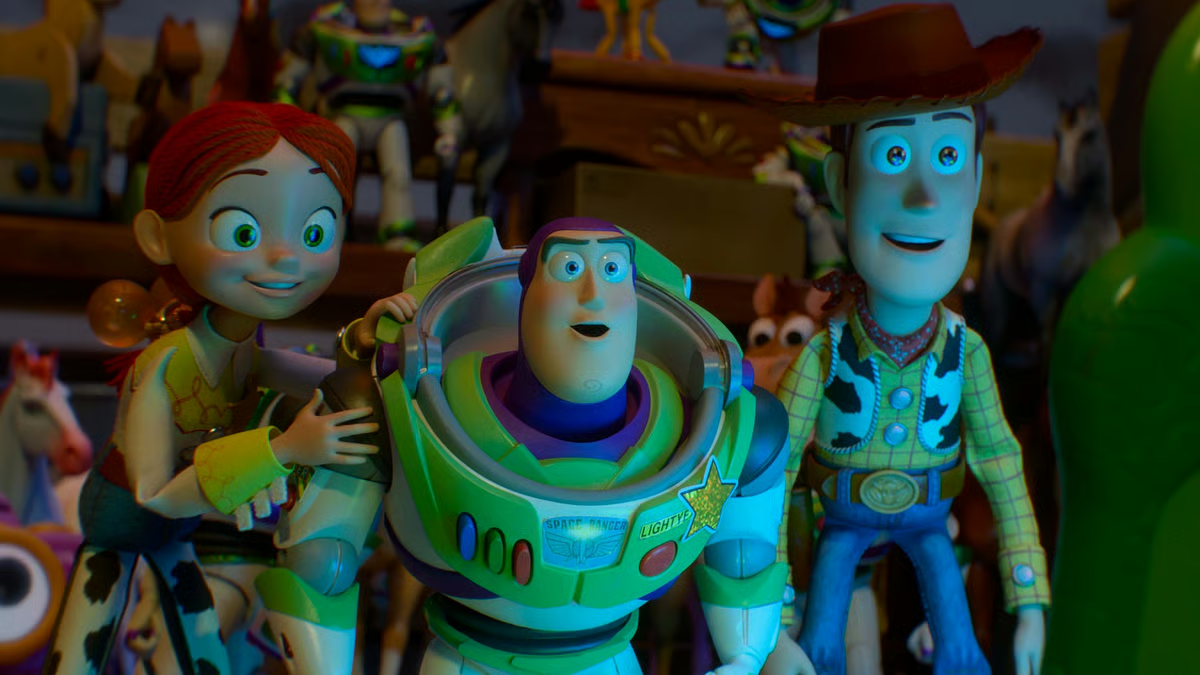

Ever since the first film, Toy Story has always grappled with different forms of existential crisis. We have seen the toys go through the fear of being replaced, of being forgotten, and as Andy grew up, the franchise touched upon the idea of gracefully moving on. Toy Story 5 is more than just about toys being made irrelevant by technology. It’s about the importance of play, the diminishing role of imagination, and why that matters, and the value of building in-person connections. However, the film is far from a tech alarmist cautionary tale. Everything great and unique about classic Pixar storytelling is on glorious display here. It is heartwarming to see the toys show care and affection to their humans. Forget the signature third-act Pixar emotional gut punch. Every time the toys yearn to play with their kid, when they go on daring adventures to make them smile again, or when they are all giddy with happiness just looking at old pictures of their kid, you can’t help but feel that we are witnessing one of the purest, unadulterated portrayals of love on screen. It is not the care and affection of a parent towards their children or someone’s feeling for their significant other; these are toys pouring love from the bottom of their plastic hearts, and yet, somehow, you get it. Whether that is the power of storytelling or the power of love, Toy Story 5 is a fine example either way.
While franchise stars Woody (Tom Hanks) and Buzz Lightyear (Tim Allen) are relegated to supporting roles, Jessie the cowgirl ragdoll (Joan Cusack) takes the lead, as she, along with the rest of the toys, helps Bonnie (Scarlett Spears) find new friends while also trying to stop her addiction to a tablet called LilyPad. The film never misses a chance to land a joke, and it always does so without using it as a tool to undercut an emotional scene. It reminds you of the early golden age of Pixar. At the beginning, we see how, except for a few like Bonnie, every kid seems to be absorbed by screens, and soon, Bonnie feels left out. We see a cultural shift in which kids playing with toys are seen as weirdos, while the default mode of friendship seems to blossom entirely through chatbots and mobile games. It was wonderful to see the film subtly highlighting reading as an indicator of a healthy childhood. Towards the end, the film inevitably makes the compromise we expected, wherein the toys and the devices find a way to work together for the child’s happiness. It felt like a surrender to the fact that we cannot entirely wipe out screens from our lives. Even as we get attached and feel happy for the characters at the end, the film has nevertheless opened up a lot of discussions around technology’s overwhelming presence, and leaves it unfinished. Even Pixar’s signature warmth struggles to mask the bleakness of the complex theme it has chosen to explore this time.
In what it succeeds, however, Toy Story 5 succeeds tremendously. When we see Bonnie playing with her friend, imagining whimsical, adventurous tales, starring their toys, you get a glimpse of the richness of imagination and how it helps us connect with others in a way that screens are yet to offer. After all, the screens are competing with thousands of years of evolution. The beauty of Toy Story 5 does not lie in one-dimensional technology bashing, but in showing us the power and the joy of conjuring entire worlds through imagination.
Comments are closed.