
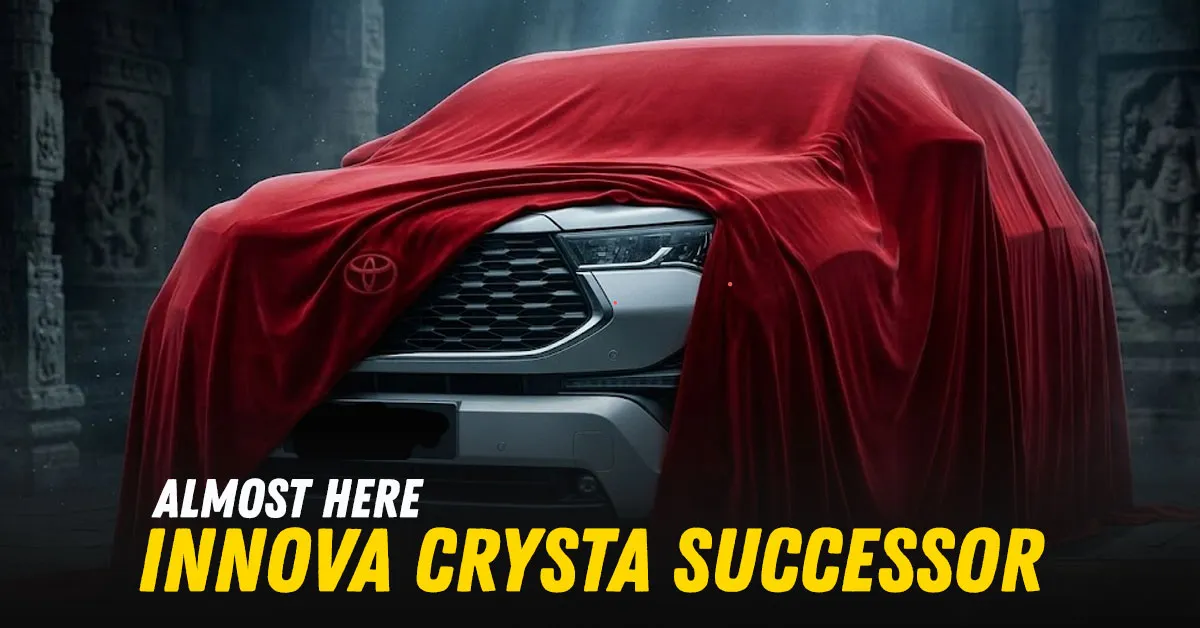

The upcoming CAFE3 norms are set to shake up the Indian automotive landscape. Many popular models may find it difficult to comply with and make it into the next decade. The Toyota Innova Crysta is a good example. Despite strong demand, the Japanese manufacturer will pull the plug on the Crysta in early 2027. Fresh information suggests that a lower-spec hybrid variant of the Innova Hycross could take its place after the Crysta bows out. This will mark a major shift in Toyota’s MPV strategy- from diesel workhorses to electrified, regulation-friendly people movers.
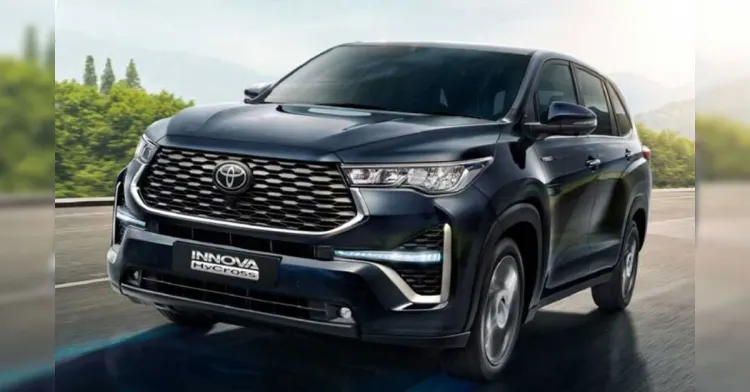
The discontinuation of the Innova Crysta leaves a sizeable void in Toyota’s lineup and in the MPV space in general. The carmaker is reportedly working on a new, more accessible version of the Innova Hycross, internally codenamed 840D, to fill this gap.
It will be positioned as a fleet-friendly offering and will thus come with fewer features and a more cost-conscious packaging, than the standard Hycross. This will allow the carmaker to cut costs and price it in a way that it appeals to people who would otherwise have opted for the Crysta.
The Crysta replacement will be a hybrid. The strong hybrid powertrain will ensure that it complies with stricter emission norms and also deliver excellent fuel efficiency figures. Mileage or fuel efficiency can make or break a deal in the fleet segment. From what we know yet, Toyota will engineer the new Hycross in a way that it can comfortably take over the exact role left by the Crysta, although with a completely different technological foundation.
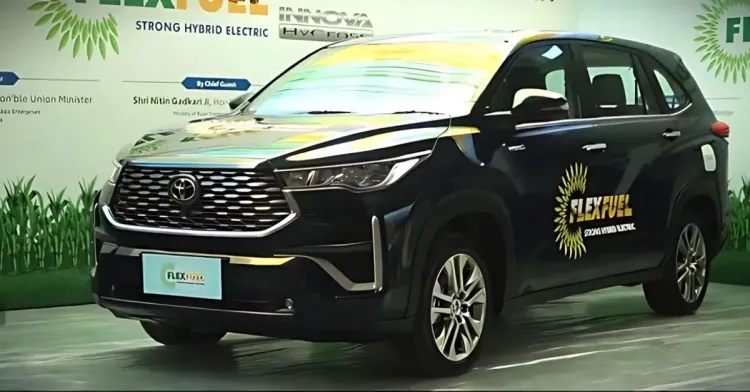
Flex-fuel powertrain remains another possibility. Toyota had showcased flex-fuel versions of the Hycross at the Bharat Mobility Expo in 2024 and 2025. These support Ethanol blends beyond E20 and align with the Indian government’s push for Ethanol-blended fuel.
A flex-fuel version, if introduced at a compelling price, will appeal well to fleet operators, and in cost-sensitive segments. The hybrid technology will further make up for the drops in fuel economy brought about by the use of Ethanol-blended fuel.
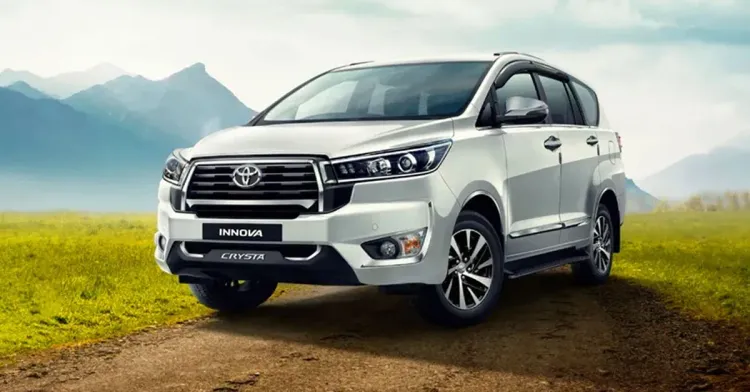
The Crysta was originally expected to be discontinued around 2025. The model, however, was then in great demand. Even today, it enjoys stellar acceptance in most cities. Back then, a large share of orders were from fleet operators. In 2025, semiconductor-related supply constraints had affected the Hycross, effectively slowing down its production. This, in a way, forced Toyota to extend the Crysta’s lifecycle. Customers benefitted the most from this.
The Innova Crysta is underpinned by Toyota’s IMV platform. This is a rugged ladder-frame chassis. Powering this MPV is a dependable 2.4-litre diesel engine. Together, these made the package so sweet that it excelled on long-distance drives, especially in the commercial space. It delivered impeccable ride quality, comfort, and minimal fatigue.
India’s upcoming CAFE 3 norms will significantly tighten fleet-level Carbon Dioxide emission targets. Heavy, ladder-frame diesel vehicles like the Crysta are at a clear disadvantage under these, as they have higher emissions than smaller vehicles (and engines).
Hybrid vehicles, on the other hand, benefit from regulatory incentives. Under the CAFE norms, strong hybrids receive “super credits,” meaning each hybrid sold is counted as two vehicles when calculating fleet emissions. In other words, every strong hybrid Hycross sold will help Toyota offset emissions more aggressively, and ensure compliance.
The discontinuation of the Innova Crysta will leave a noticeable gap in the market.At present, there are no direct rivals. No body-on-frame MPVs with diesel engines. While companies like Mahindra and Tata Motors have strong diesel engines, neither has an MPV offering. Hyundai is reportedly evaluating the Staria for India.
If it materialises, this MPV will be brought with high localisation and competitive pricing. It remains to be seen if the Korean giant would do this, as the general trend is of manufacturers moving away from traditional diesel MPVs and towards monocoque, electrified alternatives.
Source: Autocar
Comments are closed.