
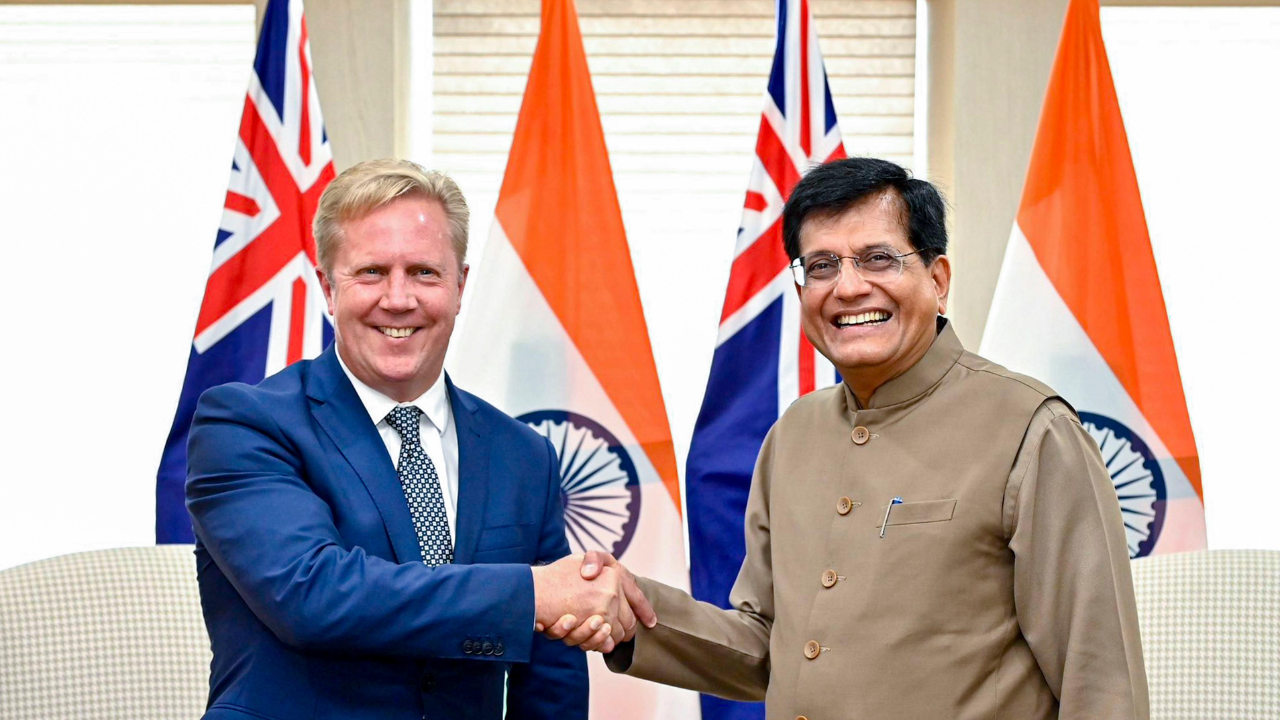
Trade Deal: Big News! New phase of India – New Zealand friendship! There is no tax on 70% of Indian goods, who will benefit?

- India and New Zealand economic ties stronger
- A historic ‘trade deal’ was signed
- 70% of Indian goods have no import duty
India-New Zealand Trade Relations: India and New Zealand have signed a historic ‘trade deal’ to strengthen their economic ties with each other. They have recently signed this trade agreement. According to this agreement, almost . This is likely to increase the demand for Indian goods in the New Zealand market.
War Impact on Sweets: Ice cream-chocolate lovers hit! ‘Sweet dishes’ became expensive due to Iran war, prices will flare up due to Trump?
The India-New Zealand Free Trade Agreement (FTA) was signed on Monday in the presence of Commerce and Industry Minister Piyush Goyal and New Zealand Trade and Investment Minister Todd McClay. The agreement is expected to significantly strengthen economic ties between the two countries.
What is this deal?
A free trade agreement is an agreement between two or more countries under which those countries agree to completely eliminate or significantly reduce customs duties on various types of tradable goods. Also, the agreement aims to reduce other barriers that may affect trade and investment between participating countries. Before the agreement was signed, Goyal said on Sunday that the free trade agreement with New Zealand would create huge opportunities for Indian businesses, including Agra-based leather exporters.
Goyal said that products sent from India to New Zealand will enter the market without any import duty, which will create huge development opportunities for sectors such as Agra’s leather industry.
India-New Zealand Free Trade Agreement: Major Issues
- Negotiations for an India-New Zealand trade agreement originally began in 2010. After nine rounds of talks, the talks were halted in 2015. They were restarted in March 2025, giving a fresh start to the process. On 22 December 2025, it was announced that these talks had been successfully concluded.
- The agreement has 20 chapters covering key areas such as trade in goods, rules of origin, services, customs procedures and trade facilitation, sanitary and phytosanitary measures, technical barriers to trade, trade remedies, dispute settlement and legal framework.
- For India, this agreement has significant benefits. All Indian exports to New Zealand will have duty-free access, including products from labour-intensive industries such as textiles, plastics, leather goods and engineering goods. New Zealand’s average import duty is currently only 2.3 percent. New Zealand has also pledged to invest $20 billion in India over the next 15 years.
- In the services sector, India has committed to market access in several high-value sectors including information technology and IT-enabled services, professional services, education, financial services, tourism, construction and various other business services.
- The agreement also creates new opportunities for skilled Indian professionals. Temporary Employment Entry Visa Route. The route will allow up to 5,000 Indian professionals in skilled trades to live and work in New Zealand for a period of up to three years at any one time.
- Additionally, Indian wine and spirits exports will have duty-free access to the New Zealand market. At the same time, wine imported from New Zealand will enter India at subsidized rates and the duty will be phased out over a period of 10 years.
- For New Zealand, this deal provides a major entry into the Indian market. As per the framework adopted in India’s trade agreement with Australia, India has opened 70 percent of its tariff lines to New Zealand.
- India has also provided tariff concessions on agricultural products such as apples, kiwifruit, manuka honey and other albumins including milk albumin. However, these benefits will be subject to quota limits and minimum import price requirements.
- Additionally, duties on iron, steel and scrap aluminum products will be phased out over a period of up to 10 years.

Comments are closed.