
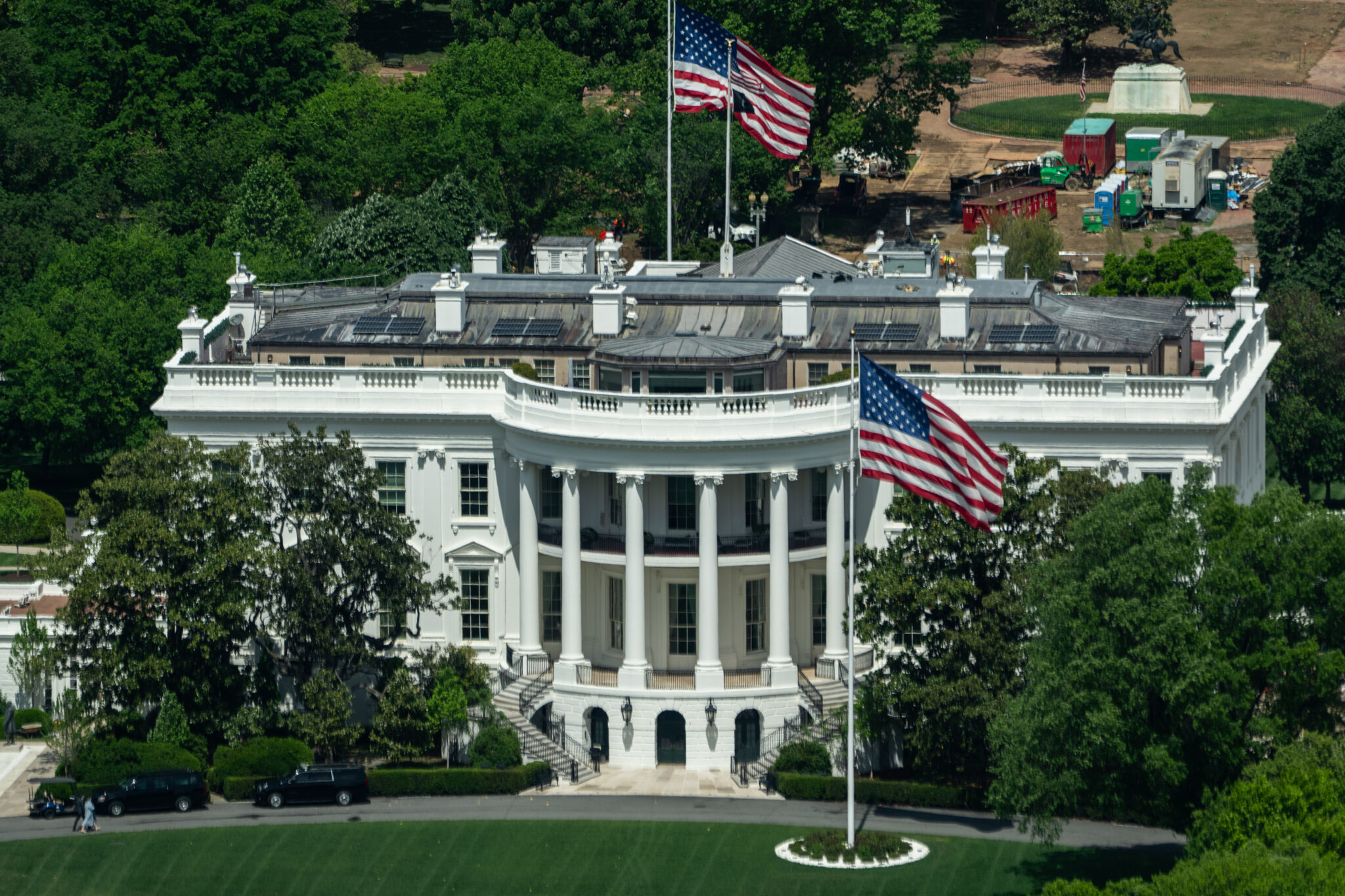

Trump Ballroom Legal Battle Sheds Light on Secret White House Bunker/ TezzBuzz/ WASHINGTON/ J. Mansour/ Morning Edition/ President Donald Trump’s legal fight over his proposed $400 million White House ballroom project has revealed new details about the historic underground bunker beneath the East Wing. The heavily fortified facility, dating back to Franklin D. Roosevelt’s presidency, has played a major role in national emergencies, including the Sept. 11 attacks and the 2020 George Floyd protests. The courtroom dispute now centers on whether Trump can continue construction without approval from Congress and federal preservation agencies.
- Trump’s $400 million ballroom project faces a major legal battle
- The project includes major underground security upgrades beneath the White House
- The bunker dates back to 1942 during Franklin D. Roosevelt’s presidency
- It served as the Presidential Emergency Operations Center
- Dick Cheney was taken there during the Sept. 11 attacks
- Trump was moved there during 2020 George Floyd protests
- The project includes bomb shelters, medical facilities, and military installations
- A federal appeals court allowed underground work to continue while legal challenges proceed

Trump’s Ballroom Project Brings White House Bunker Into Focus
President Donald Trump’s $400 million White House ballroom project has unexpectedly opened a rare window into one of the most secretive parts of the presidential complex—the underground bunker beneath the East Wing.
The legal battle over the massive 90,000-square-foot ballroom project has highlighted the role of a heavily fortified underground security facility that has quietly served presidents for decades.
The proposed ballroom would replace the former East Wing structure, which was demolished last fall.
While much of the project focuses on aboveground construction, court filings show the underground portion includes bomb shelters, military installations, medical facilities, and reinforced security infrastructure.
The White House argues the ballroom cannot function separately from the underground security systems beneath it.
Origins of the White House Bunker Date Back to World War II
The history of the White House bunker stretches back to 1942, during World War II.
President Franklin D. Roosevelt ordered the installation of an underground bomb shelter beneath the East Wing after the United States entered the war.
That facility later evolved into what is now known as the Presidential Emergency Operations Center (PEOC), one of the most secure locations in the country.
Because of presidential security concerns, most details about the bunker remain highly classified.
Still, historians say its original purpose was never meant for long-term residence.
Garrett Graff, a national security historian, explained that the bunker was designed for short-term emergency relocation.
“The whole point of the sort of presidential evacuation and continuity of the presidency is you want to get the president out of the place where everyone knows that he is and get him into a place where people don’t know where he is,” Graff said.
Dick Cheney’s 9/11 Bunker Experience Became Historic
One of the bunker’s most well-known moments came during the Sept. 11, 2001 terrorist attacks.
Vice President Dick Cheney was rushed into the underground facility as the attacks unfolded.
According to Cheney’s later recollection, the moment was urgent and forceful.
A Secret Service agent entered the West Wing, grabbed him by the belt and shoulder, and quickly escorted him underground.
“He didn’t say, ‘Shall we go?’” Cheney later told NBC News.
“He wasn’t polite about it.”
That moment became one of the most famous examples of the bunker’s emergency use and helped shape public awareness of the PEOC’s importance.
Trump Also Used the Bunker During 2020 Protests
More recently, Trump himself was taken to the White House bunker during the protests following the death of George Floyd in 2020.
Large crowds gathered near Lafayette Park outside the White House, and chants from demonstrators could reportedly be heard inside the building.
At the time, Secret Service agents and law enforcement struggled to contain the unrest, prompting security officials to move Trump underground temporarily.
That moment again brought public attention to the existence of the bunker, though most operational details remained hidden.
Now, the ballroom project is revealing even more about how that underground system functions as part of White House security planning.
Why the Ballroom Project Is Tied to National Security
According to court filings from the U.S. Secret Service, the ballroom project is not simply about adding event space.
Officials argue it is necessary to strengthen the underground security infrastructure beneath the site.
Matthew Quinn, deputy director of the Secret Service, said the aboveground construction is critical for protecting what lies below.
“An above-ground slab and topping structure is needed to ensure that key underground structures with a security purpose are properly protected and strengthened,” Quinn wrote.
He added: “Leaving the project site unfinished imperils the ability of the Secret Service to meet its statutory mission to protect the President.”
This argument became central to the administration’s legal defense.
Trump Details New Security Features
Last month, Trump publicly described some of the security upgrades planned as part of the ballroom project.
He emphasized that the structure would be built with modern defensive systems designed to handle emerging threats.
“The roof is droneproof. We have secure air-handling systems. You know, bad things happen in the air if you have bad people,” Trump said.
“We have biodefense all over. We have secure telecommunications and communications all over. We have bomb shelters that we’re building. We have a hospital and very major medical facilities that we’re building.”
The president also argued that the underground systems cannot work independently from the ballroom itself.
“The underground portion is wedded to, and serves, the upper portion,” Trump wrote in a social media post.
Historic Preservation Group Challenges Trump’s Authority
The project faces a legal challenge from the National Trust for Historic Preservation, which argues Trump exceeded his authority by moving forward without required approvals.
The group says major changes to the White House complex require oversight from key federal agencies and Congress.
Earlier this year, U.S. District Judge Richard Leon ruled in favor of the nonprofit and temporarily blocked aboveground construction.
However, the judge allowed underground work tied to national security to continue while the administration appealed.
Last week, a federal appeals court permitted Trump to continue broader construction while the legal fight moves forward.
That ruling gave the administration an important temporary victory.
Appeals Court Hearing Set for June
The legal battle is far from over.
The U.S. Court of Appeals for the District of Columbia Circuit has scheduled a hearing for June 5 to review the case.
The outcome could determine whether the ballroom moves forward fully—or faces major delays.
Trump has said taxpayer dollars will fund only the security portions of the project, while the ballroom itself will be paid for through donations from wealthy individuals and corporations.
He has repeatedly described the ballroom as a long-overdue addition to the White House.
Supporters see it as modernization.
Critics view it as executive overreach.
What happens next may define not only the future of the ballroom, but also how presidential authority applies to one of America’s most historic buildings.
More on US News
Comments are closed.