
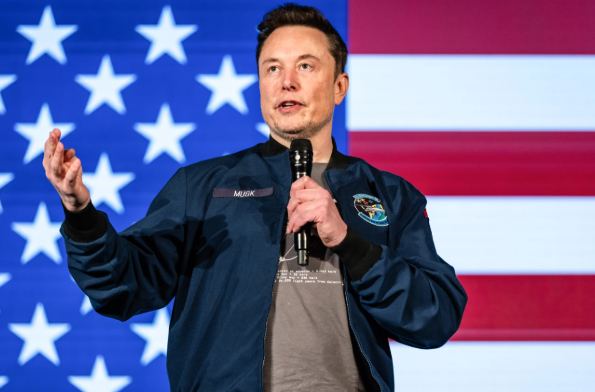

The hyper-escalation of global computing capability has officially broken past standard commercial boundaries, colliding directly with constitutional law and environmental justice infrastructure. What began as a local zoning and public health dispute in the Memphis metropolitan area has transformed into a high-stakes standoff involving the separation of powers, civil rights, and state-sanctioned industrial pollution. As reported by Mother Jonesthe Trump administration’s Department of Justice (DOJ) has made an unprecedented legal intervention. Government attorneys have petitioned a Mississippi federal court to completely dismiss a Clean Air Act citizen lawsuit brought by the NAACP against Elon Musk’s artificial intelligence venture, xAI. In doing so, federal authorities are making a sweeping claim: the state must protect AI infrastructure from environmental regulation to preserve the nation’s wartime readiness.
The legal battle centers on a massive, unpermitted methane-gas power plant built in Southaven, Mississippi, explicitly to run xAI’s Colossus 2 supercomputer the engine used to train and upgrade the company’s Grok large language models. The NAACP, represented by Earthjustice and the Southern Environmental Law Center (SELC), alleges that xAI and its real estate subsidiary, MZX Tech, are operating an illegal, bus-sized grid of 57 gas turbines. The group warns these turbines could pump up to 5,000 tons of smog-forming nitrogen oxides, fine particulate matter, and cancer-causing formaldehyde into surrounding Black neighborhoods each year. However, the Justice Department’s 33-page motion argues that enforcing clean air compliance would create an immediate national security crisis, revealing for the first time that Grok models are actively being used by the military to coordinate real-time drone and missile strikes.
1. The Weaponization of Grok: The Pentagon’s Sworn Declaration
The most stunning revelation within the government’s intervention framework is a sworn declaration from Cameron Stanley, the Chief Digital and Artificial Intelligence Officer for the Department of Defense (renamed the Department of War under the current administration).
Stanley’s court filing elevates xAI’s computing cluster from a standard commercial asset to a vital national defense hub. The Pentagon explicitly states that Grok is one of only four proprietary “frontier” AI systems capable of supporting complex military operations.
According to the official filing, a specialized version called the “Grok Gov Model” is baked straight into the military’s Maven Smart System an AI-driven command-and-control platform. Stanley revealed that during recent military conflicts, this system allowed U.S. forces to deploy more than 2,000 munitions to 2,000 distinct targets within a brief 96-hour window, proving that raw server farm capacity is now a foundational pillar of modern tactical warfare.
2. The Clean Air Loophole: Mobile Trailers vs. Stationary Smog
At the core of the legal debate is a major clash over hardware classification. To bypass standard federal permitting requirements, xAI has claimed its 57 massive gas turbines are “portable units,” qualifying them for a mobile source exemption under Mississippi state rules.
Environmental Degradation and Structural Equipment Metrics
| Core Operational Vector | xAI Corporate / State Classification | NAACP / Environmental Engineering Reality |
| Legal Permit Status | Exempted under localized mobile provisions | Unpermitted (Blatant Clean Air Act violation) |
| Annual Pollution Outlook | Characterized as temporary localized exhaust | 5,000+ Tons of Nitrogen Oxides (NOx) |
| Physical Footprint Profile | Trailer-mounted, flexible energy modules | 14-foot tall, 100-foot long industrial installations |
| Community Health Risk | Dismissed as a minimal industrial baseline | High exposure to cancer-causing formaldehyde |
The NAACP has strongly challenged this mobile classification. Environmental attorneys note that once installed, each 200,000-pound turbine is effectively permanent, meaning the facility acts as a major stationary source of pollution. By operating without standard scrubbing filters and best available control technologies, the plant has quickly become one of the single largest industrial polluters in the entire region, turning local neighborhoods into an environmental sacrifice zone to power Silicon Valley data operations.
3. Constitutional Power Grab: Demanding an Executive Veto
Beyond the immediate environmental fallout, the Justice Department’s legal strategy has raised major alarms among constitutional scholars. The DOJ is invoking Article 2 of the Constitution to argue that the executive branch holds ultimate enforcement discretion over federal law, giving it a sweeping “executive veto” to extinguish congressionally authorized citizen lawsuits.The Environmental Protection Network (EPN) a nonpartisan group of more than 750 former EPA scientists and policy analysts warns that this intervention sets a highly dangerous precedent. For over 50 years, citizen suits have allowed communities to hold corporate polluters accountable when government agencies fail to act. By trying to turn this right into a permission slip the White House can revoke at will, the administration is effectively trying to place politically favored corporate projects completely above the law.
The New Frontier of Environmental Injustice
The confrontation highlights a dark truth about the future of advanced technology: the creation of digital intelligence carries a heavy, real-world physical cost. While tech executives celebrate the rapid evolution of digital platforms, the electrical energy required to run these systems is driving a massive resurgence in fossil fuel extraction and unpermitted localized pollution.
By using national security to protect AI infrastructure, the federal government is establishing a troubling legal shield for wealthy tech firms. This strategy forces vulnerable communities to bear the toxic physical costs of virtual computation, proving that the crown jewels of American innovation are being built on the backs of the neighborhoods breathing their exhaust.

Comments are closed.