
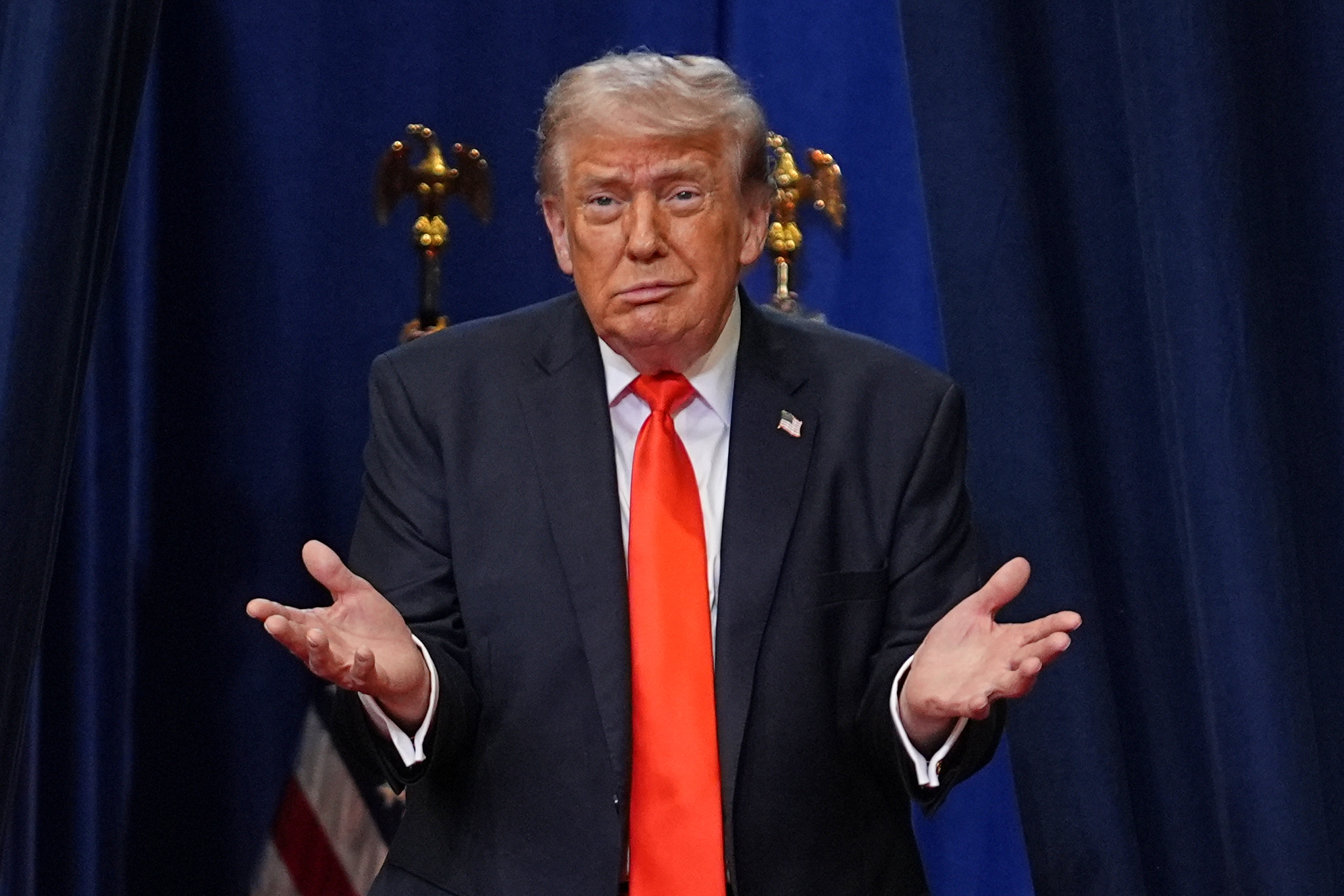

Trump Likes Government Owning Some US Companies but Rejects Spirit Airlines/ TezzBuzz/ WASHINGTON/ J. Mansour/ Morning Edition/ President Donald Trump is increasingly open to government ownership in private companies. He considered but declined a deal to take a stake in Spirit Airlines. The shift marks a break from traditional Republican free-market principles.
Trump Government Ownership Economy Quick Looks
- Trump supports selective government stakes in U.S. companies
- Spirit Airlines deal rejected over profitability concerns
- Airline ceased operations after failing to secure support
- Policy shift challenges traditional Republican economic views
- Administration cites competition with China as justification
- Critics warn of risks tied to political control of markets

Trump Signals Shift Toward Government Ownership
President Donald Trump is increasingly embracing the idea of the federal government taking ownership stakes in private companiesmarking a notable shift from traditional Republican economic philosophy.
While he has long criticized opponents as “communists,” Trump now appears more open to selective government intervention when it aligns with his economic and political objectives. His approach focuses less on ideology and more on deal-making potential and perceived benefits to the United States.
Spirit Airlines Deal Falls Through
One of the clearest examples of this evolving strategy involved Spirit Airlinesa struggling budget carrier facing financial strain from rising fuel costs tied to the Iran war.
The Trump administration considered a deal that would have provided approximately $500 million in exchange for a government stake in the airline. However, the proposal ultimately collapsed.
Trump made clear that his decision was based on financial considerations rather than philosophical opposition to government ownership. “ only if it’s a good deal,” he said when discussing potential intervention.
“If we can help them, we will,” Trump added. “But we have to come first.”
Without a finalized agreement, Spirit Airlines ceased operations, highlighting the risks companies face when relying on government intervention.
Government as an Activist Investor
Under Trump’s leadership, the federal government has taken on a more active role in shaping the economy, acting in some cases as an investor rather than simply a regulator.
The administration has pursued stakes in several industries deemed critical to national security and economic competitiveness. These include semiconductor manufacturing, rare earth materials, and energy resources.
Trump has pointed to investments in companies such as Intel as examples of successful government involvement.
He touted financial gains tied to stock performance, stating, “I’m very proud of that Company in that I am responsible for making the United States of America over 30 Billion Dollars in the last 90 days on that stock alone.”
This approach reflects a broader strategy aimed at strengthening domestic industries and countering foreign competitors.
Breaking With Republican Economic Tradition
Historically, Republican leaders have opposed government ownership of private businesses, arguing that markets function best without state interference.
Trump’s policies challenge that long-standing belief. Instead of avoiding intervention, his administration has selectively supported companies and industries it views as strategically important.
This shift has sparked debate within conservative circles, with some lawmakers expressing concern about the government “picking winners and losers.”
Despite these criticisms, the administration argues that modern economic realities — particularly competition with China — require a more flexible approach.
China Competition Drives Policy Direction
Supporters of Trump’s strategy say government investment can help U.S. companies compete against foreign rivals that benefit from heavy state support.
China’s economic model, which includes significant government involvement in key industries, has influenced policymakers in Washington to reconsider traditional free-market approaches.
Sujai Shivakumar, an expert at a Washington think tank, described the investment strategy as “a strategic move, necessitated by the growth of China as an economic peer and rival.”
He added, “The key point is that we should not sacrifice our national economic and industrial framework in the name of ‘free markets’ or other ideologies.”
Critics Warn of Risks and Political Influence
Not everyone agrees with the administration’s approach. Critics argue that government ownership introduces political considerations into business decisions, potentially distorting markets and reducing efficiency.
Tad DeHaven, a policy analyst, framed the issue in stark terms. “This is entirely a reflection of a transactional-minded president who wants unilateral control of the economy,” he said. “At the end of the day, it is about power, it is about leverage and it is about control.”
Others worry about the risks of poor investment decisions, noting that taxpayer money could be exposed to significant losses if government-backed companies fail.
Legal and Structural Concerns
Another point of contention is how these investments are structured. Unlike previous administrations that relied on congressional approval for major economic programs, Trump has often acted more independently.
His administration has used funds from existing legislation, such as the CHIPS and Science Act, to finance investments in private companies.
Critics argue that this approach lacks transparency and oversight. Monica Gorman, a policy expert, emphasized the need for clearer rules.
“Congress really needs to step in and design a legislative framework for U.S. industrial policy that governs equity stakes as well as other mechanisms such as loans and grants,” she said.
She added, “All of these are important tools in the U.S. industrial policy toolkit, but we need more guidance on when and how to use them.”
Balancing Opportunity and Risk
The debate over government ownership reflects a broader tension in U.S. economic policy: how to balance free-market principles with the need to compete in a global economy increasingly shaped by state intervention.
Trump’s approach represents a hybrid model, blending elements of capitalism with selective government involvement.
While supporters see it as pragmatic and necessary, critics view it as a dangerous expansion of executive power into the private sector.
More on US News
Comments are closed.