
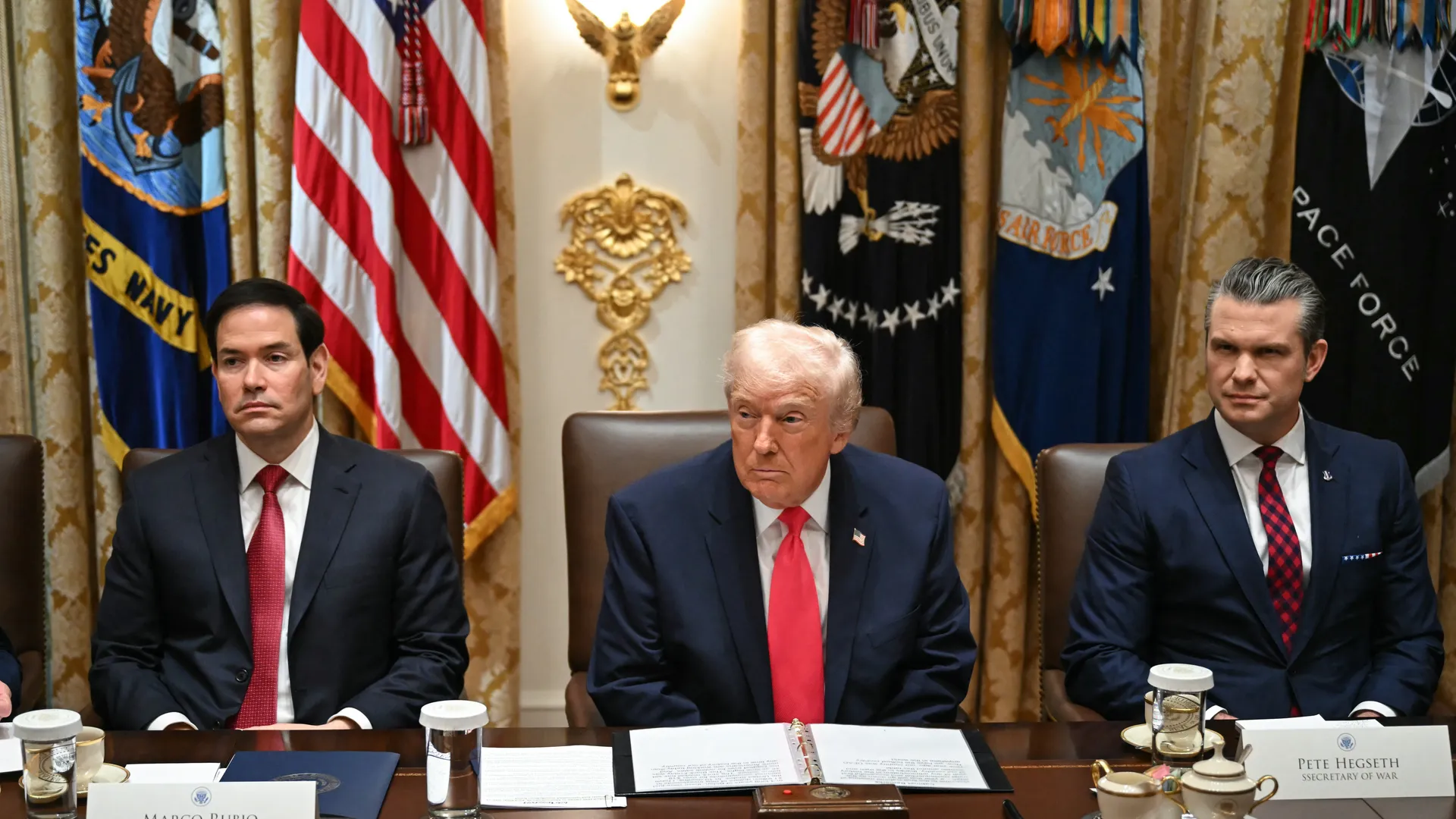

Trump Meets Top Iran Advisers as War Threats Grow/ TezzBuzz/ WASHINGTON/ J. Mansour/ Morning Edition/ President Donald Trump convened top advisers to review nuclear talks with Iran and assess next steps. Officials say the U.S. could be closer to military conflict than the public realizes. Diplomacy remains possible, but the arrival of a U.S. aircraft carrier may shift the timeline.
Trump Iran Crisis Meeting Quick Looks
- Trump briefed on Geneva nuclear negotiations
- Senior advisers discuss diplomatic and military options
- White House signals openness to potential strike
- U.S. demands Iranian response by month’s end
- USS Gerald R. Ford strike group heading to region
- Rubio planning Israel visit for Iran talks
- Officials divided over progress in negotiations
- War risk rising amid mounting military posture
Deep Look: Trump Meets Top Iran Advisers as War Threats Grow
President Donald Trump convened his top national security advisers for a high-level meeting on escalating tensions with Iranas concerns grow that the United States could be edging closer to a major military confrontation in the Middle East.
According to two U.S. officials familiar with the discussions, Trump received a detailed briefing on nuclear negotiations held earlier this week in Geneva. Senior officials then debated potential next steps — including whether diplomacy can still prevent a broader conflict or whether military options must remain firmly on the table.
A Crisis Intensifying Behind Closed Doors
While public attention has largely focused on other global developments, administration officials privately acknowledge that the standoff with Iran has reached a critical juncture. One official described the situation as far more serious than many Americans realize.
A potential U.S. military operation against Iran would likely involve an extended, large-scale campaign — dramatically different from recent limited operations elsewhere. Rather than a short, targeted strike, such an engagement could stretch for weeks and resemble a sustained war effort.
Trump’s increasingly forceful rhetoric and military preparations have complicated his diplomatic maneuvering. Having raised the stakes publicly, backing down without significant concessions from Tehran on its nuclear ambitions could be politically difficult.
White House press secretary Karoline Leavitt acknowledged Wednesday that “there are many arguments one can make in favor of a strike against Iran.” At the same time, she emphasized that Trump prefers diplomacy and urged Iranian leaders to negotiate seriously.
“Iran would be wise to make a deal,” she said.
Diplomacy Under Pressure
The Geneva talks were intended to explore possible limits on Iran’s nuclear program. One U.S. official said Iranian representatives signaled openness to compromise but failed to present concrete steps addressing Washington’s core concerns.
“The ball is in Iran’s court,” the official said, noting that Tehran has until the end of the month to return with a package of proposals meeting U.S. demands.
However, skepticism runs deep within the administration. A second official characterized the talks as unproductive, dismissing them as “a nothing-burger.” That divide reflects broader uncertainty about whether negotiations can realistically avert escalation.
Among those attending the White House meeting were senior figures including Secretary of State Marco RubioTrump adviser Jared Kushnerand special envoy Steve Witkoff. Their presence underscores the gravity of the deliberations and the administration’s attempt to balance diplomacy with strategic deterrence.
Military Posture Shifts
One key development to watch is the imminent arrival of the USS Gerald R. Ford aircraft carrier strike group in the Eastern Mediterranean. U.S. officials say the carrier’s deployment could significantly influence both the timing and scope of any potential military campaign.
Aircraft carriers provide a powerful projection of force, capable of launching air operations, supporting missile defense, and coordinating regional assets. Their presence also sends a strong signal to both allies and adversaries.
In addition, Rubio is scheduled to visit Israel later this month for consultations focused heavily on Iran. Israel has long viewed Iran’s nuclear program as an existential threat and has advocated for aggressive measures to curb Tehran’s capabilities.
The coordination between Washington and Jerusalem will likely play a decisive role in shaping the next phase of the crisis.
Strategic Calculations
The administration faces a complex strategic landscape. On one hand, officials argue that a credible threat of force strengthens America’s negotiating position. On the other, a military confrontation with Iran could ignite regional instability, disrupt global energy markets, and draw in allied forces.
Analysts note that Iran’s network of proxy militias across the Middle East increases the risk that conflict could expand beyond direct U.S.-Iran engagement. Retaliatory strikes could target U.S. bases, allied infrastructure, or maritime shipping lanes.
At the same time, Trump has sought to portray himself as both tough and pragmatic — willing to use force but preferring negotiated agreements when possible. That dual messaging is central to his current approach.
Broader Geopolitical Context
The Iran crisis is unfolding amid several other global challenges. During Wednesday’s meeting, Trump was also briefed on ongoing negotiations between Russia and Ukraine, as well as preparations for the upcoming Gaza Board of Peace gathering.
Balancing these simultaneous diplomatic efforts adds further complexity to decision-making. A military escalation with Iran could reshape U.S. engagement in multiple theaters at once.
What Comes Next
The coming days are likely to prove decisive. Iran’s response to U.S. demands will determine whether negotiations remain viable or whether the White House accelerates military planning.
The arrival of the USS Gerald R. Ford strike group and Rubio’s diplomatic outreach to Israel signal that Washington is preparing for multiple contingencies.
For now, Trump’s message blends warning and opportunity: Iran can avoid confrontation by making significant nuclear concessions — but failure to do so may carry substantial consequences.
Whether diplomacy prevails or conflict becomes unavoidable may hinge on the next round of communication between Washington and Tehran.
More on US News

Comments are closed.