
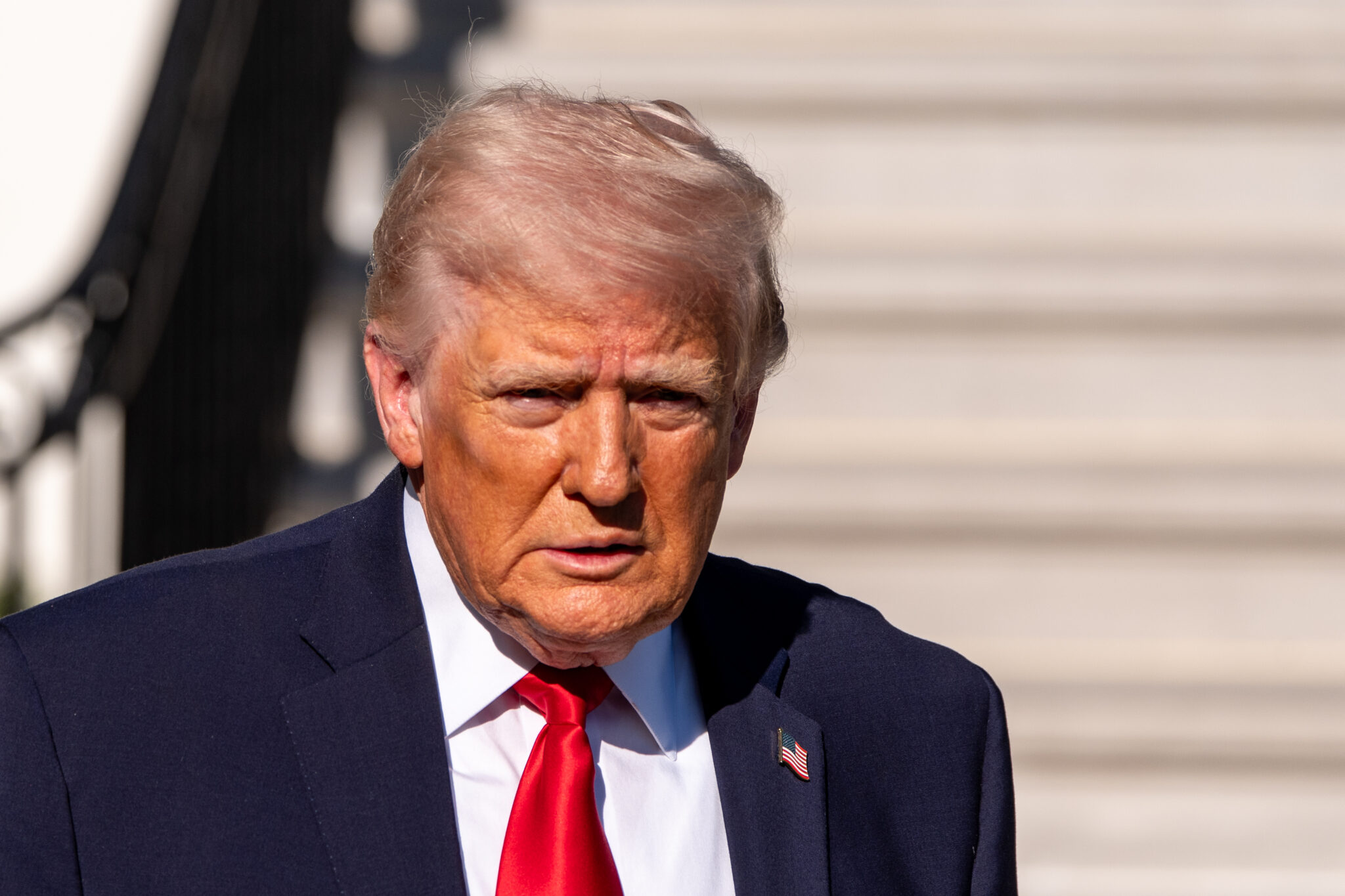

Trump Orders U.S. Navy Blockade of Strait of Hormuz After Failed Iran Talks/ TezzBuzz/ WASHINGTON/ J. Mansour/ Morning Edition/ President Trump ordered a U.S. Navy blockade of the Strait of Hormuz. The move followed failed U.S.-Iran ceasefire negotiations in Pakistan. Global leaders urged diplomacy as tensions and oil risks escalated.


- Trump orders immediate naval blockade
- Talks with Iran collapse after 21 hours
- Strait carries 20% of global oil
- JD Vance led U.S. negotiations
- EU urges diplomacy and restraint
- Russia offers to mediate peace
- Gulf nations oppose Iran tolls
- Ceasefire future remains uncertain


ISLAMABAD — President Donald Trump announced Sunday that the United States Navy will immediately begin a blockade of the Strait of Hormuz following the collapse of historic U.S.-Iran ceasefire talks in Pakistan, escalating tensions in a conflict already shaking global markets.
The decision came after 21 hours of negotiations between U.S. and Iranian officials ended without an agreement, leaving the fragile two-week ceasefire uncertain and raising fears of further escalation.
Trump said the blockade aims to stop Iran from controlling shipping through the critical waterway, which typically handles roughly 20% of global oil shipments.
“Effective immediately, the United States Navy, the finest in the world, will begin the process of blockading any and all ships trying to enter or leave the Strait of Hormuz,” Trump said in a social media post.
He added that vessels paying tolls to Iran would be targeted.
“I have also instructed our Navy to seek and interdict every vessel in international waters that has paid a toll to Iran. No one who pays an illegal toll will have safe passage on the high seas,” Trump said.
Trump also defended the blockade during an interview, emphasizing that Iran should not decide which countries receive oil shipments.
“We’re not going to let Iran make money on selling oil to people that they like and not people that they don’t like,” Trump said.
“It’s going to be all or none, and that’s the way it is.”
Failed Talks Trigger Escalation
The blockade announcement followed the end of face-to-face negotiations in Islamabad, the highest-level talks between the two countries since Iran’s 1979 Islamic Revolution.
Vice President JD Vance, who led the U.S. delegation, said negotiations stalled over Iran’s nuclear program.
“We need to see an affirmative commitment that they will not seek a nuclear weapon,” Vance told reporters following the talks.
Iranian Parliament Speaker Mohammad Bagher Qalibaf, who led Tehran’s delegation, pushed back.
“It is time for the United States to decide whether it can gain our trust or not,” Qalibaf said.
Iranian officials also denied nuclear weapons ambitions.
“Iran is not seeking to acquire nuclear weapons, but it has the right to nuclear energy for peaceful purposes,” an Iranian diplomatic official said.
Global Leaders Call for Diplomacy
Despite the collapse in negotiations, global leaders urged continued diplomatic efforts.
European Union foreign affairs spokesperson Anouar El Anouni said:
“The EU remains convinced that diplomacy is key to resolve all outstanding issues.”
Oman’s Foreign Minister Badr Al-Busaidi also urged compromise.
“I urge that the ceasefire be extended and talks continue,” he said.
Both sides must “make painful concessions,” he added.
Pakistan’s Foreign Minister Ishaq Dar also called for continued dialogue.
“It is imperative that the parties continue to uphold their commitment to ceasefire,” Dar said.
Russia Offers Mediation
Russia also entered the diplomatic effort. The Kremlin said President Vladimir Putin spoke with Iranian President Masoud Pezeshkian.
Putin “emphasized his readiness” to help bring about a diplomatic settlement, according to the Kremlin.
Gulf Nations Reject Iran Control
Regional oil exporters also weighed in. UAE energy leader Sultan Al Jaber rejected Iran’s attempt to control the strait.
“Any attempt to close the Strait of Hormuz is a direct threat to global energy, food and health security,” Al Jaber said.
The Abu Dhabi National Oil Company had previously declared force majeure due to disruptions caused by the conflict.
Strategic Waterway at Risk
Iran’s control of the Strait of Hormuz has become its strongest leverage in the conflict. Before the war, more than 100 ships passed through daily. Since the ceasefire, only about a dozen have transited.
The U.S. military has already moved destroyers into the region and announced additional mine-clearing operations, including underwater drones.
War’s Rising Toll
The war has caused significant casualties across the region:
- 3,000 killed in Iran
- 2,020 killed in Lebanon
- 23 killed in Israel
- Additional deaths across Gulf states
Infrastructure damage across multiple Middle Eastern nations has also driven energy prices higher worldwide.
Israel-Lebanon Conflict Adds Pressure
Israel has continued strikes against Hezbollah in Lebanonfurther complicating negotiations.
Lebanese officials reported additional casualties Sunday following Israeli airstrikes near Tyre.
Israel is pushing Lebanon to disarm Hezbollah, but analysts warn such efforts could prove difficult.
Uncertain Future
With talks collapsed and the blockade looming, uncertainty surrounds the ceasefire and the broader conflict.
Trump signaled the U.S. is prepared for further military action.
“At an appropriate moment, we are fully locked and loaded,” Trump said, warning that U.S. forces are ready if diplomacy fails.
As global leaders push for diplomacy, the blockade of one of the world’s most vital shipping lanes could mark a major turning point in the conflict.
More on US News
Comments are closed.