
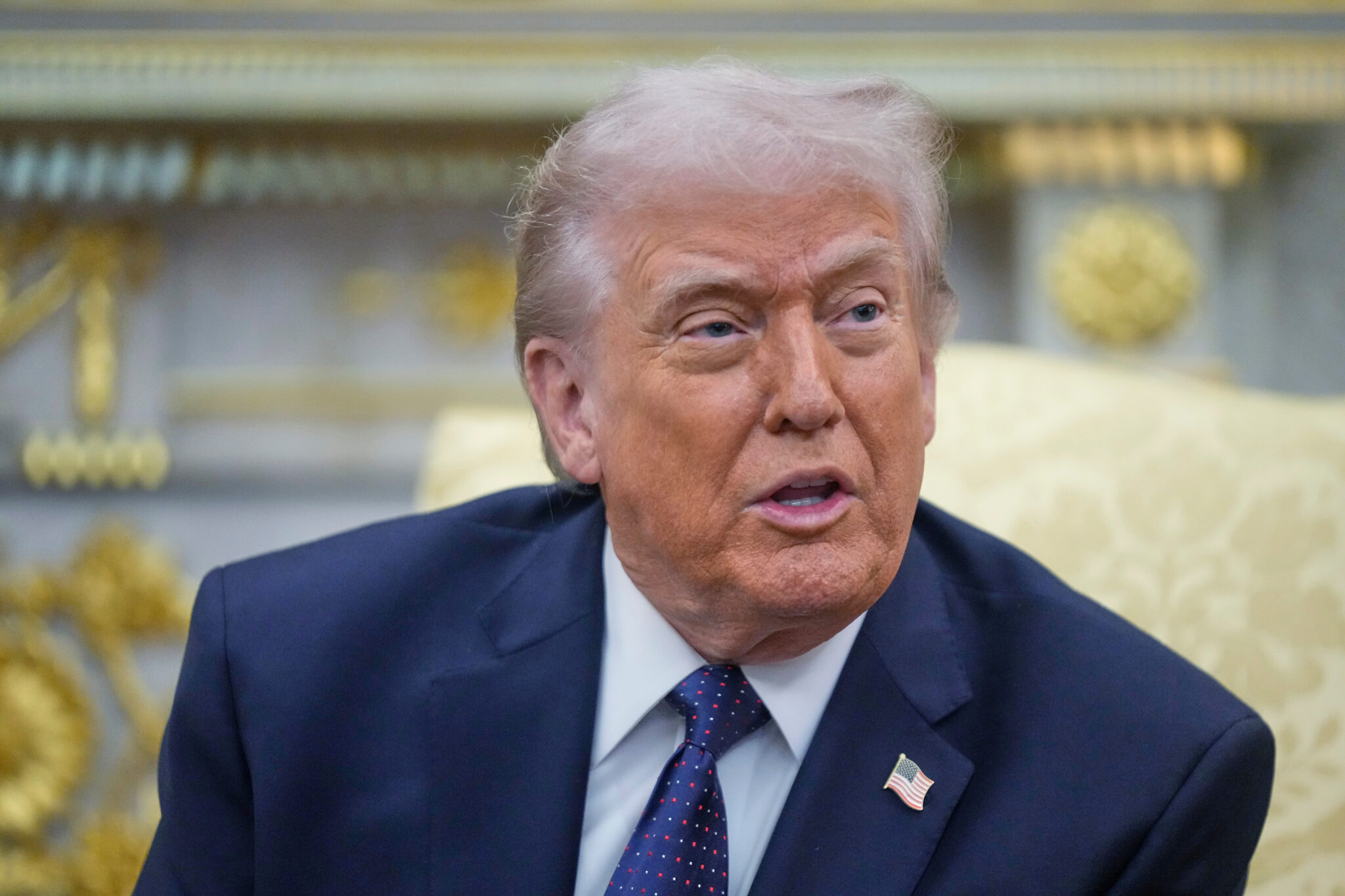

Trump Says He’s Not Worried Whether Iran Becomes a Democratic State/ TezzBuzz/ WASHINGTON/ J. Mansour/ Morning Edition/ President Donald Trump said he is not concerned whether Iran becomes a democracy following the current conflict. Instead, he emphasized that any new Iranian leader must treat the United States, Israel, and regional partners fairly. Trump also predicted Cuba could soon collapse and highlighted voter ID legislation as a major domestic priority.
- Trump said Iran’s leadership has been “neutered” after recent U.S. military operations.
- He indicated the U.S. could help choose a new Iranian leader.
- The president said the next leader does not have to lead a democratic state.
- Trump suggested a religious leader could also be acceptable.
- He compared potential changes in Iran to U.S. involvement in Venezuela earlier this year.
- Trump predicted Cuba could soon collapse and seek negotiations.
- He also emphasized passing voter ID legislation as a top domestic priority.
President Donald Trump said Friday that he is not concerned whether Iran ultimately becomes a democratic state following the ongoing conflict, as long as its future leadership maintains good relations with the United States and its allies.
In a wide-ranging phone interview with CNN, Trump argued that Iran’s leadership has already been significantly weakened by the recent military campaign carried out by the United States and its partners.
“Iran is not the same country it was a week ago,” Trump said. “A week ago they were powerful, and now they’ve been indeed neutered.”
The president suggested that the current conflict has dramatically altered Iran’s political landscape and opened the possibility for new leadership.
Trump has previously indicated that he expects to play a role in shaping Iran’s future leadership following the war.
During the interview, he expressed confidence that selecting a replacement leader would be relatively straightforward.
“It’s going to work very easily,” Trump said, comparing the situation to Venezuela, where the United States earlier this year captured former President Nicolás Maduro and supported the installation of his deputy as acting president.
Trump praised Venezuela’s current leadership, saying the arrangement has been successful.
“We have a wonderful leader there,” Trump said, referring to acting President Delcy Rodríguez. “She’s doing a fantastic job.”
When asked whether Iran must become a democratic country after the conflict, Trump made clear that democratic governance is not his primary requirement.
Instead, he said the most important factor would be whether Iran’s new leadership treats the United States and its regional partners fairly.
“No,” Trump said when asked whether a democratic system was necessary. “I’m saying there has to be a leader that’s going to be fair and just.”
He added that the future leader must also maintain positive relations with Israel and other countries in the Middle East that cooperate closely with the United States.
Trump also indicated he would be open to Iran being led by a religious figure, depending on the individual.
“Well, I may be, yeah,” Trump said. “It depends on who the person is.”
He added that he regularly interacts with religious leaders around the world and described many of them as effective leaders.
The president also highlighted what he described as improved relations between the United States and several Middle Eastern countries during his presidency.
According to Trump, countries such as Saudi Arabia, the United Arab Emirates, and Qatar have strengthened ties with Washington and are now cooperating closely with the United States.
“I became very friendly with all those countries,” Trump said, claiming those relationships had improved significantly compared with earlier administrations.
Trump criticized former Presidents Joe Biden and Barack Obama, arguing that their policies had pushed some Middle Eastern partners toward closer ties with China.
“They were all going to go to China,” Trump said.
In addition to discussing Iran, Trump also addressed the broader military campaign in the region.
He described the U.S. operation against Iran as highly successful.
On a scale of one to ten, Trump said the campaign was performing at “12, maybe 15.”
Despite rising global oil prices tied to the conflict, Trump said he is not concerned about the potential economic impact.
“That’s all right,” he said, predicting the increase would be temporary.
He suggested the United States has already neutralized much of Iran’s naval power, reducing Tehran’s ability to disrupt key shipping routes in the region.
“We’ve knocked their Navy,” Trump said.
According to the president, approximately 25 Iranian ships have been destroyed during the conflict.
The situation in the Strait of Hormuz—a vital shipping route through which a large share of global oil supplies pass—has been a particular concern for global markets.
Trump said his administration has already developed strategies to manage that risk.
“I’ve already figured out the Strait of Hormuz,” he said, without providing additional details.
Trump also discussed other international issues during the interview, including Cuba.
The president predicted that the Cuban government could soon collapse and seek negotiations with the United States.
“Cuba is going to fall pretty soon,” Trump said.
He suggested that Secretary of State Marco Rubio could be tasked with handling negotiations with Havana if the situation develops further.
“They want to make a deal so badly,” Trump said.
However, he emphasized that the administration remains focused primarily on the conflict with Iran for now.
“We’re really focused on this one right now,” he said.
Beyond foreign policy, Trump also outlined what he described as a major domestic priority for his administration: passing new voter identification legislation.
He said the proposed SAVE America Act—which includes voter ID requirements and proof-of-citizenship rules for voter registration—would be among the most important legislative efforts of his presidency.
Trump suggested the legislation could influence his upcoming endorsement in a closely watched Republican Senate runoff in Texas between Sen. John Cornyn and Texas Attorney General Ken Paxton.
“I’m making a decision fairly shortly,” Trump said.
However, he indicated that he wants assurances that whichever candidate he supports will strongly back the legislation.
Trump argued that the bill should include strict election requirements, including voter identification, proof of citizenship, and limits on mail-in voting.
He also repeated his call for the Senate to eliminate the filibuster if necessary to pass the measure.
“The Senate has to act on it,” Trump said.
While the legislation faces significant political hurdles, Trump suggested it remains a central objective for his administration.
For now, however, he said the administration’s top focus remains the escalating conflict in the Middle East.
More on US News

Comments are closed.