
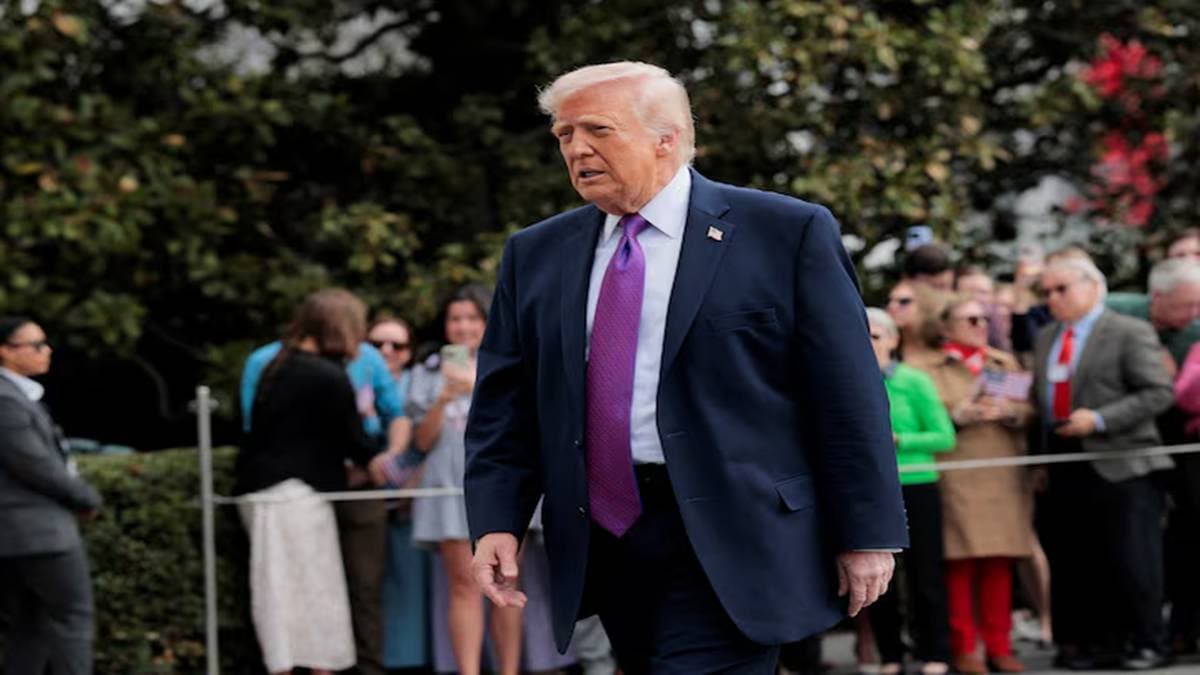

US President Donald Trump has sparked debate by claiming that as global oil prices rise, the United States will profit financially. His comments came as crude oil prices soared due to the growing conflict between the United States, Israel, and Iran, which has affected global energy markets and shipping routes. In a statement on his social media site, Trump highlighted the size of America’s oil production and claimed that higher oil prices could benefit the country. “The United States is the largest oil producer in the world, by far, so when oil prices go up, we make a lot of money,” he said.
His comments came as global oil prices jumped sharply, with crude briefly crossing the $100-per-barrel mark following heightened tensions in West Asia and disruptions to shipping in the region. The statement triggered criticism from some political leaders and analysts who argued that rising oil prices tend to increase fuel costs for ordinary consumers and businesses. However, Trump maintained that America’s strong energy production capacity allows the country to benefit when global oil markets tighten.
Middle East Tensions Push Oil Above $100 Per Barrel:
The sharp increase in oil prices has been driven largely by geopolitical tensions surrounding the ongoing war involving the US and Iran. The conflict has raised concerns about potential disruptions to global energy supply, particularly through the strategically important Strait of Hormuz. This narrow waterway is one of the world’s most critical oil transit routes, with roughly 20% of global oil and liquefied natural gas shipments normally passing through it. Any disruption to traffic in this region can quickly affect global energy prices and supply chains.
Attacks on ships and the closure of parts of the strait have left several oil tankers stranded, contributing to uncertainty in global energy markets. The disruption has pushed crude prices above $100 per barrel for the first time in several years, highlighting the sensitivity of energy markets to geopolitical risks. Analysts warn that prolonged instability in the region could drive prices even higher and potentially trigger inflationary pressure across many economies. Energy costs influence a wide range of sectors, including transportation, manufacturing and food production.
Critics Warn Rising Fuel Prices Hurt Consumers:
Trump’s remarks have drawn criticism from several lawmakers who argue that higher oil prices could place a financial burden on households and businesses. Rising fuel prices often lead to increased transportation costs, which can eventually push up the price of goods and services.
Some critics suggested that celebrating higher oil prices overlooks the impact on ordinary consumers who must deal with rising gasoline costs. US gasoline prices have climbed sharply in recent weeks, increasing more than 50% from earlier levels and reaching around $3.60 per gallon on average.
Political opponents also accused the administration of focusing too heavily on the benefits to energy producers rather than the challenges faced by working families. However, supporters of Trump’s energy policies argue that strong domestic oil production helps protect the United States from supply shortages during global crises.
US Energy Production Gives Strategic Advantage:
Despite the issue, Trump pointed out that his first priority is to prevent Iran from gaining nuclear weapons and to maintain Middle Eastern stability. He argued that the geopolitical battle constituted a larger strategic matter, even if it temporarily affected global oil markets.The United States is now one of the world’s leading oil producers, thanks in large part to the rise of shale oil production over the last decade. This has greatly reduced the country’s dependence on imported crude while increasing its influence in global energy markets.
Because of this production potential, increased oil prices can benefit American energy corporations while increasing revenue from domestic oil output. Supporters of Trump’s argument claim that this gives economic benefits during times of global supply disruption. However, analysts warn that the overall impact of rising oil prices is complicated. While energy producers may benefit, sustained price increases may hamper economic growth and raise inflation, especially if transportation and manufacturing expenses rise.
As the geopolitical situation in West Asia continues to evolve, energy markets remain volatile. The debate surrounding Trump’s remarks highlights the delicate balance between energy security, economic stability and the political consequences of rising fuel prices.

Comments are closed.