
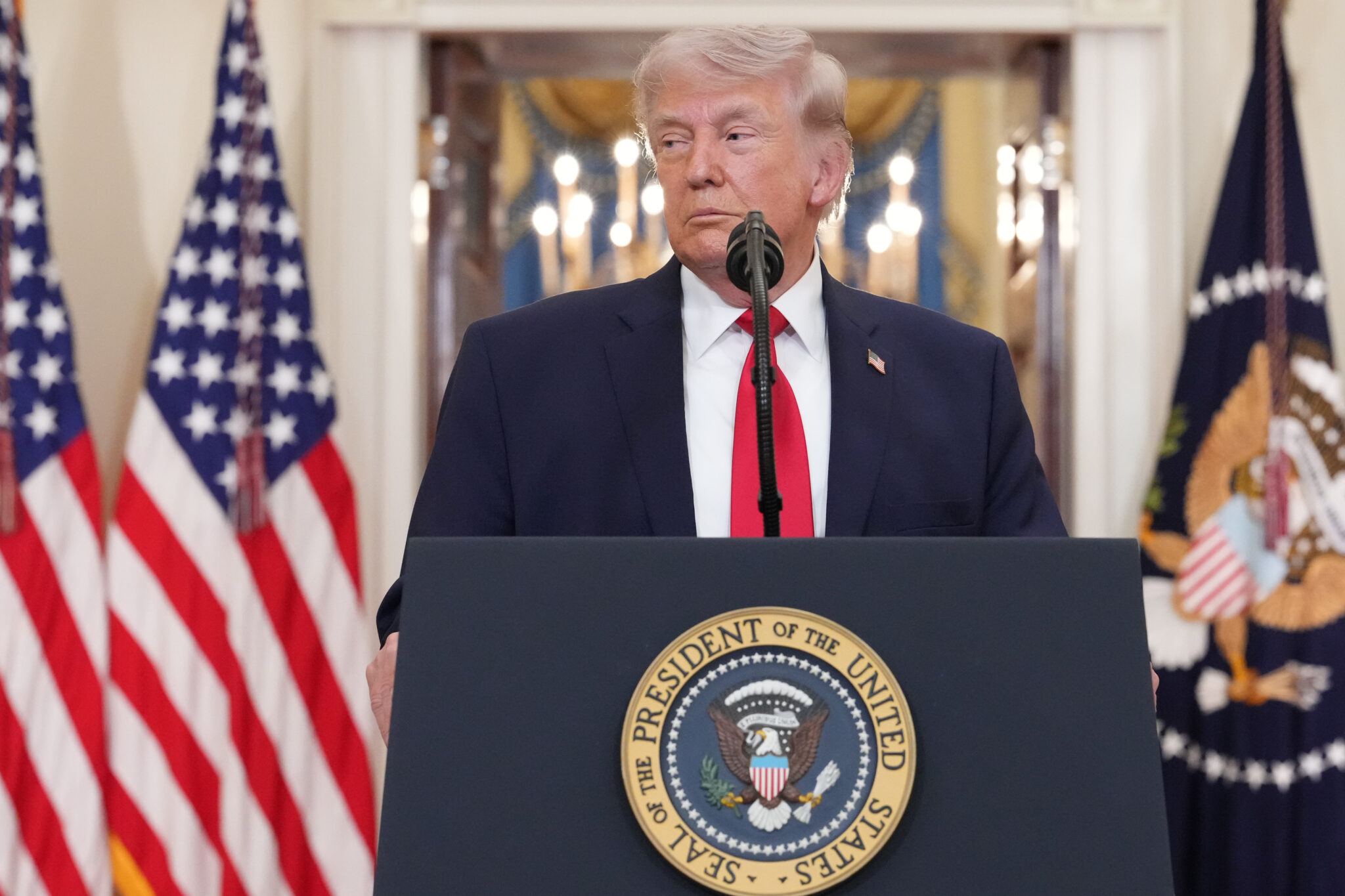

Trump Signs Executive Order To Reshape College Sports/ TezzBuzz/ WASHINGTON/ J. Mansour/ Morning Edition/ President Donald Trump signed an executive order aimed at stabilizing college sports and controlling athlete compensation. The order threatens federal funding cuts for schools that fail to comply with new rules. Changes target transfers, eligibility limits, and revenue sharing across college athletics.
- Trump signs executive order on college sports
- Schools risk losing federal funding
- Limits proposed on athlete transfers
- Five-year eligibility window suggested
- Revenue-sharing reforms proposed
- Olympic sports protection emphasized
- NCAA and conferences face potential changes
- Litigation expected from athletes and schools
- Congress urged to pass permanent legislation
- College athletics facing major financial shifts


President Donald Trump signed a sweeping executive order Friday aimed at reshaping college athletics, warning that universities could lose federal funding if they fail to comply with new rules designed to stabilize the rapidly evolving college sports landscape.
The order, signed hours before the women’s Final Four, marks Trump’s latest attempt to address major changes in college athletics, including athlete compensation, transfers, eligibility rules, and rising financial pressures on schools.
Trump’s directive calls on federal agencies to enforce compliance and evaluate whether institutions that violate new standards should remain eligible for federal grants and contracts. The move mirrors previous administration efforts to influence university policies through funding leverage.
College sports have undergone dramatic transformation since athletes gained the ability to profit from name, image, and likeness deals and share in revenue. Some schools now spend more than $20 million annually on athlete compensation, raising concerns about sustainability and competitive balance.
Trump’s order outlines several proposed reforms. Among the most prominent is a call for consistent eligibility rules, including a five-year participation window for athletes. The proposal would limit athletes to one transfer, with an additional transfer allowed after completing a four-year degree.
Supporters say these changes would restore stability to college athletics.
Cody Campbell, a Texas Tech regent and policy adviser involved in shaping reforms, praised the executive order and expressed optimism about continued progress through Congress.
“I’m extremely supportive of the President’s order,” Campbell said, adding that lawmakers must still pass legislation to create permanent rules.
Trump also emphasized the importance of protecting Olympic sports programs, which many leaders fear could be reduced or eliminated if revenue-sharing models heavily favor football and basketball.
Sarah Hirshland, CEO of the U.S. Olympic and Paralympic Committee, said the order sends an important message about maintaining investment in Olympic sports at the collegiate level.
College athletics governance remains complex, involving the NCAA, the newly formed College Sports Commission, major conferences, smaller leagues, and hundreds of universities. These overlapping authorities have made legislative progress slow.
Trump urged Congress to act quickly, noting that lawmakers have struggled for more than a year to reach agreement on reforms.
Sen. Maria Cantwell, a key participant in bipartisan negotiations, welcomed the president’s push for congressional action.
NCAA President Charlie Baker also acknowledged the urgency, noting that legislative clarity is necessary to address ongoing legal challenges and financial instability.
Legal experts predict the executive order will likely trigger lawsuits. Athletes have successfully challenged eligibility rules in court, gaining greater freedom to transfer and pursue compensation opportunities.
Attorney Mit Winter, who specializes in college sports law, said conflicts could arise between federal court rulings and executive branch directives, potentially leading to extended legal battles.
University leaders also recognize the uncertainty ahead. University of Nebraska President Jeffrey Gold emphasized the urgency of reform but cautioned against predicting how courts might respond.
The order also comes amid mounting financial pressure on universities. Several major programs, including Penn State and Florida State, have faced significant debt challenges as college athletics costs rise.
Conference commissioners from the Atlantic Coast Conference and Southeastern Conference welcomed Trump’s involvement, saying the executive order builds momentum toward preserving academic and athletic opportunities for student-athletes.
Trump’s action represents his second executive order on college sports since last July, highlighting the administration’s continued focus on restructuring college athletics.
The initiative reflects broader concerns that college sports — once built on amateur participation — are rapidly transforming into a professional-style system without consistent national rules.
Trump’s proposal aims to impose structure, but with multiple stakeholders involved and legal challenges expected, the future of college athletics remains uncertain.
Still, the threat of withholding federal funding adds significant pressure on universities to comply, potentially accelerating changes across the college sports landscape.
More on US News
Comments are closed.