

Just three hours after the historic decision of the US Supreme Court, President Trump made a new move. Immediately after the court canceled the global tariff, Trump, citing Section 122, announced the imposition of new tariffs on all countries. Under Section 122, America can impose a temporary global tariff up to a maximum of 10%, whose duration is limited to 150 days. This provision is generally used to control large trade deficits.
Earlier on Friday, the Supreme Court of the United States had declared the sweeping global tariffs imposed by the Trump administration illegal. The court made it clear that the duties imposed on other countries were not in accordance with the constitutional provisions. The 18% reciprocal tariff imposed on India was also considered canceled after this decision. The Supreme Court said with a majority of 6-3 that under the US Constitution, the power to impose taxes and tariffs does not lie with the President, but with Congress. Despite this decision of the court, Trump’s new step may further intensify the legal and political conflict regarding America’s trade policy.
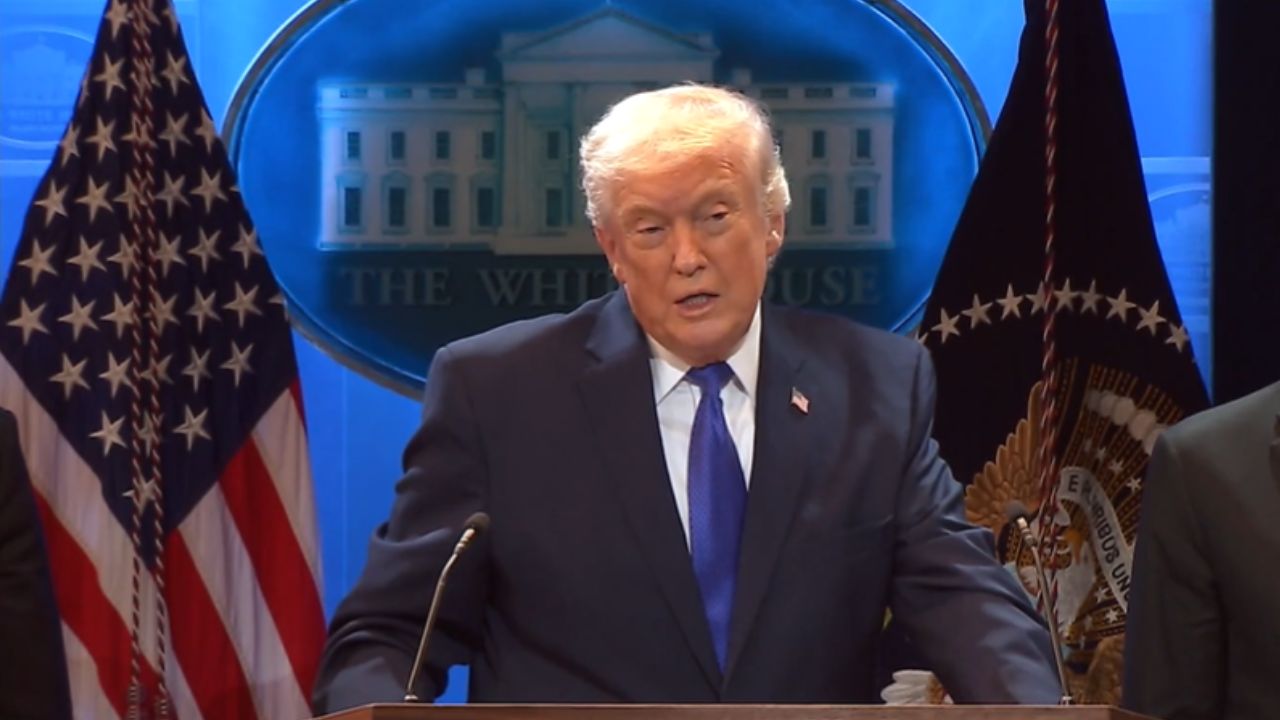
After the Supreme Court’s decision, President Donald Trump gave a strong reaction in the press conference. Let us know what he said after PC.
- ‘The Supreme Court did not listen to us’.
- ‘Today’s tariff decision is disappointing.’
- ‘I want to make America great again.’
- ‘Supreme Court’s decision is not in the interest of America.’
- ‘Such a decision was not expected from the court’.
- Trump said that we have options other than tariffs, further saying that the decision is wrong but it will not make a difference.
- Court bowed before foreign forces, now 10 percent additional tariff will be imposed on all countries,
- Trump said that it is possible that we will charge more money
- Those who are happy with the Supreme Court’s decision will not remain happy for long.
- Trump said, ‘He is ashamed of some of the judges of the court. They are a disgrace to the country, they don’t have the courage to do the right thing for our country.
- President Trump said that PM Modi is my good friend, but there is no change in the trade deal with India.
The Supreme Court of America has given a big decision declaring the so-called ‘Global Tariff Policy’ of Donald Trump administration illegal. The Court held that the President overstepped his legal bounds when he used International Emergency Economic Powers (IEEPA) to impose sweeping import tariffs. This decision is being considered a severe blow to Trump’s economic agenda – especially ‘reciprocal tariffs’.
For India, this decision signals a return to stability and institutional control in US trade policy more than any single tariff schedule. Exporters, investors and trade negotiators have long been keeping an eye on the risks of a sudden change in US policy. In such a situation, this decision can prove to be strategically important for New Delhi.
What does the Supreme Court’s decision mean for India?
The Supreme Court made it clear that the US President cannot impose blanket import duties using emergency powers. This limits the scope for sudden and widespread ‘reciprocal’ tariff imposition. Indian industries like engineering goods, auto components, chemicals, textiles, gems and jewelery can get relief from this. These sectors were most affected by suddenly announced tariff shocks, which increased uncertainty in global supply chains.
Will US tariff rates be reduced immediately?
At least these are the indications for now. After some of the charges imposed under IEEPA are declared illegal, the average effective tariff rate may come down to around 9.1 percent, which was earlier estimated to be around 16.9 percent. However, this rate will remain one of the highest levels since 1946. Analysts believe that even if the Trump administration imposes tariffs again through alternative legal provisions, their rates will not be as aggressive as before.
Will trade negotiations now become more institutionalized?
After the decision, US tariff policy will have to return within the statutory framework related to Congress. This means formal investigation, due process, clear triggers and political oversight. For India, this means more structured dialogue, clear timelines and room for negotiation before tariffs are implemented. Now New Delhi can negotiate for product-specific relaxations or compliance adjustments instead of reacting to unilateral announcements.
Can India get a new opportunity in supply chain?
If the Trump-era tariff structure were to be recreated under limited powers, India could gain a competitive edge in some sectors. Especially in those areas where higher US tariffs were imposed on other countries. However, experts say that American tariff pressure has not completely ended. The administration can take recourse to other legal provisions like Section 232 (national security), Section 301 (unfair trade practices), Section 122 or 338. New investigation and legal basis will be necessary for any such step.
How important is this decision for investors?
This decision sends a clear message to the markets – legal limits matter even in an age of economic nationalism. The Court underlined that US trade policy cannot be changed indefinitely with the help of executive orders alone. For India, this is a positive sign in front of global investors. This could strengthen confidence in more stable access to the US market in the medium term and reduce the risk of policy instability arising from Washington’s domestic politics.
Will the income of the US government be affected?
Economists estimate that the tariffs imposed under IEEPA could generate $130 to $140 billion by the end of 2025. If courts order refunds, companies will have to go through the legal process. At present, more than 1,000 corporate entities are said to be involved in the litigation.
If the government has to return the fees, it could increase federal financial pressure.
Does Trump still have options?
The President still has many legal avenues available.
- Section 122 of Trade Act 1974: Import duty temporarily up to 15%.
- Section 338 of the Tariff Act 1930: Duty up to 50% on discriminatory trade practices.
- Section 232 of the Trade Expansion Act 1962: Sector-specific duty on national security grounds.
- Section 301 of the Trade Act 1974: Action after formal investigation.
Analysts believe that the White House may try to re-impose the tariffs through alternative legal structures.
Trump also raised questions on the stance of the judges and indicated that the legal battle over his economic policy is not over yet.
Will New Delhi maintain silence?
There are indications that India will adopt a ‘wait and watch’ strategy. New Delhi will keep a close eye on legal and political developments while avoiding public statements. However, behind the scenes, this decision seems to be subtly strengthening India’s bargaining power. In essence, the Supreme Court did not support free trade, but decided who had the right to tax. For India, this difference could make future trade negotiations more orderly and predictable – provided Washington keeps an eye on its next move.

Comments are closed.