
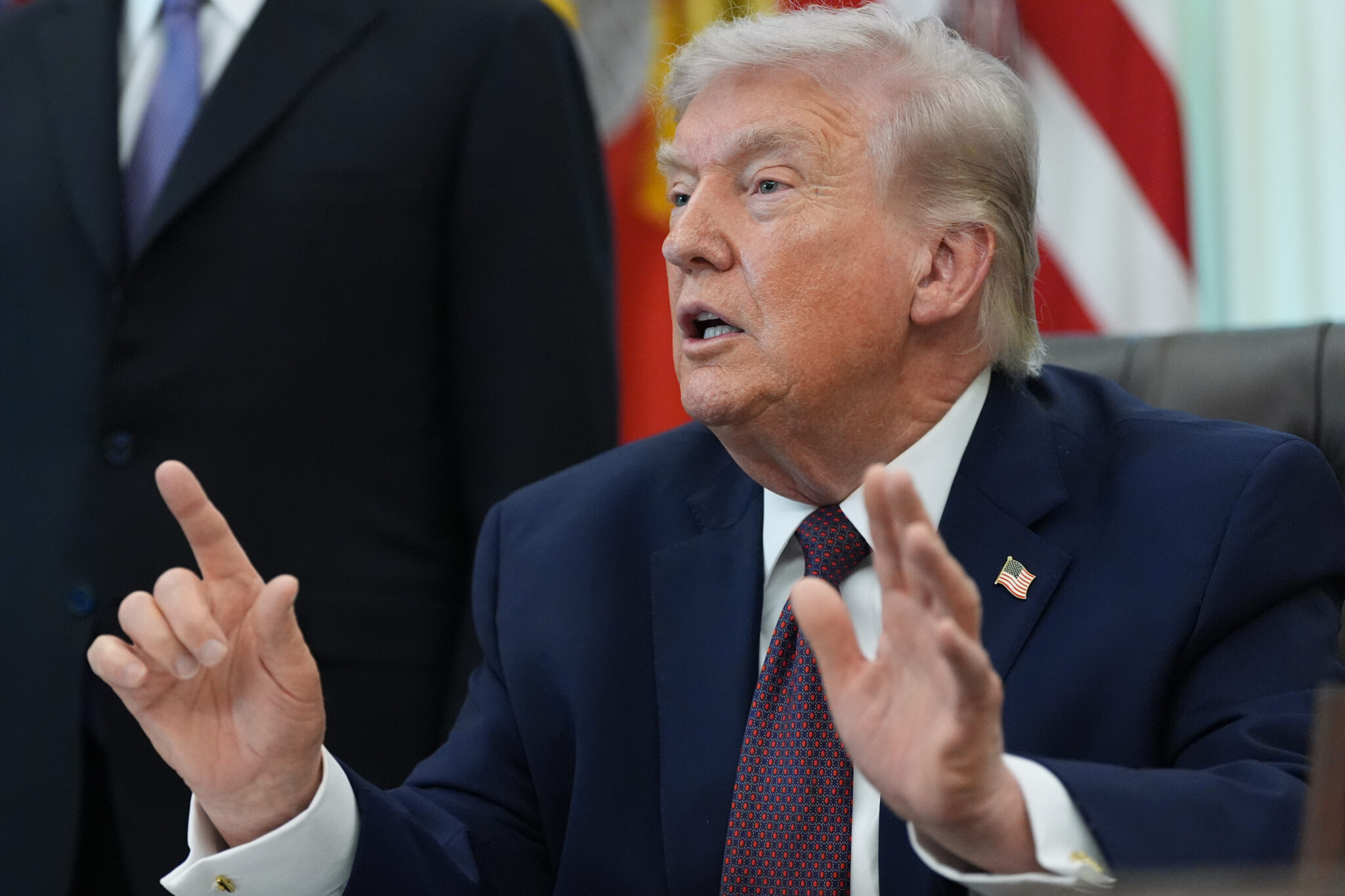

Trump Threatens Iran Over Strait of Hormuz After Pilot Rescue/ TezzBuzz/ WASHINGTON/ J. Mansour/ Morning Edition/ President Donald Trump issued a sharp warning to Iran, threatening infrastructure strikes if the Strait of Hormuz remains closed. The warning followed a dramatic U.S. rescue of a wounded aviator inside Iranian territory. Regional tensions escalated as airstrikes, drone attacks, and diplomatic efforts unfolded across the Middle East.

- Trump threatens Iran with infrastructure strikes
- Deadline set for reopening Strait of Hormuz
- U.S. rescues wounded aviator inside Iran
- Iran strikes Gulf infrastructure targets
- Civilian infrastructure increasingly targeted
- Diplomatic efforts intensify across region
- Airstrikes reported in Tehran, Qom, and Gulf states
- Regional casualties and displacement rise


U.S. President Donald Trump issued a forceful and expletive-laden warning to Iran, threatening to strike major infrastructure targets if Tehran fails to reopen the Strait of Hormuz by Tuesday. The warning came as details emerged about a dramatic rescue mission involving a wounded American aviator whose aircraft was downed deep inside Iranian territory.
The escalating rhetoric marked a dangerous turning point in the five-week-long conflict that has already claimed thousands of lives, rattled global markets, and pushed fuel prices sharply higher.
Trump posted on social media that the United States would target Iranian power plants, bridges, and other key infrastructure if the strategically vital Strait of Hormuz remained closed. The narrow waterway is one of the world’s most critical energy shipping routes, handling a significant portion of global oil and gas shipments.
“If the Strait of Hormuz is not opened, Iran will be living in Hell,” Trump wrote, concluding his post with the phrase “Praise be to Allah.”
The president has issued similar deadlines previously but has also extended them following diplomatic mediation efforts. However, this latest warning came amid intensified fighting and a dramatic military rescue operation.
Dramatic Rescue Mission Inside Iran
The heightened tensions followed Friday’s crash of a U.S. F-15E Strike Eagle inside Iranian territory — the first confirmed American aircraft loss in Iran since the conflict began on Feb. 28.
Trump described the rescue of one wounded aviator as a daring operation conducted “deep inside the mountains” involving dozens of aircraft. According to U.S. officials, the injured service member was successfully evacuated after an intense search effort.
A second crew member was rescued in daylight hours within several hours of the crash.
According to a senior U.S. administration official, intelligence agencies deliberately spread misinformation inside Iran, suggesting American forces had already secured the second pilot. The tactic created confusion and likely helped facilitate the successful rescue operation.
Iran claimed its forces also downed additional U.S. aircraft during the rescue. Iranian state television aired footage allegedly showing wreckage from American helicopters and transport aircraft.
However, a regional intelligence official told The Associated Press that U.S. forces destroyed two of their own aircraft due to technical malfunctions during the mission. Additional aircraft were then deployed to complete the operation.
Two Black Hawk helicopters were also reportedly struck but managed to reach safe airspace.
Iran Responds With Regional Threats
Iran responded defiantly, launching strikes against infrastructure targets in Gulf Arab nations and warning it could also disrupt shipping through the Bab el-Mandeb Strait — another key global trade chokepoint near the Red Sea.
Iranian Culture Minister Sayed Reza Salihi-Amiri criticized Trump’s statements, saying the U.S. president’s rhetoric shifts unpredictably and complicates diplomatic efforts.
Meanwhile, Iran’s U.N. mission described Trump’s threats as “clear evidence of intent to commit war crime,” particularly given the potential targeting of civilian infrastructure.
Legal experts note that international humanitarian law allows attacks on civilian infrastructure only when there is clear military necessity and when civilian harm is minimized — a difficult threshold to meet.
Iran’s joint military command warned of increased attacks on regional oil facilities and civilian infrastructure if the United States or Israel targets similar sites within Iran.
Strait of Hormuz at Center of Crisis
The Strait of Hormuz remains at the center of the dispute. Some commercial vessels have reportedly paid Iran for safe passage, raising concerns about global energy security and shipping stability.
Iranian presidential spokesperson Seyyed Mohammad Mehdi Tabatabaei said Tehran could reopen the strait only if transit revenue helps compensate for war damage.
Senior Iranian adviser Ali Akbar Velayati also warned that Iran could disrupt the Bab el-Mandeb Strait, potentially widening the crisis beyond the Persian Gulf.
Diplomatic Efforts Continue
Despite the rising tensions, diplomatic efforts intensified across the region.
- Oman hosted talks between Iranian and Omani officials
- Egypt engaged U.S. and Iranian diplomats
- Turkey and Pakistan joined discussions
- Russia’s Foreign Minister Sergey Lavrov spoke with Iran
- Bahrain urged U.N. Security Council action
These diplomatic initiatives aim to ensure safe passage through global shipping routes and prevent further escalation.
Airstrikes and Casualties Across Region
Violence continued across multiple countries.
An airstrike near Eslamshar, southwest of Tehran, killed at least 13 people in a residential building. Additional strikes damaged facilities near Tehran’s Sharif University of Technology, including a nearby natural gas distribution site.
Another strike in Qom killed at least five people in a residential neighborhood.
Elsewhere:
- UAE reported injuries from intercepted Iranian projectiles
- Kuwait suffered damage to power plants and desalination facilities
- Bahrain reported fires at oil and petrochemical facilities
- Israel searched for missing civilians after Haifa strike
- Lebanon reported deaths from Israeli strikes in Beirut
Since the conflict began:
- Over 1,900 killed in Iran
- More than 1,400 killed in Lebanon
- 1 million displaced in Lebanon
- 19 killed in Israel
- 13 U.S. service members killed
- Dozens killed across Gulf states and West Bank
The growing humanitarian toll has intensified calls for ceasefire negotiations.
The conflict remains volatile, with both sides signaling willingness to escalate while simultaneously pursuing diplomatic solutions.
More on US News
Comments are closed.