
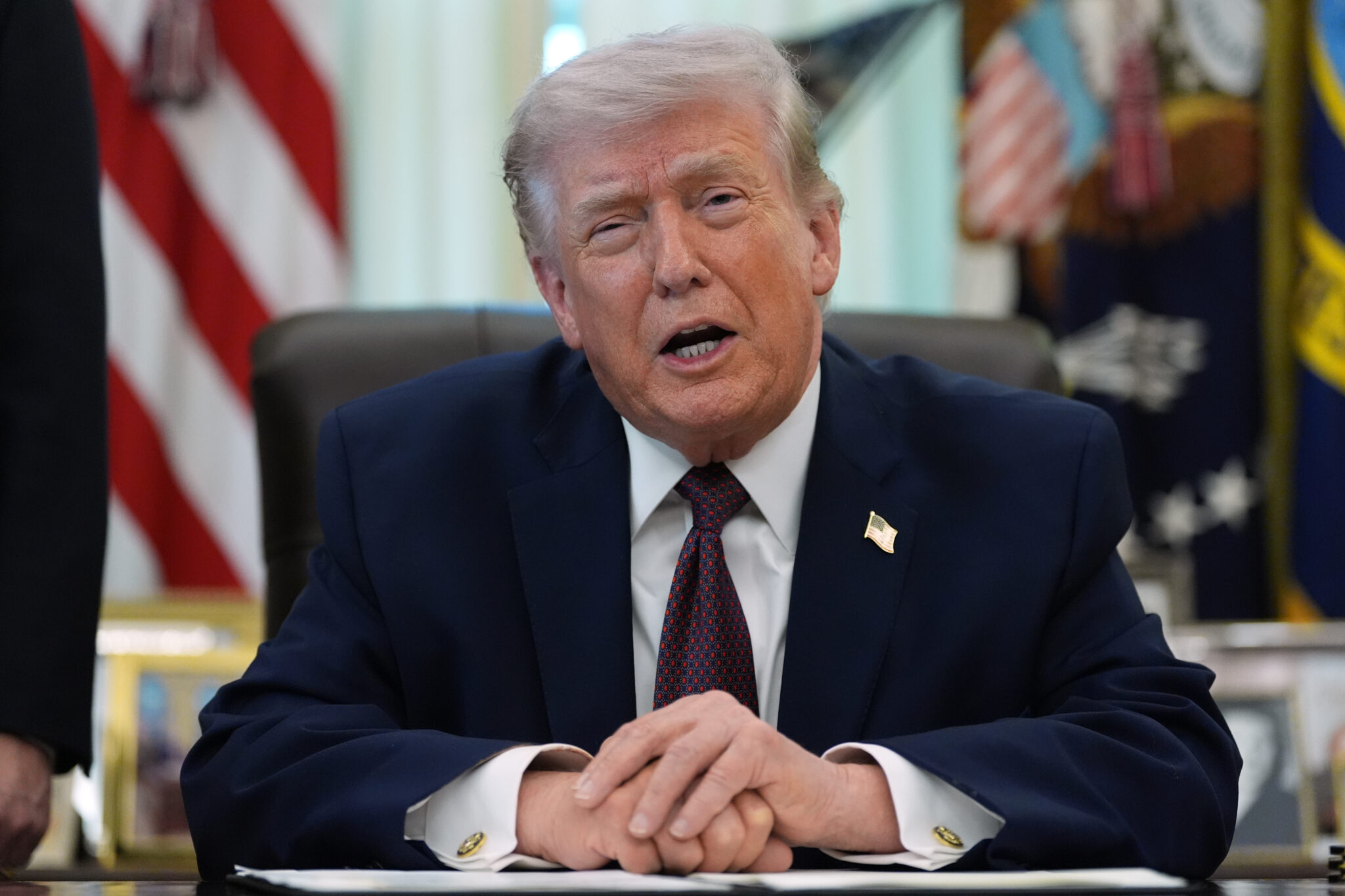

Trump to Deliver Prime Time Speech on Iran War as Questions Swirl over His Next Move/ TezzBuzz/ WASHINGTON/ J. Mansour/ Morning Edition/ President Donald Trump will deliver a prime time address on the Iran war amid growing uncertainty. Americans are increasingly concerned about rising gas prices and prolonged conflict. Trump’s shifting statements leave allies and adversaries guessing about his next move.
- Trump to address nation at 9 p.m.
- Speech expected to outline next steps
- War enters critical phase
- Polls show Americans favor quick exit
- Gas prices surpass $4 per gallon
- Trump signals possible withdrawal within weeks
- Iran ceasefire claim remains disputed
- Strait of Hormuz remains central issue
- NATO criticism expected in speech
- Allies and adversaries watching closely

President Donald Trump is set to deliver a prime time address Wednesday night on the ongoing Iran war, as uncertainty grows over whether the conflict is nearing an end or heading toward further escalation.
Millions around the world are expected to watch the address, which the White House has described only as an “important update.” Officials have offered few details about what Trump plans to announce, leaving observers to speculate about whether the president will outline a withdrawal strategy, expand military operations, or pursue diplomatic negotiations.
The speech comes at a pivotal moment in the conflict and Trump’s presidency. After weeks of military operations and rising economic pressure, the president faces increasing calls at home to bring U.S. involvement to an end.
Public opinion appears to be shifting against a prolonged conflict. A recent Reuters poll found that roughly two-thirds of Americans believe the United States should work quickly to end its involvement in the war, even if military objectives are not fully achieved.
Economic concerns are also mounting. Gasoline prices have climbed above $4 per gallon nationwide, a level not seen in years. Rising fuel costs, along with higher prices for food and goods, are creating additional pressure on the administration.
Before the conflict, Trump frequently highlighted low gasoline prices as a measure of economic success. The recent increase presents a political challenge, particularly with midterm elections approaching.
Analysts say domestic pressure could influence Trump’s messaging. Imran Bayoumi, a geostrategy expert at the Atlantic Council, said public opposition and economic fallout pose risks if the war drags on.
“The deep domestic unpopularity of the war, along with the economic fallout, both pose a problem ahead of midterm elections,” Bayoumi said.
Trump’s own statements about the war’s end have shifted repeatedly. Initially, he called for Iran’s unconditional surrender. Later, he suggested a negotiated agreement could end the conflict. More recently, Trump said the war could end within “two to three weeks” even without a deal.
On Wednesday morning, Trump again altered his tone, claiming Iran’s president had requested a ceasefire. He said the United States would consider negotiations only after the Strait of Hormuz — a critical global oil route — is reopened.
Until then, Trump warned the United States would continue military operations, saying the U.S. would be “blasting Iran into oblivion.”
Analysts note that Trump’s goals for the conflict remain loosely defined. That flexibility could allow the president to declare victory at any time.
Trump has claimed that U.S. strikes have neutralized Iran’s nuclear threat, though experts say it remains unclear whether Iran’s capabilities have been fully eliminated.
Meanwhile, U.S. and Israeli operations have significantly weakened Iran’s military infrastructure. However, complex objectives — such as securing enriched uranium or reopening the Strait of Hormuz — may require additional time and resources.
Trump is also expected to renew criticism of NATO during his speech. He has accused allies of failing to support U.S. operations and has suggested the United States could reconsider its role in the alliance.
In an interview with Britain’s Telegraph newspaper, Trump said he is considering withdrawing the United States from NATO, further raising stakes ahead of his address.
Trump also recently suggested the United States may leave the Iran conflict within weeks. He predicted that gas prices would drop quickly once U.S. involvement ends.
The president has also downplayed the strategic importance of the Strait of Hormuz for the United States, saying other nations dependent on Gulf oil should manage the situation themselves.
“We’re not going to have anything to do with it,” Trump said, referring to the strait’s security.
Trump’s speech will be closely watched by allies and adversaries alike. Some observers note that Trump previously signaled openness to negotiations shortly before launching major strikes on Iranian nuclear facilities, raising questions about whether his remarks could signal further military action.
For now, the primetime address represents a key moment in the evolving conflict — one that could shape U.S. foreign policy, global markets, and the trajectory of the Iran war in the weeks ahead.
More on US News
Comments are closed.