
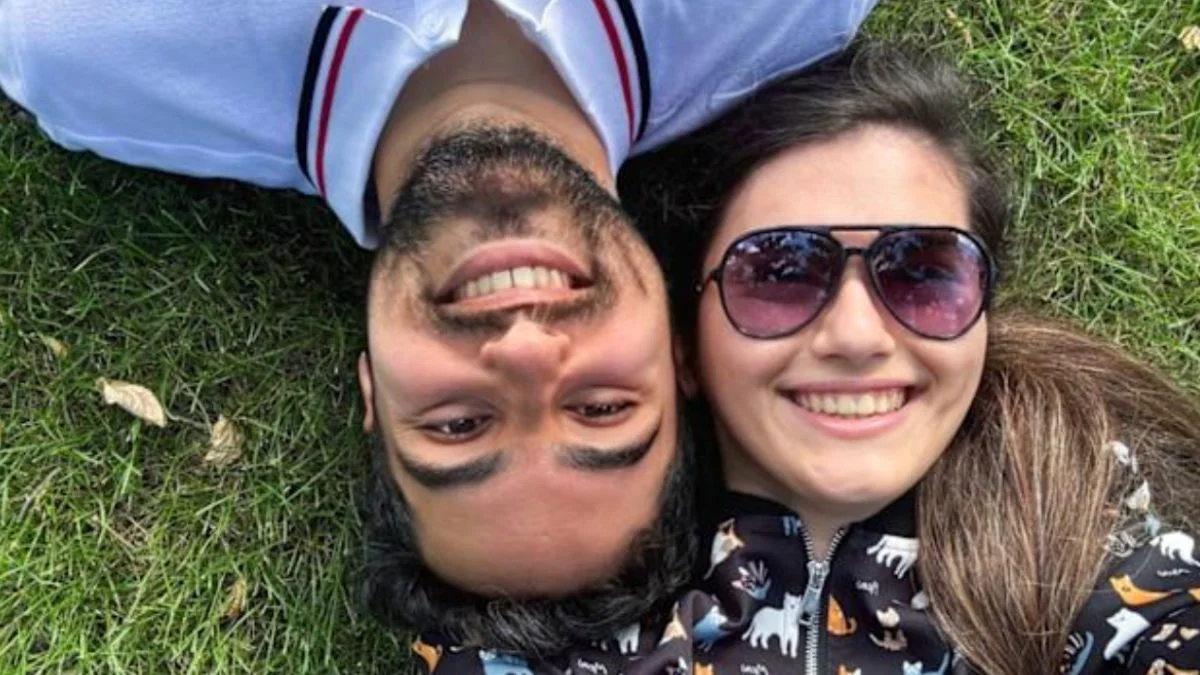

A couple from Iran has found themselves mourning the loss of their premature infant while each is prevented from being together for the final moments it had from the Trump administration’s travel restrictions on those coming from Iran and other countries, designed to improve national security through stricter immigration policies.
Sefidgari socks is 33 years old; she is a Ph.D. student in endocrinology and animal bio-science at Rutgers University; she entered the U.S. through an F1 student visa in 2024. In early March of 2026, at 30 weeks pregnant, she delivered her child after going into pre-term labor; unfortunately, the child lived for only one week. For the duration of her many challenges associated with the premature delivery, hospital stay, and subsequent grief due to the loss of her child, she has essentially been alone in New Jersey with no emotional or physical support from outside of the state, thus far.
Her husband, Ehsan Entezarialso 33, is a post-doc in metallurgy at the University of Saskatchewan in Canada. He has been unable to travel from Canada to New Jersey to join his wife during this very emotional time, after having to wait until January 2026, after meeting with her for the last time while they lived in Iran and were married in 2023. Ehsan applied for an F2 dependent visa, which was denied due to the restrictions in the June 2025 travel banwhich blocks people from entering the USA from Iran due to potential terrorist or national security risks. In the notice of denial, the decision indicated that the reason for the denial was based on inadequate proof of the cumulative ties of Ehsan to Safa and the overall family situation.
“People’s lives do not matter to them,” Sefidgari said to NBC News, adding, “It is just so upsetting, and heartbreaking.” Entezari, who has experienced different levels of anxiety, stress, and depression due to all the time he has been separated from Sefidgari, mentioned that Sefidgari is having a medically fragile pregnancy without any support at all.
The couple filed a lawsuit in December of 2025, which challenged how the travel ban impacted student visa dependents. Earlier this week, the administration’s attorneys filed a motion to dismiss the case. Senator Cory Booker (D-N.J.) has stated that this policy is “discriminatory and irresponsible” and that it makes family reunification impossible for individuals from specific countries.
Sefidgari, who recently renewed her Iranian passport while in Washington D.C., is facing her program expiring in 2029 as well as needing to renew her visa in June 2021. She will bury her baby in New Jersey, which holds so many painful memories for her, while Entezari must alternately attend the burial.
In addition to the lawsuit discussed above, the couple’s case highlights the many other difficulties that Iranians will experience while trying to obtain a U.S. visa, since many types of visas have a long wait time, and the travel ban doesn’t help that situation. The administration has indicated that the need for public safety as a result of rising U.S.–Iran tensions is the reason for the continued enforcement of the travel ban.
The narrative of these two individuals adds to the discussions around balancing national security against humanitarian considerations as we manage our immigration system in the United States.

Comments are closed.