
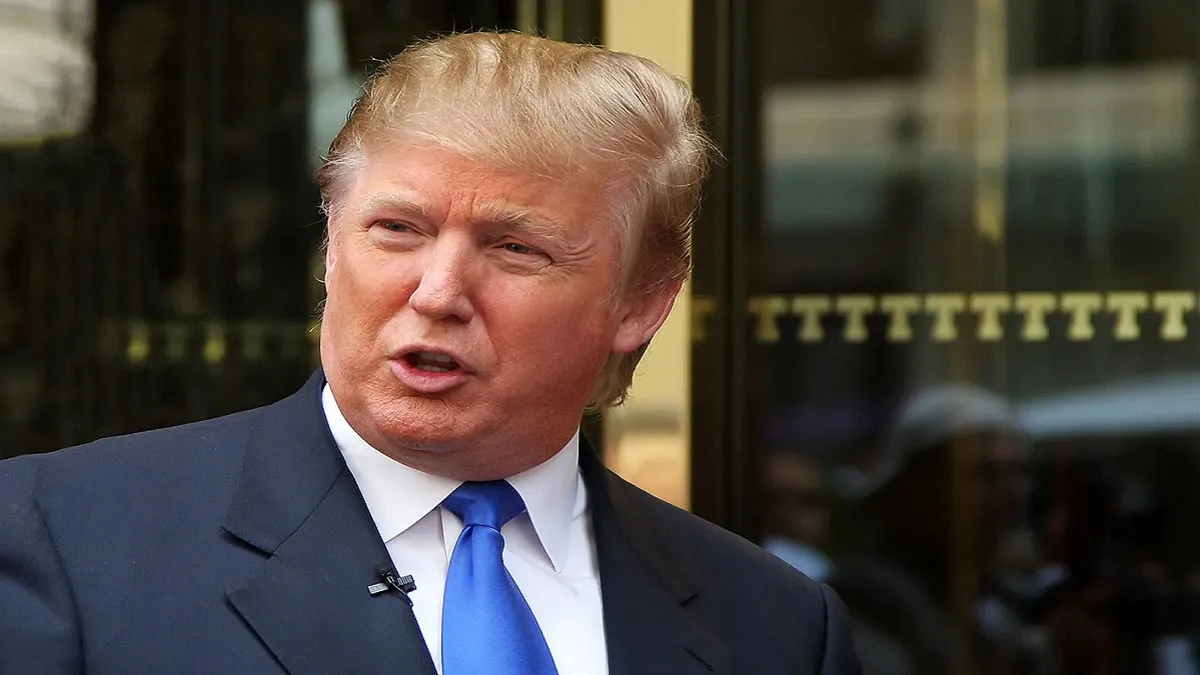

US President Donald Trump, along with Israel, started a military operation against Iran on February 28. At that time he had given many big goals of this campaign. These included removing Iran’s current regime, completely dismantling its nuclear program, destroying its ballistic missile program, weakening its navy and banning Iran-backed armed groups. But now many questions are being raised regarding the agreement reached after the 15-week war.
The US administration is calling this agreement a major diplomatic success, but many experts believe that most of the goals announced by Trump have still not been achieved. Many important issues have not been included in the Memorandum of Understanding or MOU, while some matters have been left for future negotiations.
At the beginning of the war, Trump had appealed to the people of Iran to raise their voice against the current religious regime. He had said that this is an opportunity for change for the Iranian people. However, there is no mention of change of power in the agreement reached after 15 weeks of conflict. The current leadership still remains in power in Tehran. Despite heavy losses during the war, there was no major uprising in Iran and the government remained in power.
Trump’s most important goal was to end Iran’s nuclear program. He had said many times that Iran would never be allowed to make nuclear weapons. But this issue has not been completely resolved in the agreement. Issues related to Iran’s enriched uranium reserves and sensitive nuclear facilities have been left for further talks. Iran has consistently maintained that its nuclear program is only for energy and medical needs. The ballistic missile program also could not become part of the agreement.
Trump had talked about completely eliminating Iran’s missile capability during the war. He said that these missiles are a threat to Israeli and American bases. But according to reports, the missile program has been kept out of the agenda of talks and no new restrictions or monitoring arrangements have been decided on it.
No concrete decision has been taken on the help to Lebanon’s Hezbollah, Yemen’s Houthi and Iran-backed groups active in Iraq-Syria. America and Israel wanted Iran to stop providing weapons, money and training to these groups, but there is no clear provision in this regard in the agreement. Due to this, Iran’s influence remains to a great extent in the region.
The biggest impact during the war was on the Strait of Hormuz. About 20 percent of the world’s oil is traded from here. The route was affected during the conflict, causing oil prices to rise and impacting global trade. Now this route has reopened, but Iran has made it clear that it will increase its surveillance and control over this strategic area.
During the war, America and Israel targeted hundreds of Iranian military targets. According to reports, hundreds of missile bases, command centres, launchers, air defense systems, drone bases and naval assets were destroyed. Despite this, Iran continued missile and drone attacks towards Israel and many countries in the Gulf region for 15 weeks. The conflict began on February 28, when the US and Israel launched major attacks on Iran.
Iran then attacked the Strait of Hormuz and launched several retaliatory attacks in the region. There were frequent attacks between the two sides during March, April and May. Finally, on June 15, Donald Trump announced the agreement. The agreement was digitally signed by Trump, US Vice President JD Vance and Iranian Parliament Speaker Mohammad Bagher Ghalibaf.

Comments are closed.