
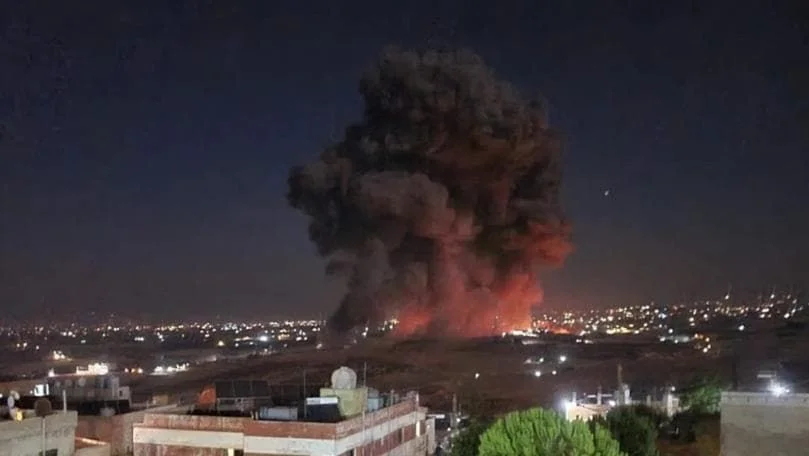

An Israeli airstrike hit a residential apartment in Bchamoun, southeast of Beirut, on Tuesday, killing at least two people and injuring five others, according to Lebanon’s Ministry of Public Health. The strike came without warning and set part of the building on fire, with videos shared online showing flames tearing through the apartment block.
The attack was carried out as Israel continued its bombardment across Lebanon and issued a new evacuation warning for Burj Shemali in the country’s south. Residents in Beirut’s southern suburbs were also placed under renewed threat, as the Israeli army said it was targeting what it described as Hezbollah-linked infrastructure. Reporting from Beirut, Al Jazeera’s Zeina Khodr said there had been “no letup” in the attacks, and noted that the Israeli military also claimed to have struck members of Iran’s Quds Force, the external wing of the Islamic Revolutionary Guard Corps.
The escalation is part of a wider wave of violence that has gripped Lebanon in recent months. Lebanese authorities say Israeli attacks have killed at least 1,039 people and wounded 2,876 others since the conflict intensified. According to the report, Israel has also carried out repeated overnight strikes on Beirut’s southern suburbs, hitting areas including Bir al-Abed, Haret Hreik, Burj al-Barajneh and others.
Elsewhere, Israeli forces struck a petrol station belonging to the Amana company near the port city of Tyre, sending thick smoke and fire into the sky. Israel has accused Amana stations of supporting Hezbollah’s “economic infrastructure,” and has hit them before.
The conflict has also triggered a major displacement crisis. A spokesperson for UN Secretary-General Antonio Guterres said more than 1.2 million people have been forced from their homes, equal to about one in five people in Lebanon. Humanitarian access in the south remains difficult, especially for those living near the Litani River, where ongoing strikes are making evacuation and aid delivery increasingly hard.

Comments are closed.