
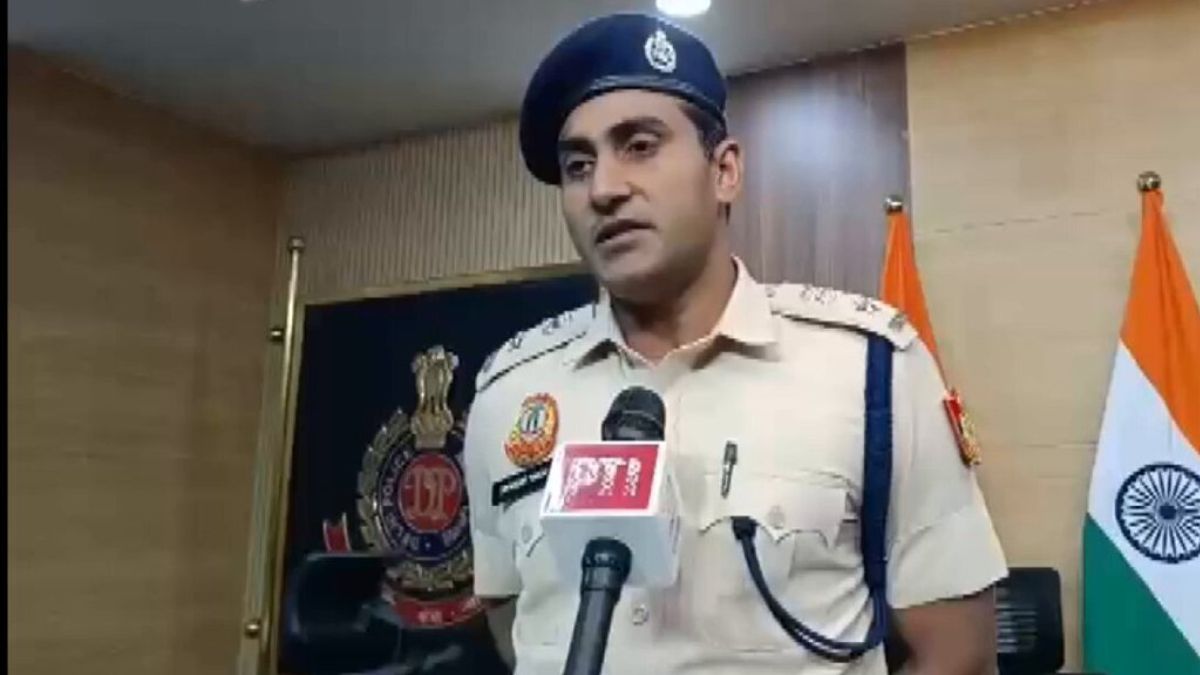

Delhi Police has solved a murder case that initially began with an unidentified body in the Adarsh Nagar area, tracing the accused through a detailed investigation that ultimately led officers to the vicinity of the Nepal border after nearly two months of sustained efforts.
According to Vijay Singh, Joint Commissioner of Police (Northern Range)the victim was later identified as Ramesh Yadavwho had been murdered by another individual who fled immediately after the crime.
Police said the investigation initially faced challenges because the deceased had not been identified when the body was first discovered. Detectives therefore focused on establishing the victim’s identity before moving forward with efforts to locate the suspect.
Investigation begins with unidentified victim
Officials said the case started as an unidentified body investigation in the Adarsh Nagar area. Police teams worked to gather evidence and verify the identity of the deceased. After extensive inquiries, investigators identified the victim as Ramesh Yadav. The breakthrough allowed officers to reconstruct the victim’s recent movements and examine people who may have been connected to the case.
Police said identifying the victim proved to be a crucial step in advancing the investigation and narrowing down potential suspects.
Suspect linked to nearby market
As the investigation progressed, officers learned that a person working in a nearby market could be connected to the murder. According to police, the suspect had been living temporarily in Gurugram while working in the area. Investigators subsequently gathered information regarding his background, movements, and possible whereabouts following the crime.
Further inquiries revealed that the accused was originally a resident of Nepalprompting police to expand the investigation beyond Delhi and neighboring regions.
Intelligence gathering extended to border areas
With indications that the suspect may have fled toward Nepal, investigators began collecting intelligence from areas near the international border. Police teams coordinated information-gathering efforts and tracked leads across multiple locations while attempting to determine the suspect’s exact movements.
Officials said the investigation required continuous surveillance, verification of intelligence inputs, and coordination with agencies operating in border regions.
Breakthrough after two months of efforts
Vijay Singh said that after nearly two months of continuous investigationpolice succeeded in locating the accused outside the Nepal border area. The breakthrough marked the culmination of a lengthy manhunt that involved tracing the suspect’s connections, verifying intelligence, and following multiple leads developed during the investigation.
Authorities have not disclosed additional details regarding the motive behind the murder or the exact circumstances surrounding the suspect’s detention.
Case highlights importance of victim identification
Police officials noted that the successful resolution of the case depended heavily on identifying the victim at an early stage of the investigation. What began as an unidentified body case eventually developed into a cross-border intelligence operation that led investigators to the alleged perpetrator.
The case is now expected to proceed through the legal process as authorities continue their investigation and prepare the necessary documentation related to the murder case.

Comments are closed.