
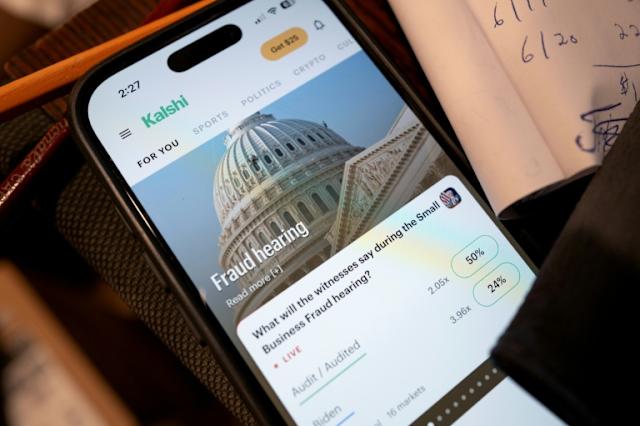

A fresh legislative push in Washington is targeting the fast-growing prediction market industry, with two Democratic lawmakers proposing sweeping restrictions on what Americans can legally bet on. Representative Greg Casar and Senator Chris Murphy have introduced a bill that aims to curb betting on a wide range of real-world events, arguing that such markets can be easily manipulated and may expose users to unfair losses.
The proposed law, formally titled the Banning Event Trading on Sensitive Operations and Federal Functions Act, or the “BETS OFF” Act, is designed to address what its sponsors see as a regulatory gap in the rapidly evolving prediction market space. Platforms such as Kalshi and Polymarket have popularized the concept of allowing users to trade on the outcomes of everything from elections to entertainment events, drawing millions of dollars in wagers.
Under the new proposal, many of these markets could be outlawed if lawmakers succeed in pushing the bill through Congress.
Lawmakers Highlight Risks of Insider Influence
At the core of the legislation is a concern that prediction markets may not operate on a level playing field. Casar and Murphy argue that, in many cases, people with inside knowledge—or even direct influence over outcomes—could exploit these platforms at the expense of ordinary participants.
This concern is especially pronounced in markets tied to entertainment or cultural events, where outcomes may be known in advance by a limited group of insiders. In such situations, critics believe that everyday users risk unknowingly betting against individuals who already have access to the final results.
Beyond entertainment, the lawmakers are also worried about markets tied to political or government actions. They argue that allowing bets on such events could create ethical dilemmas and even raise questions about whether financial incentives might distort decision-making or public perception.
What the BETS OFF Act Would Ban
The proposed legislation outlines several categories of events that would no longer be eligible for prediction market trading. These include:
- Violent or sensitive events such as terrorism, assassinations, and armed conflicts
- Government actions that are not directly tied to financial or economic indicators
- Any event where participants could reasonably have control over the outcome
By targeting these areas, the bill seeks to draw a clear line between acceptable financial speculation and activities that lawmakers view as ethically questionable or potentially dangerous.
Murphy has emphasized that betting on geopolitical developments—such as conflicts involving nations like Iran—raises serious concerns. According to him, allowing financial wagers on matters of war and peace risks trivializing events that have real-world human consequences.
Rapid Growth Draws Regulatory Attention
Prediction markets have expanded significantly in recent years, fueled by advances in technology and growing public interest in alternative forms of online trading. Platforms like Kalshi have reported sharp increases in activity, particularly during high-profile events.
One of the most notable examples is the surge in betting tied to the Academy Awards, where trading volumes have climbed dramatically over a short period. Similarly, major sporting events such as the Super Bowl—including its widely watched halftime performances—have become key attractions for users looking to place speculative bets.
This blend of entertainment and finance has helped prediction markets appeal to a broader audience, but it has also intensified scrutiny from regulators who worry about the lack of consistent oversight.
Industry Defends Its Practices
Companies operating in this space have pushed back against criticism, insisting that they have safeguards in place to maintain fairness. Kalshi, for example, has said that it enforces rules designed to prevent insider trading and has taken disciplinary action in cases where users attempted to exploit non-public information.
Supporters of prediction markets argue that these platforms can provide valuable insights by aggregating public opinion and forecasting outcomes more efficiently than traditional methods. They also contend that outright bans could stifle innovation in a sector that blends finance, data analysis, and technology.
However, critics remain unconvinced, pointing out that enforcement can be challenging, especially when platforms operate across borders.
Offshore Platforms Under Scrutiny
A key focus of the BETS OFF Act is the role of international prediction market platforms. Services like Polymarket, which operate outside the United States, are not always subject to domestic regulations, creating potential loopholes for American users.
To address this issue, the proposed legislation includes provisions aimed at limiting access to offshore platforms. These measures would restrict payment processing for such services and introduce penalties for individuals or entities that promote them within the United States.
By targeting the financial channels that support these platforms, lawmakers hope to reduce their reach and ensure that U.S. regulations cannot be easily bypassed.
Balancing Innovation and Consumer Protection
The debate over prediction markets highlights a broader tension between encouraging innovation and protecting consumers. While these platforms offer a new way to engage with current events and financial speculation, they also raise questions about fairness, transparency, and accountability.
Casar and Murphy have argued that most users assume some level of regulatory protection when participating in such markets. If that assumption does not hold true, they believe it becomes the government’s responsibility to step in and establish clear rules.
At the same time, the lawmakers acknowledge that their proposal may face resistance from those who view prediction markets as a legitimate and evolving form of online activity.

Comments are closed.